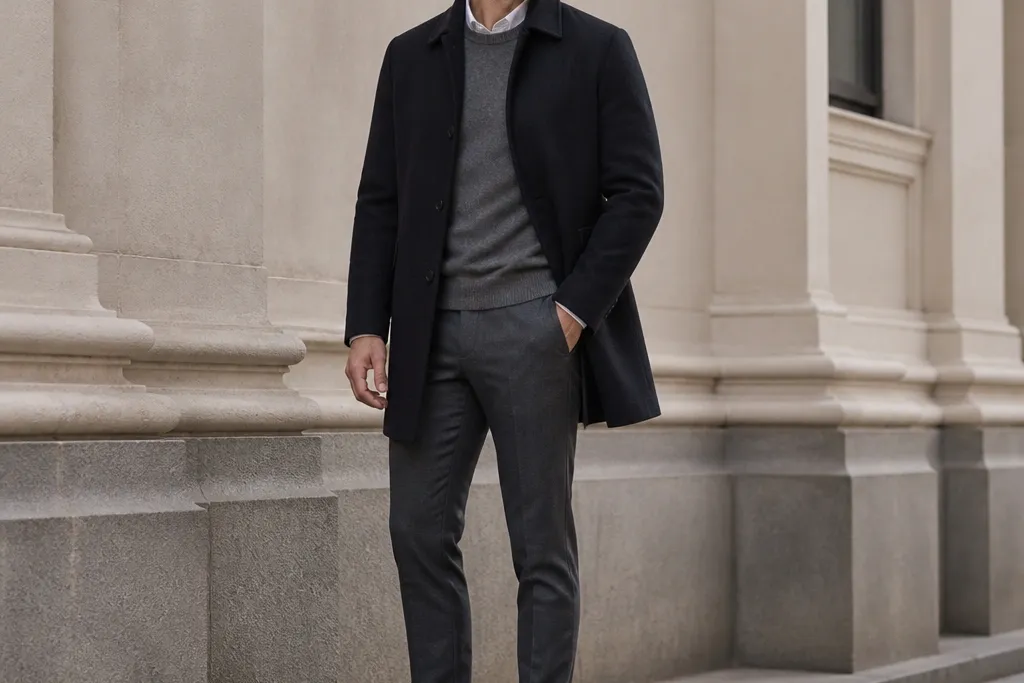
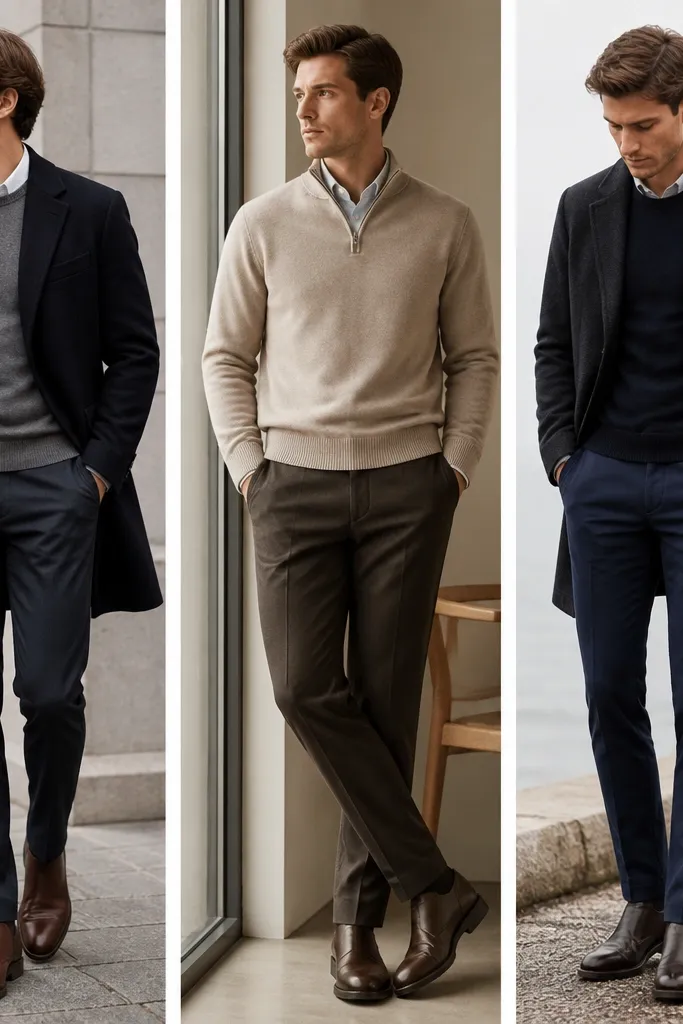
1. Charcoal wool trouser + off-white knit polo + navy overcoat
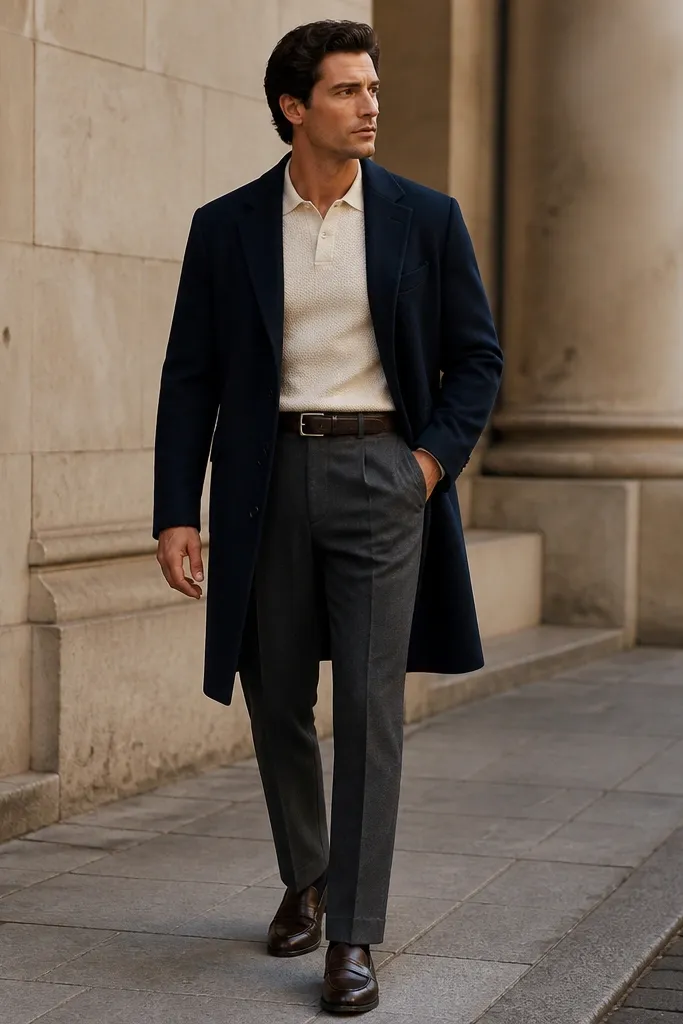
This is my go-to when I need “business casual” without thinking. The off-white knit polo reads softer than a dress shirt, and the knit texture hides minor wrinkles from commuting. Charcoal trousers keep it grounded and make the overcoat look intentional even if you’re wearing it unbuttoned. I like this combo on most skin tones because the off-white doesn’t wash people out the way bright white can. If you’re lean, the knit polo adds some fullness through the chest; if you’re stockier, the polo collar keeps the neckline tidy and draws the eye up.
Start with charcoal wool trousers and make sure the hem has a slight break over loafers. Add the off-white knit polo and leave it untucked or do a small straight tuck at the front only, depending on your belt line. Layer the navy overcoat open — don’t button it if it pulls at the stomach. Finish with dark brown loafers and a matching belt, then add a simple watch with a leather strap.
Try thisRoll the overcoat sleeves once, then let them fall naturally. It makes the whole look feel less stiff without changing your clothes.
AvoidAvoid a polo that’s too short — if it rides up when you sit, the outfit looks sloppy fast.
2. Dark chinos + light blue brushed flannel + workwear jacket
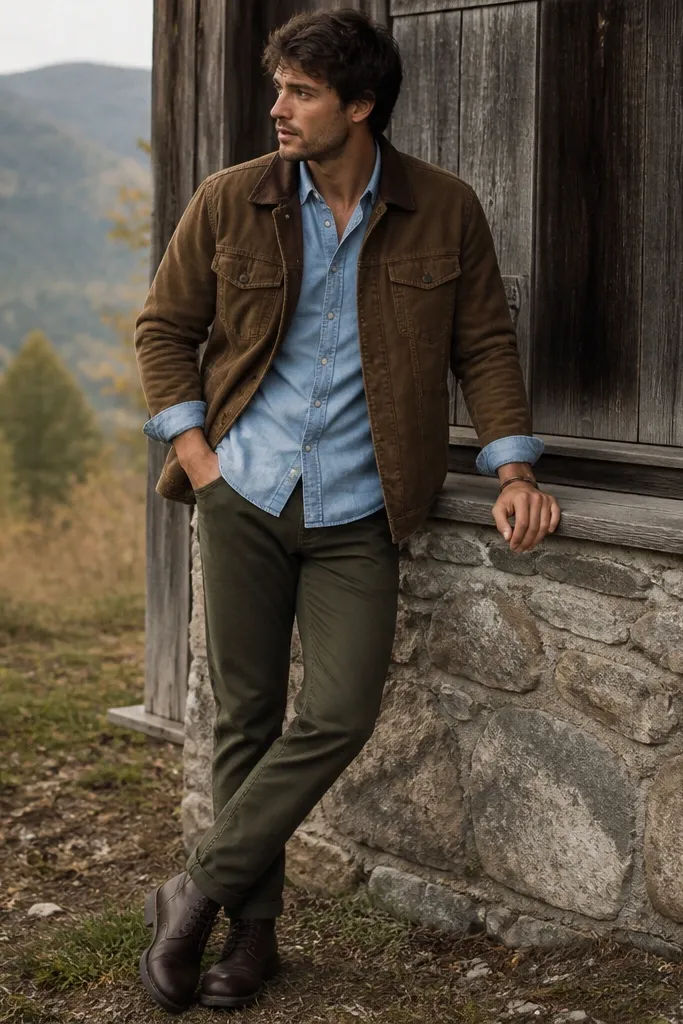
Brushed flannel button-downs give you warmth and structure without the crisp look of an office shirt that needs ironing. Dark chinos are forgiving — they hide dust and small creases from sitting in a car. A brown workwear jacket (waxed cotton or sturdy denim) ties the whole thing together and makes the look feel winter-ready. This pairing works especially well for people who want to look polished but not dressed-up. It also flatters medium to broader builds because the jacket’s shoulder line adds shape without clinging.
Begin with dark olive or navy chinos and choose a flannel in light blue or pale blue-gray. Button the flannel all the way up, then do a slight half-tuck at the front so the waist looks clean. Put on the workwear jacket and keep the jacket unbuttoned — it prevents tugging across the chest. Wear leather boots in dark brown or black and add a belt that matches the boot color.
Try thisUse a fabric brush on the flannel before you leave. It removes lint and keeps the texture looking fresh.
AvoidSkip flannel that’s thin and see-through — it reads cheap under office lighting.
3. Charcoal trousers + white oxford + cardigan + loafers
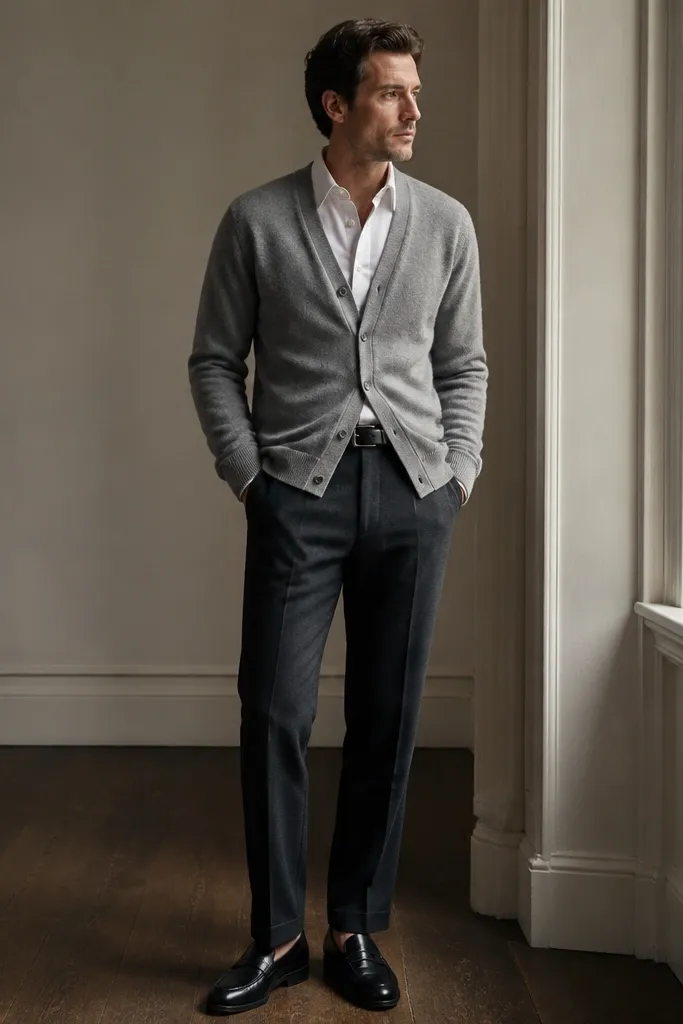
This is a winter office classic that looks intentional even when you didn’t iron. A white oxford under a cardigan gives you that crisp collar presence, but the cardigan makes it comfortable for cold mornings and warm meeting rooms. Medium-gray or navy cardigan fabric blends nicely with charcoal trousers and doesn’t fight your shirt. I like this on people with darker hair because the white collar pops cleanly; it also works on lighter hair because the contrast is still controlled. If you have a bigger midsection, choose a cardigan that buttons easily without straining — the drape should fall straight.
Start with charcoal wool trousers and a white oxford button-down. Keep the shirt collar crisp and do a full tuck — no bunching at the waistband. Layer a mid-gray cardigan that hits around hip level; button it if it lays flat, leave it open if you’re between sizes. Finish with black or dark-brown loafers and a belt that matches the shoes.
Press your shirt collar once with your hand and steam it briefly in the bathroom before leaving. It takes 30 seconds and makes a big difference.
Don’t use a cardigan that’s too short — it creates an awkward line right above the belt.
4. Navy chinos + merino crewneck + tan overcoat
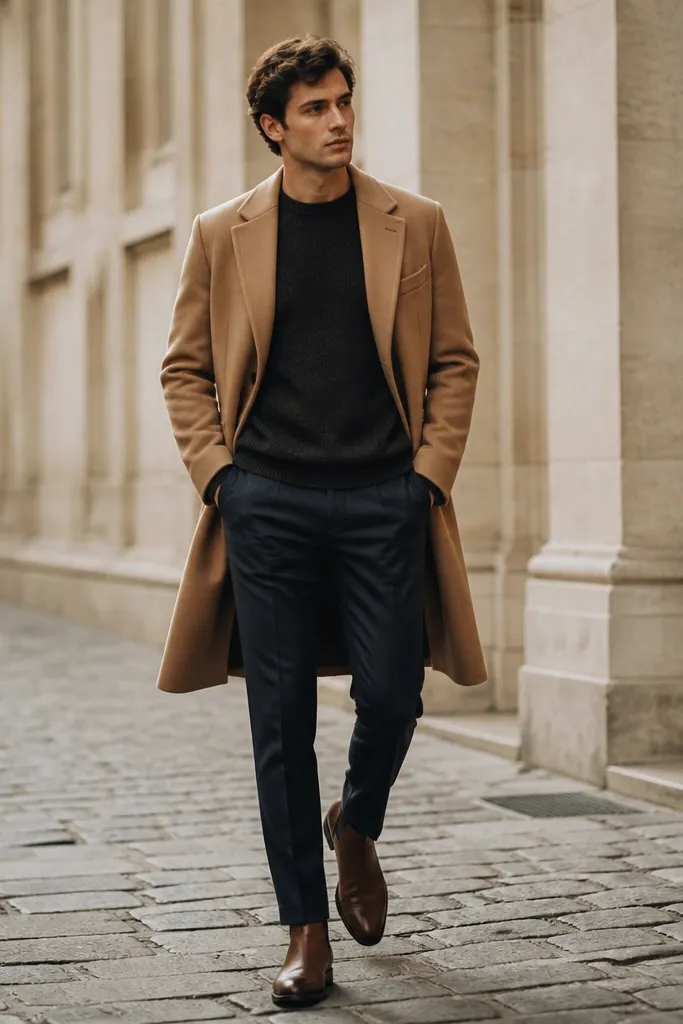
A dark merino crewneck is low maintenance because it holds shape better than most sweaters and it doesn’t look wrinkled after sitting. Navy chinos keep the outfit casual enough for day-to-day while still reading professional with the right shoes. A camel or tan overcoat adds warmth and color contrast, especially against dark tops. This combo flatters almost everyone because navy is forgiving and the overcoat creates a clean vertical line. If you’re tall, the overcoat length makes you look more balanced; if you’re shorter, go for a coat that ends around mid-thigh.
Wear navy chinos and a dark crewneck (charcoal, forest green, or navy). Keep the sweater untucked if it sits flat and doesn’t hike — otherwise do a slight tuck at the front. Layer the tan overcoat open for a longer silhouette. Choose brown Chelsea boots and a brown belt, then add a simple scarf in wool or a thick knit.
Try thisPick a crewneck with a tight rib at the cuffs. It keeps the sleeves from looking stretched out after a few hours.
AvoidAvoid a tan overcoat that’s too light in winter — it shows grime quickly near the hem.
5. Charcoal wool trousers + navy knit polo + camel scarf
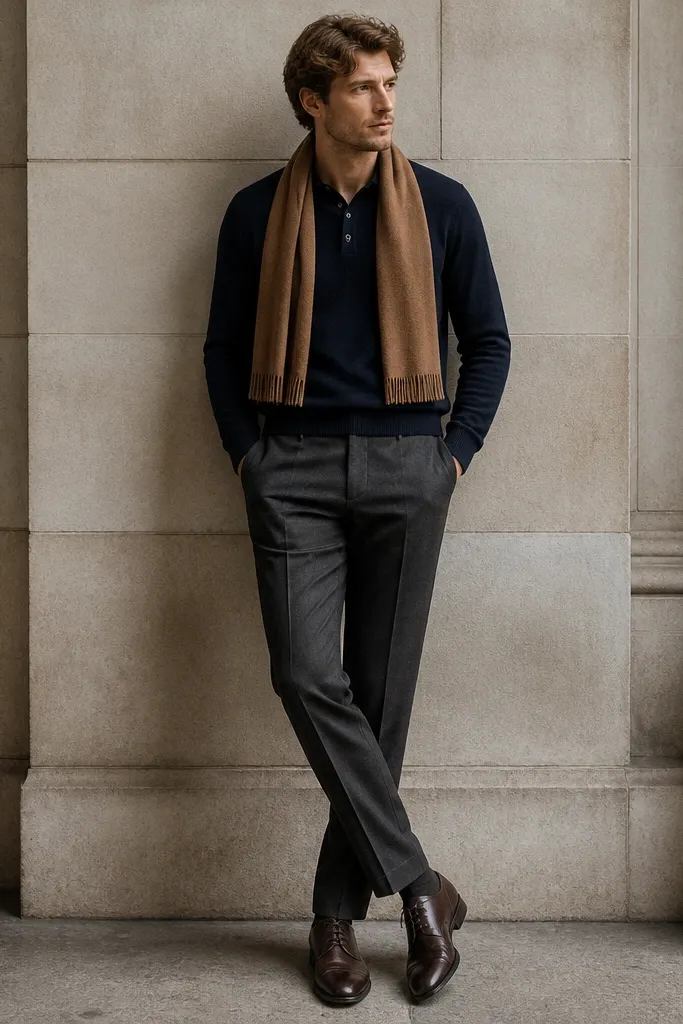
This outfit is simple but looks expensive because the colors are controlled. A navy knit polo sits between casual and business casual — it has a collar and placket like a shirt, but it doesn’t require ironing. Charcoal trousers make the navy look sharper and hide small creases. The camel scarf gives winter warmth and adds contrast without adding clutter. I like it for people who hate dress shirts but still need a meeting-ready look. It also works well for lighter skin tones since camel and navy complement instead of washing you out.
Start with charcoal wool trousers and a navy knit polo. Do a full tuck if your polo is long enough; otherwise, keep it untucked but make sure it doesn’t bunch when you sit. Add a dark overcoat only if you need it — otherwise a lighter jacket works too. Finish with dark brown leather shoes and belt, then add a camel scarf with a simple loop.
Keep the scarf pattern minimal. Solid or micro-woven textures look cleaner in office photos than big prints.
Don’t wear a polo with a collar that rolls outward — it kills the “put together” look.
6. Dark chinos + white pocket tee under blazer
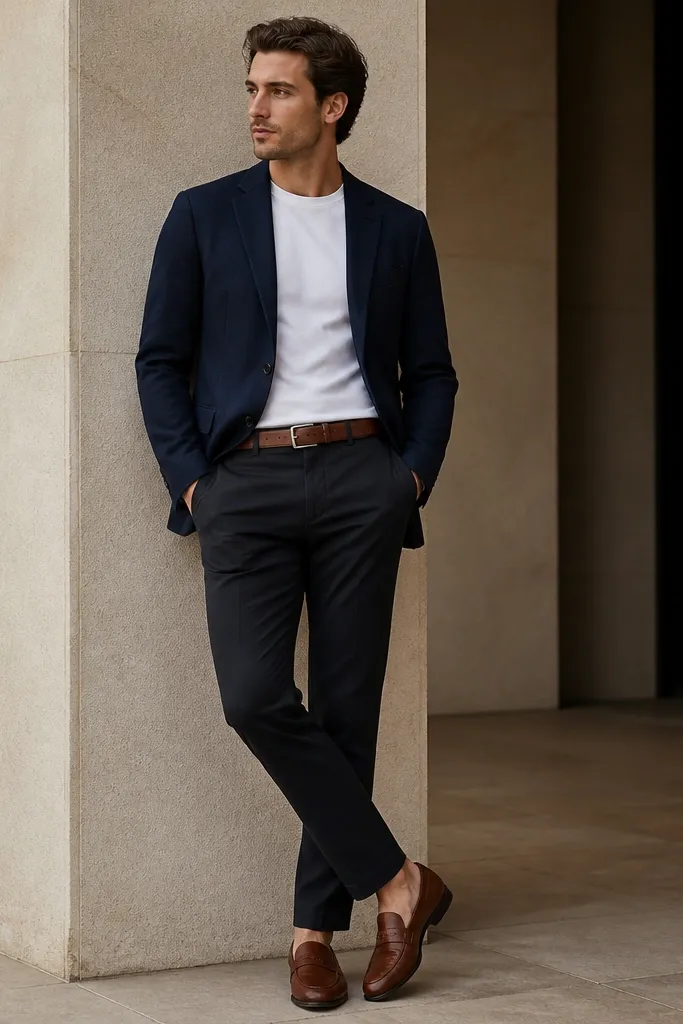
A blazer over a plain tee is one of the fastest ways to look sharp without dressing like you’re going to a wedding. The trick is fabric and fit: choose a blazer in wool blend or structured cotton, not a thin knit. Dark chinos keep it grounded and stop the tee from making it look too casual. A white tee gives crisp contrast and reads clean under indoor lighting. This works especially well for guys who carry most of their weight through the torso because the blazer frames the shoulders and the tee stays smooth.
Wear dark chinos with a navy blazer that fits the shoulders cleanly. Use a white crew tee that hits at the waistband — no long shirt tails. Keep the tee untucked and use the blazer to cover the midsection; add a pocket square only if it’s plain white. Finish with brown loafers and a belt in the same shade, then add a simple watch.
Try thisChoose a tee with a thicker collar hem. Thin tees curl and make the blazer look sloppy.
AvoidSkip blazers that pull at the buttons — the whole outfit looks strained.
7. Olive chinos + black crewneck + long denim coat
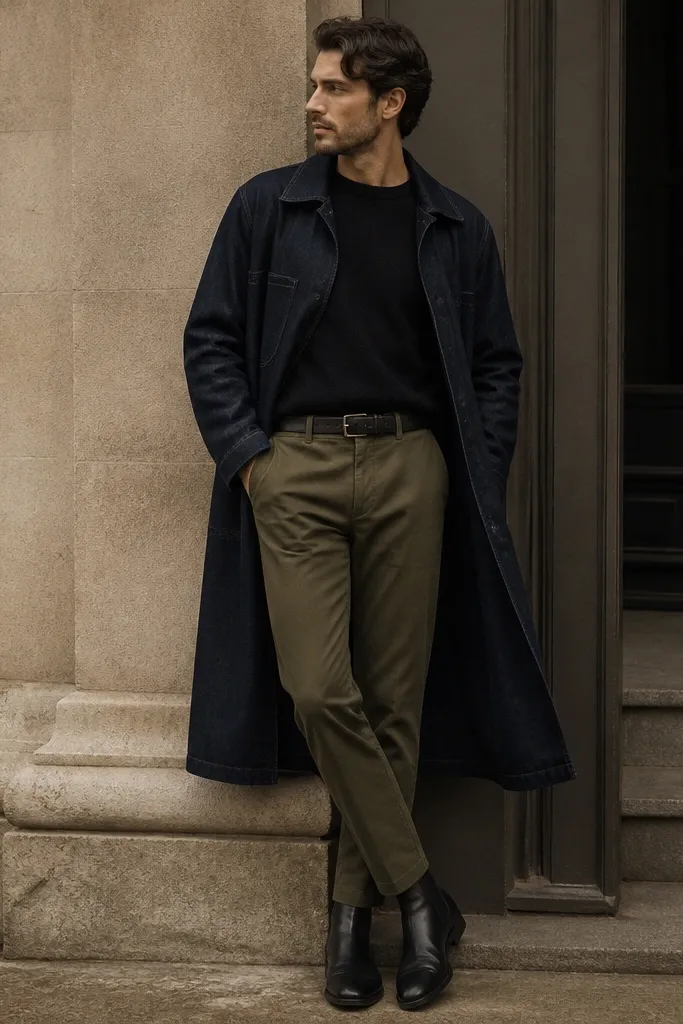
This is the winter “I still look good after commuting” setup. A black crewneck is low maintenance because it hides lint and small marks better than lighter knits. Olive chinos add color depth and keep it from looking too monochrome. A longer denim coat gives you that overcoat feel without the formal vibe, which is perfect for casual offices. It flatters most builds because the coat adds vertical length and the crewneck keeps the neckline tidy. If you’re fair-skinned, the black can be strong — pair it with a clean coat and a scarf in gray to balance.
Put on olive chinos and a black crewneck sweater that fits close at the neck and doesn’t sag at the elbows. Layer the long dark denim coat open; the hem should cover your belt line. Wear black boots and a black belt to keep the silhouette cohesive. If it’s cold, add a gray beanie instead of a bright one.
Use a lint roller on the crewneck before you leave. Black knit shows fluff more than you’d think.
Avoid denim coats that are too stiff at the shoulders — you need movement for real days.
8. Charcoal trousers + light blue oxford + no-tie vest
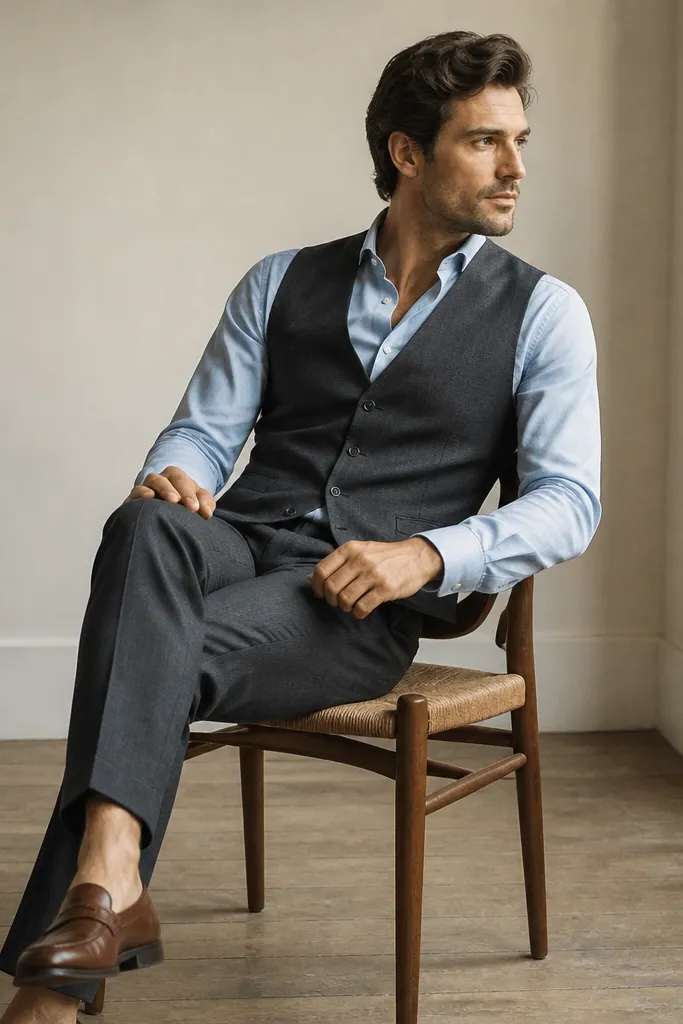
A vest gives you instant business polish with almost no effort. When you skip the tie, the vest keeps the outfit from falling into “casual” territory. The light blue oxford adds brightness and makes your face look more awake in winter indoor lighting. Charcoal trousers keep everything aligned and formal enough for client calls. This works great for guys who want structure without wearing a full suit jacket. If you’re tall and lean, a vest that fits the chest and waist makes you look more built; if you’re average build, it smooths the midsection.
Start with charcoal trousers and a light blue oxford button-down. Add a charcoal vest that buttons without pulling — close it for a clean line. Keep the shirt collar tucked neatly under the vest opening; no gaps. Wear brown loafers and a matching belt, then add a simple watch. Skip a tie and use a single folded pocket square in white if you want a little extra.
Choose a vest with a smooth front, not chunky knit — it looks sharper under office lights.
Don’t wear a vest that’s longer than your belt line. It looks off in photos and at eye level.
9. Navy chinos + white knit turtleneck + black overcoat
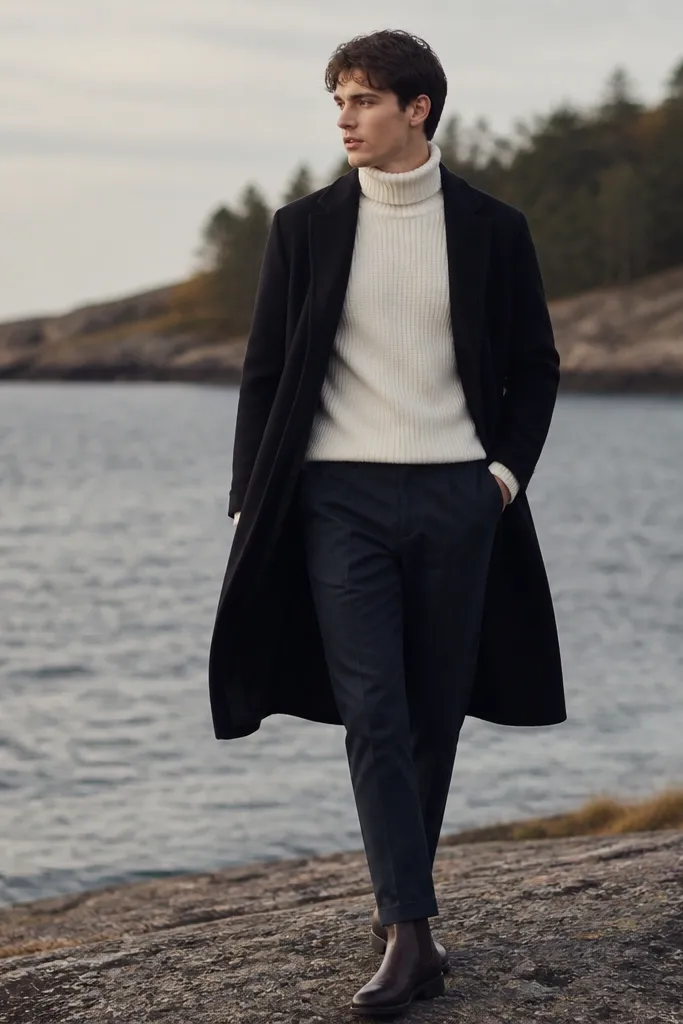
Turtlenecks can look too try-hard, but the right one looks clean and modern. A white knit turtleneck is warm and low maintenance because it sits close to the neck and doesn’t need collars or ironing. Navy chinos keep the outfit casual enough for most offices, while the black overcoat makes it look like you planned it. This combo flatters men with medium to darker hair because the white lifts your face; it also looks good on lighter hair if you keep the turtleneck rib tight and not overly thick. The silhouette is simple: straight lines, no complicated layers.
Wear navy chinos and a white knit turtleneck that fits snug at the neck and has a ribbed cuff. Keep the turtleneck untucked only if it stays flat; otherwise do a full tuck. Layer a black overcoat open — buttoning often looks too bulky with turtlenecks. Finish with dark leather boots and a black belt, then add a simple black scarf if needed.
Try thisPick a turtleneck with a shorter neck opening. Long necks bunch and make the outfit feel messy.
AvoidAvoid overly thick turtlenecks that make you look like you’re wearing winter pajamas.
10. Charcoal wool trousers + patterned pocket square + brushed shirt + overcoat
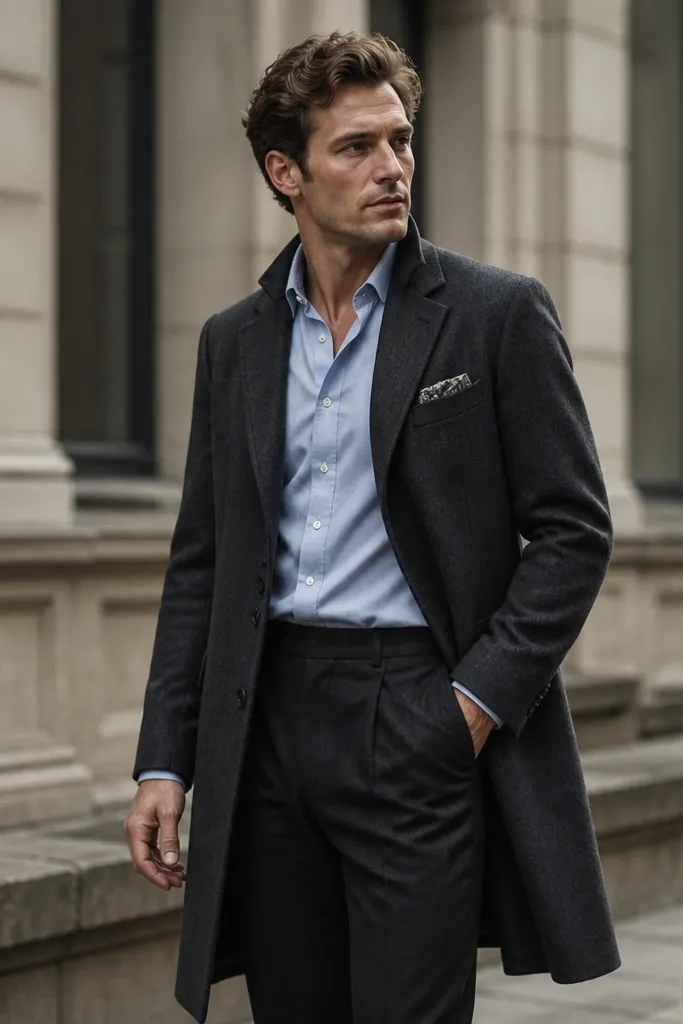
This is my “one small detail” approach. A pale blue brushed shirt gives warmth and texture, and the charcoal overcoat makes it winter-ready. The pocket square adds personality without changing the rest of the outfit, and it reads well in meetings because it sits at face level. Charcoal trousers keep everything consistent and hide minor fabric wrinkles. This works for guys who want to look a notch more styled but still want low maintenance — you’re only adjusting one accessory. It also flatters people with warm skin tones because pale blue balances without clashing.
Start with charcoal wool trousers and a pale blue brushed cotton button-down. Do a full tuck and button the shirt to the top, then layer the charcoal overcoat. Add a pocket square in a small pattern like micro-check or subtle dots in white and blue. Wear brown leather shoes and match the belt. Keep the rest plain: no loud tie and no extra scarf unless it’s cold.
Try thisFold the pocket square so it shows about 1 inch above the pocket edge. Too much fabric looks costume-like.
AvoidSkip big, high-contrast pocket squares with busy shirts. The combo reads chaotic.
11. Dark chinos + chambray shirt + cardigan
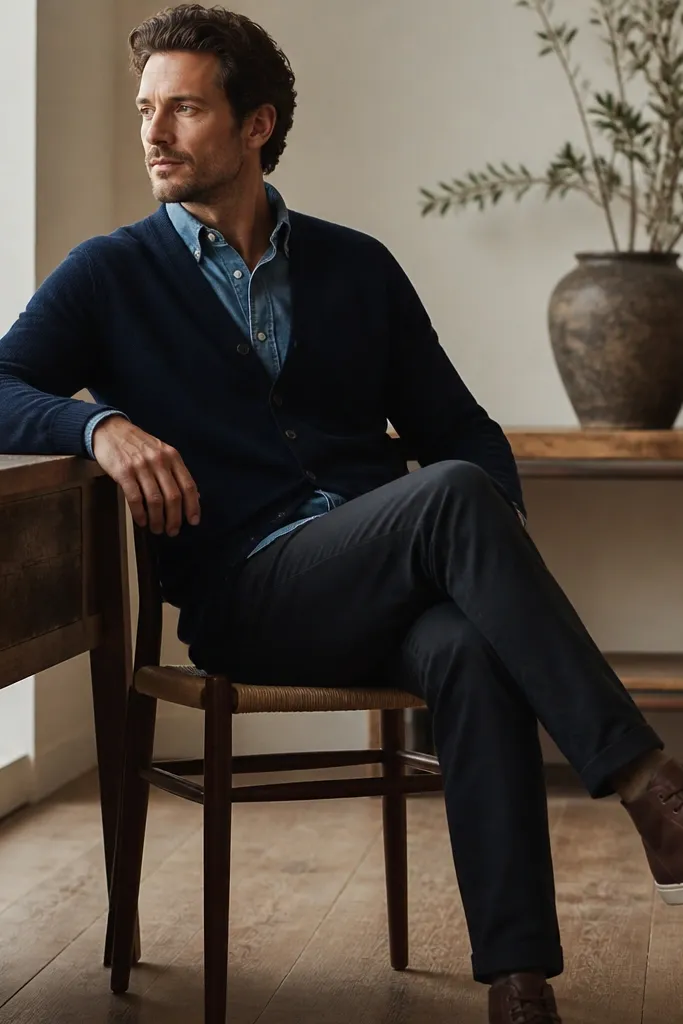
Chambray is like denim’s calmer cousin. It gives you that casual structure, but it still looks appropriate in a business casual setting when paired with darker trousers and a cardigan. A navy cardigan makes it feel winter-ready and keeps the outfit from looking too young. This combo is great if your office leans casual and you want to avoid looking too formal. It flatters guys with narrower shoulders because the chambray adds a little visual weight across the chest. If you have a fuller build, the cardigan helps smooth the torso as long as it fits without pulling.
Wear dark chinos and a medium-blue chambray shirt. Button the shirt and layer a navy cardigan that hits around your hip — not above your belt. Keep the shirt untucked only if it doesn’t flare; otherwise do a partial tuck at the front. Use brown boots or clean leather sneakers if your office is truly casual. Add a leather belt and a simple watch.
Try thisRoll the cardigan sleeves slightly and keep the shirt cuffs visible by half an inch. It makes the outfit look styled without extra work.
AvoidDon’t let the chambray gap at the buttons — if it strains, it looks cheap.
12. Charcoal trousers + striped crewneck + overcoat
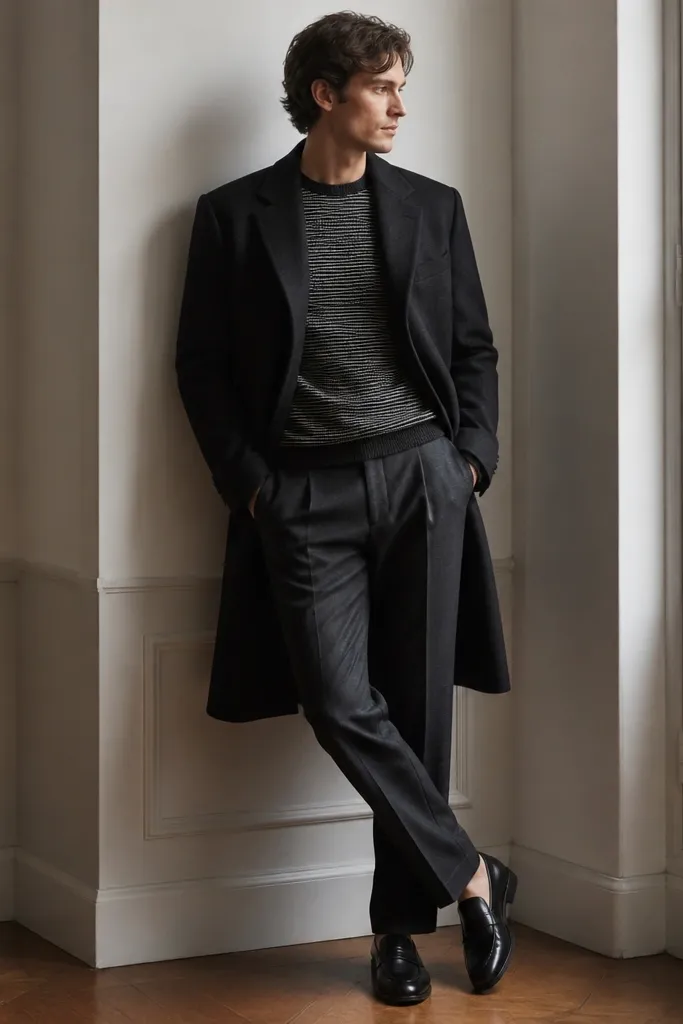
Stripes give you shape and interest even when the rest is plain. The trick is keeping the stripe scale small — thin horizontal stripes in navy and off-white — so it still reads business casual. Charcoal trousers anchor the pattern and make it look intentional instead of casual. This is a good option for men who want variety but hate wearing lots of different shirts. It also works well for most skin tones because the off-white stripe is bright without being harsh like pure white. If you’re broad through the shoulders, stripes add visual structure without clinging.
Start with charcoal wool trousers and a thin-striped crewneck. Wear the sweater untucked if it sits flat; otherwise do a straight tuck so the waistband line stays clean. Layer a dark overcoat open to show the stripes across your chest. Choose black loafers or dark boots and match with a black belt. Keep accessories minimal — one watch and maybe a scarf.
Try thisWash and dry your crewneck inside out to keep stripes from fading unevenly.
AvoidAvoid thick, wide stripes — they read more casual and can look dated quickly.
13. Navy chinos + white oxford + leather bomber jacket
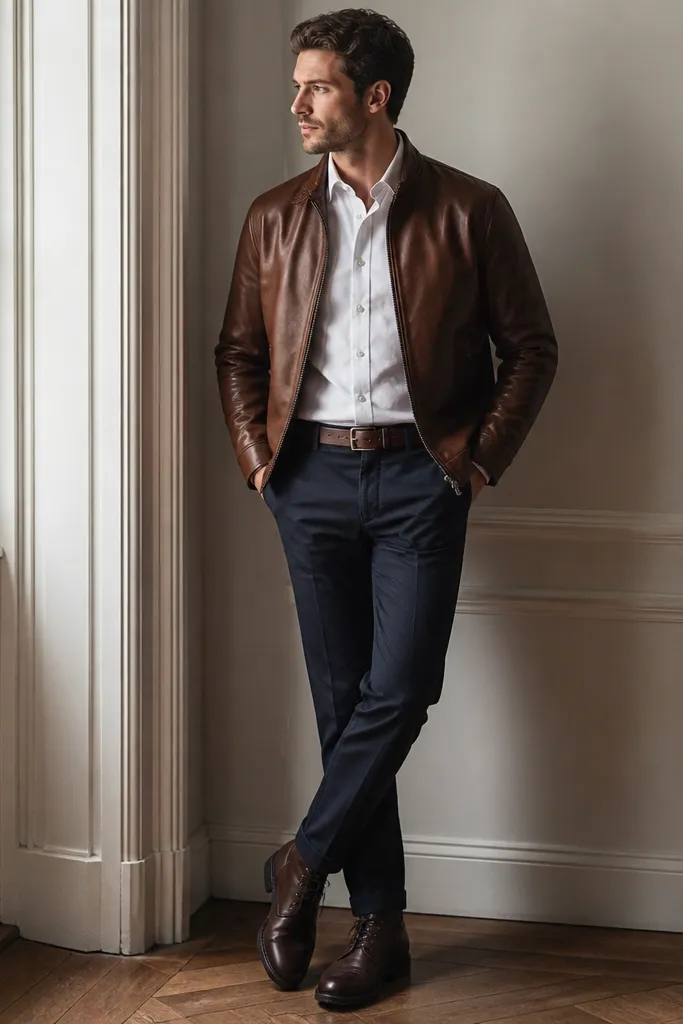
Leather bomber jackets look sharp in winter because they bring structure and warmth without needing a full overcoat. A white oxford under the bomber keeps things professional and makes the collar look crisp even if you skip ironing. Navy chinos keep the outfit casual enough for everyday work. This combo works well for offices that have a slightly modern dress code. It flatters most body types because the bomber’s shoulder seam and ribbed cuffs create a clean frame. If you’re on the lean side, the bomber adds shape; if you’re broader, choose one that fits through the chest without pulling at the zipper.
Wear navy chinos and a white oxford button-down tucked in. Put the bomber on and leave it zipped halfway or fully — either way, make sure it doesn’t crease aggressively at the belly. Choose dark brown or cognac leather and match your belt. Finish with dark boots and a simple watch face. Keep the shirt collar clean — no rumpled collar points.
Try thisCondition the leather once a month with a small amount of conditioner. Dry leather looks dull even if your outfit is otherwise perfect.
AvoidDon’t wear a bomber that’s too cropped. It makes the torso look cut off under winter layers.
14. Olive chinos + olive overshirt + black Chelsea boots
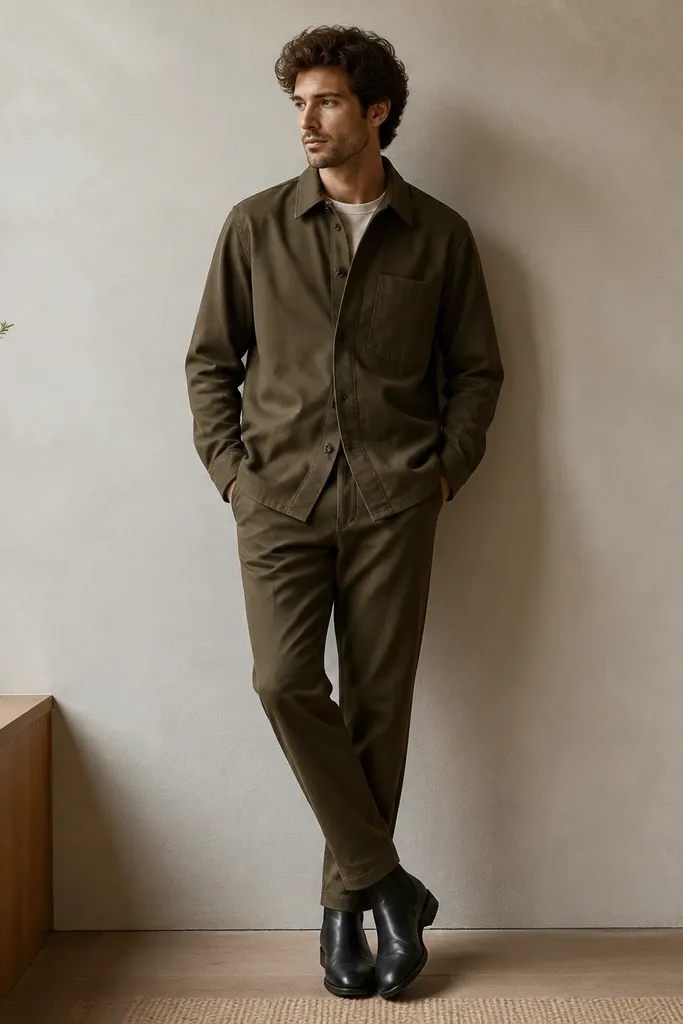
Overshirts are the unsung hero of low maintenance business casual. They add warmth and structure and you don’t need a separate blazer or cardigan. Olive on olive looks good when you keep tones close — muted olive overshirt, slightly darker chinos — and then add a contrast shoe. Black Chelsea boots make it feel sharper and more office-appropriate. This works especially well for men who want a casual winter look that still reads grown-up. It also flatters darker skin tones because olive complements without swallowing your frame.
Start with olive chinos and a simple base layer under the overshirt, like a white or cream crewneck. Choose an olive overshirt in brushed cotton or heavier twill; button it so the front lies flat. Wear the overshirt untucked if it hits around the belt line and doesn’t flare; otherwise do a small tuck at the front. Finish with black Chelsea boots and a black belt. Add a knit beanie only if you’re outside a lot.
Try thisPick an overshirt with a slightly higher collar stand. It keeps the neckline looking tidy under coats.
AvoidSkip shiny overshirts. They look like outerwear rather than a business casual layer.
15. Charcoal trousers + navy t-shirt + textured blazer
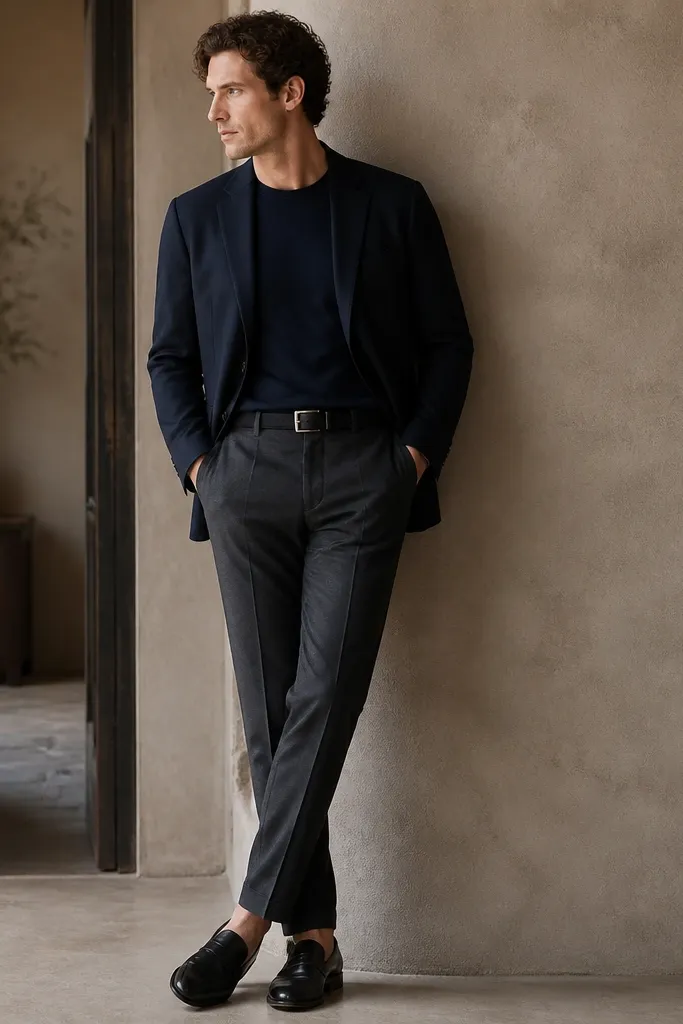
If your office tolerates it, a textured blazer over a navy tee is a fast win. The tee stays comfortable and low maintenance, and the blazer makes it look like you dressed for the day. I like textured blazers in wool blend with a subtle weave because they don’t look flat or shiny under office lights. Charcoal trousers keep the contrast sharp and make the outfit feel more formal than it is. This works best for guys who want to avoid button-downs but still need a clean silhouette. It also flatters men with slimmer frames because the blazer adds structure through the shoulders.
Wear charcoal trousers and a navy crew t-shirt that fits close at the neck and doesn’t sag. Choose a blazer that fits shoulders properly; the sleeve length should hit your wrist bone. Keep the t-shirt untucked and make sure the blazer covers the belt line. Wear dark loafers and match your belt to the shoe leather. Add a pocket square only if it’s plain white.
Try thisUse a lint roller on the blazer and tee. Even small lint makes a textured blazer look worn.
AvoidDon’t use a thin jersey tee. It stretches out and looks sloppy under a blazer.