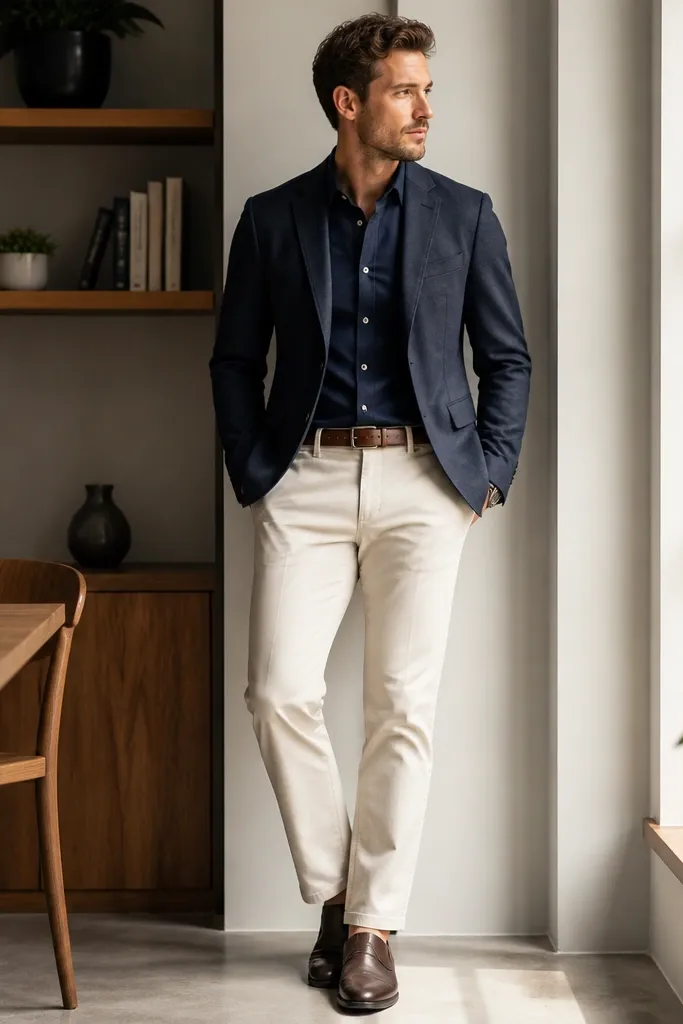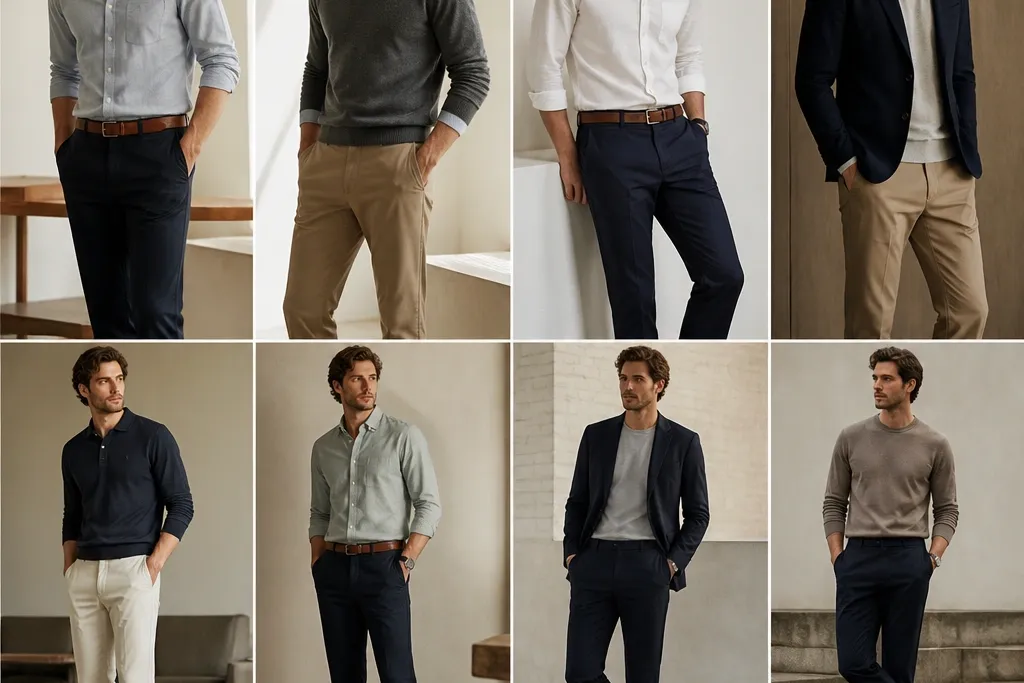
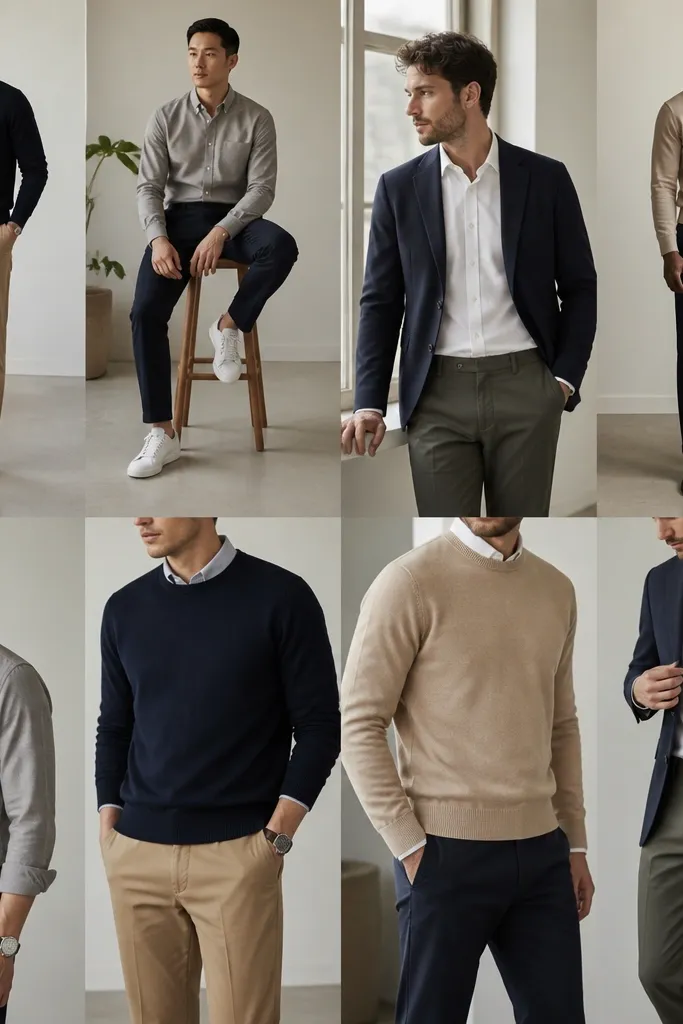
1. Navy blazer + white oxford + dark denim
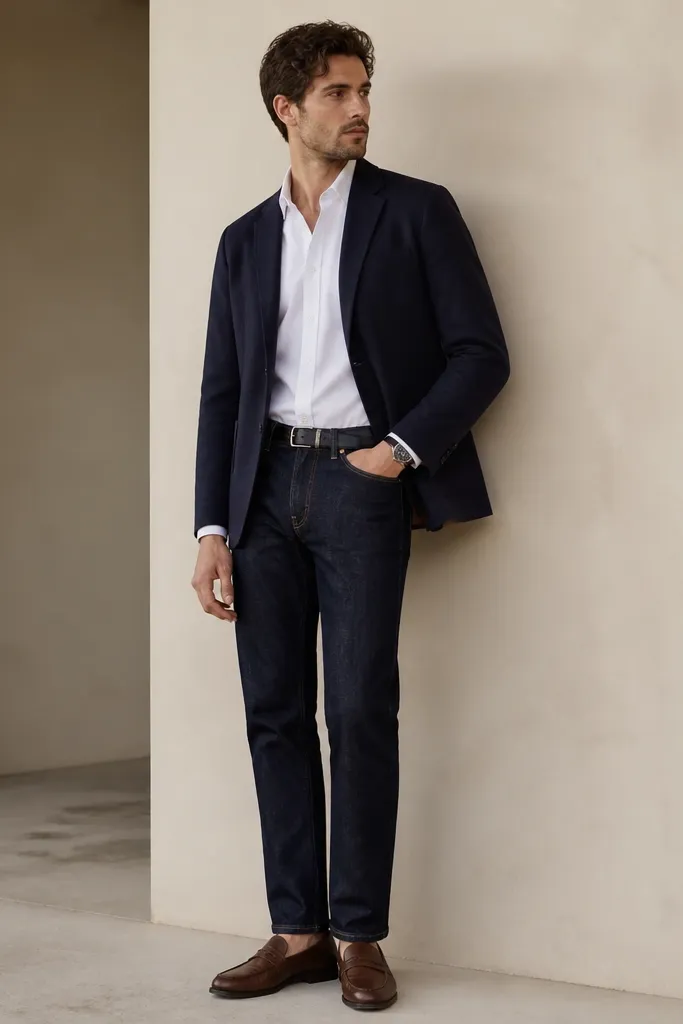
Start by wearing the white oxford tucked into dark denim, with the shirt hem reaching your belt line. Add the navy blazer unbuttoned so the front drapes and you get a smoother silhouette. Choose denim with a straight or slim-straight cut and a dark rinse that doesn’t have fading around the knees. Finish with brown loafers and match your belt to the shoe — not to the blazer. If you want it cleaner, roll no sleeves; let the cuff sit flat at the wrist.
I repeat this because it works in almost every office dress code I’ve dealt with. The navy blazer reads business without needing a tie, and the white oxford stays sharp under fluorescent lights. Dark denim is the cheat code here: it looks like trousers from a distance, especially when the wash is deep and even. If you’re heavier through the middle, choose a blazer that closes cleanly without pulling at the button; unstructured styles drape better and don’t fight your torso. For lighter skin tones, white button-ups brighten your face, while the navy keeps it grounded.
AvoidAvoid light-wash denim or distressed knees; that’s where the outfit starts looking like weekend clothes.
Try thisPress the shirt collar flat before work and keep the blazer dry-cleaned or steamed — wrinkles show fast on navy.
2. Charcoal crewneck sweater + chambray button-up
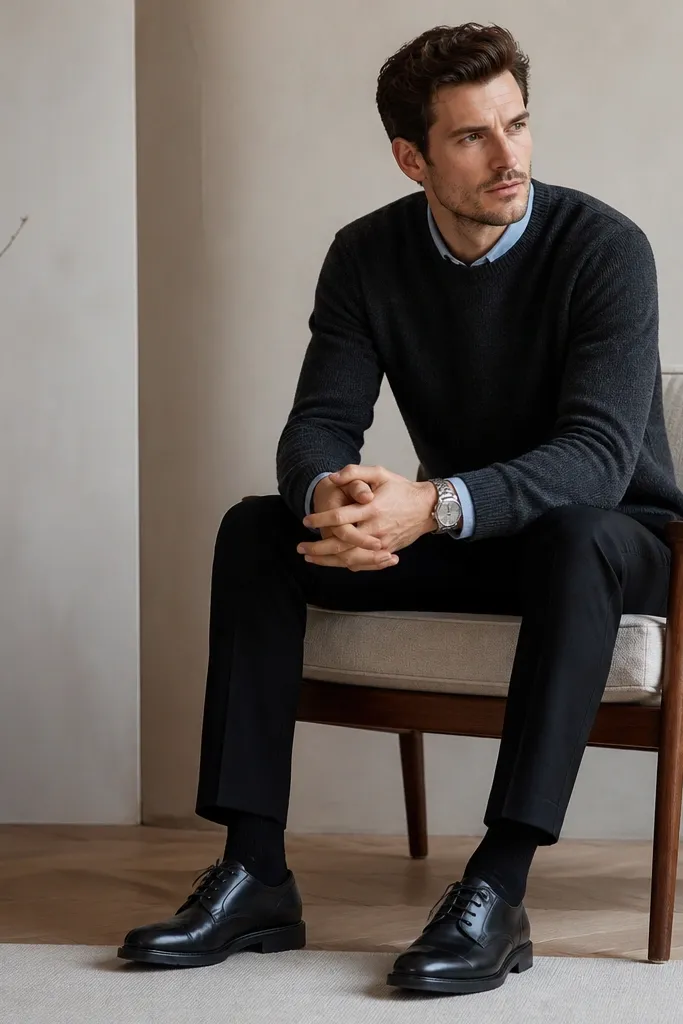
Start by buttoning the chambray all the way and tucking it into your trousers. Layer the charcoal crewneck over it, leaving the chambray collar visible and centered. Choose black or charcoal trousers with a clean front — no heavy texture. Wear black leather shoes (oxfords or derby) so the outfit stays grounded. Keep accessories simple: one watch and a belt that matches the shoe color.
This is my go-to for “business casual but not too formal” days. The charcoal crewneck gives structure, and the chambray underlayer adds color that doesn’t scream. I like it on people with narrower shoulders because the crewneck frames the neck and shoulders without adding bulk. If you’ve got a stockier build, this works when the sweater isn’t tight in the midsection — aim for a relaxed fit with no bunching at the hem. Chambray is softer than crisp poplin, so it looks lived-in but still put-together.
AvoidAvoid sweaters that are too short — if the hem rides up, the whole look turns sloppy.
Try thisUse a lint roller on the sweater before you leave; crewnecks collect fuzz fast in office air.
3. Olive overshirt + striped tee + black chinos
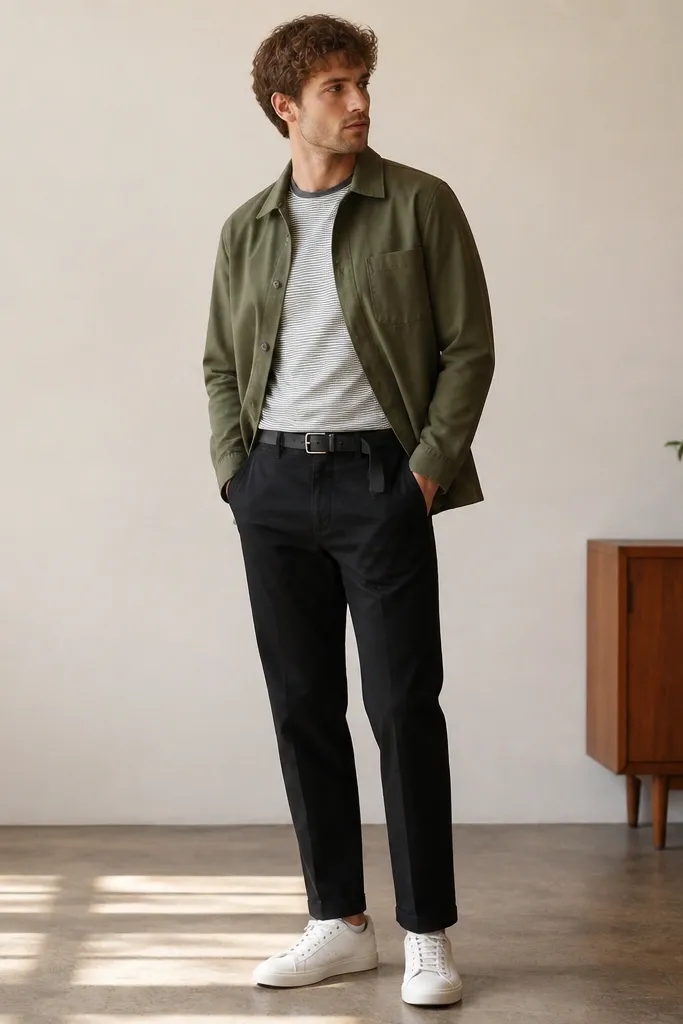
This one is for days when you want business casual but you’re tired of button-ups. The olive overshirt gives you a tailored layer, and the striped tee adds personality without going loud. Black chinos keep it from looking too casual, especially with a straight or tapered leg. I like this on medium to darker skin tones because olive flatters warmth and the stripes add contrast around the face. If you’re tall, the overshirt length helps cover your waistband and keeps proportions right.
Start by tucking the striped tee into black chinos — not fully tucked if the tee is thick, but snug and clean. Wear the olive overshirt open with the front panels sitting flat around your hips. Choose chinos with a matte finish and a slight taper so the outfit looks sharp. Put on white low-top sneakers with minimal branding, and keep the socks no-show or very low. Add a simple leather watch strap if you want it to read more office-ready.
Iron the overshirt seams; the crisp edges are what makes this feel “work” instead of “camp.”
Avoid oversized tees and overshirts that swallow your frame; the vibe goes baggy fast.
4. Light blue oxford + tan chinos + cognac belt
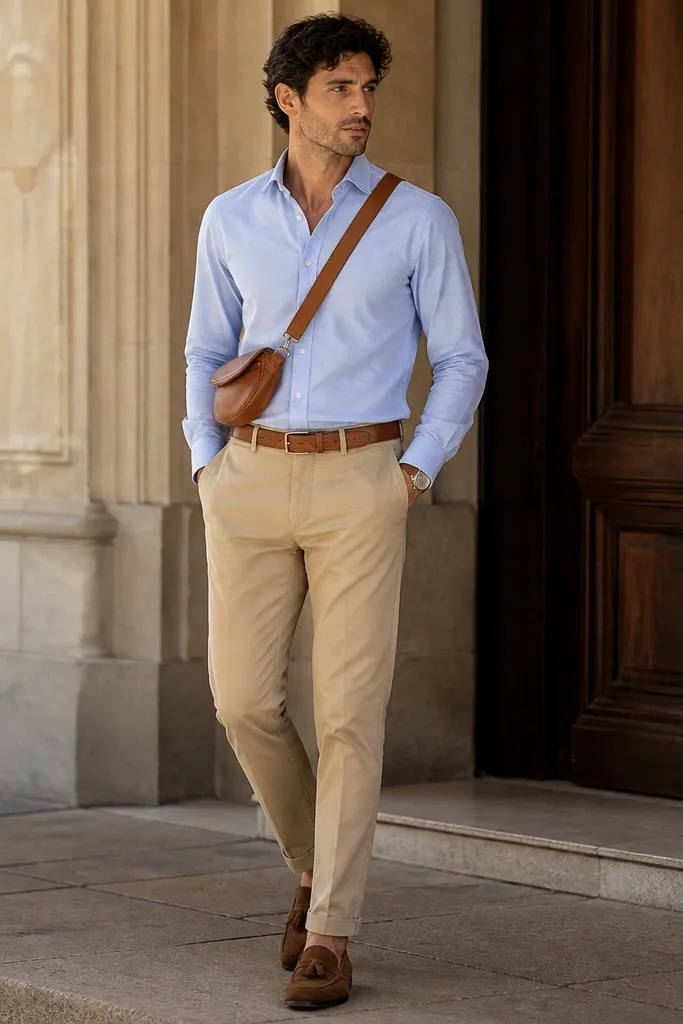
Start by choosing a light blue oxford with a stiff collar and a slim cuff. Tuck it into tan chinos and keep the shirt hem at the belt line — use a half-tuck if you hate bulky fabric. Roll the sleeves once only if your office allows it; otherwise leave them flat. Wear cognac or medium-brown suede loafers and match your belt to that shade. Add a simple dark watch dial so the face doesn’t compete with the shirt.
This is the outfit I wear when the office is warmer and people start wearing lighter colors. Light blue oxford looks clean and friendly, and tan chinos add a summer feel without turning into vacation clothes. Cognac accessories pull the whole thing together — belt, shoes, and any small leather item. If you’re fair-skinned, tan can pull you washed out, so pick a mid-tone chino (not pale khaki) and keep the shirt crisp. For darker skin tones, the light blue pops hard and makes you look sharp in photos.
AvoidAvoid overly wrinkled oxford fabric; tan makes wrinkles stand out.
Try thisPick chinos with a flat front and a slight taper; it keeps the tan from looking like uniform khakis.
5. White knit polo + navy chinos + leather driving loafers
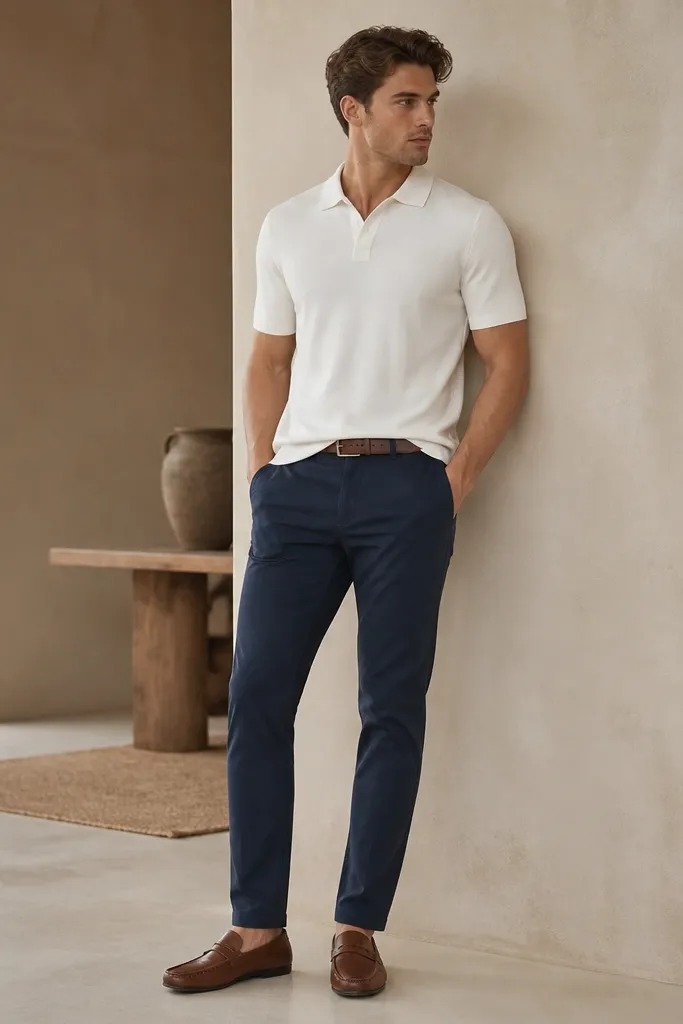
Start by picking a knit polo that fits the shoulders — the collar should sit flat, not fold. Wear it tucked in for a sharper look, or slightly untucked if the fabric is structured and the hem lands at the waistband. Choose navy chinos in a matte cotton twill. Add brown leather driving loafers and match your belt to the shoe. Keep colors limited: polo white, chinos navy, accessories brown.
A knit polo is the fastest way I know to look polished without buttons and a tie. White feels crisp, and the knit fabric makes it look intentional even if you’re not wearing a blazer. Navy chinos give you the business line, while keeping it comfortable. This works especially well for lean builds because it adds some softness around the torso without clinging. For guys with a bit of belly, choose a polo that has enough room in the midsection and doesn’t flare at the hem.
AvoidAvoid polos with shiny fabric or thick stripes; those read casual fast.
Try thisWash and dry polos the same way every time; shrinkage changes the drape and can make the collar curl.
6. Black bomber + check button-up + gray trousers
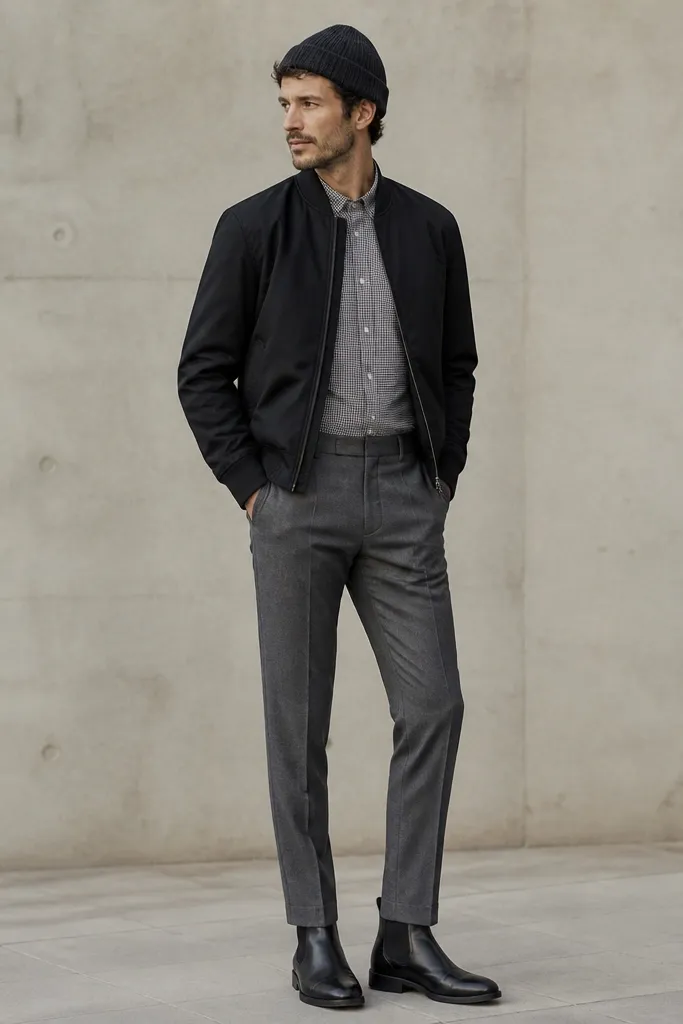
Start by buttoning the check shirt and tucking it into gray trousers. Wear the bomber zipped only partway so the shirt front stays visible. Choose trousers with a smooth finish and a straight leg, not jogger-style. Wear black leather boots or derby shoes so the outfit stays business casual, not streetwear. Add a belt that matches the shoe hardware and keep the watch strap dark.
This is my “office cool” outfit for people who don’t want a blazer every day. A matte black bomber adds modern shape, and the check button-up brings texture without yelling. Gray trousers make the whole thing feel intentional, because they balance the darkness of the jacket. If you have broad shoulders, the bomber’s slight taper keeps things tidy; choose one that isn’t too bulky in the chest. If you’re on the fair side, the gray trousers keep your face from getting washed out by the black.
AvoidAvoid shiny bomber fabric; it makes the outfit look like it belongs to a different dress code.
Try thisPick checks that are small scale — wide checks can start looking like flannel weekend wear.
7. Navy turtleneck + camel overcoat + dark jeans
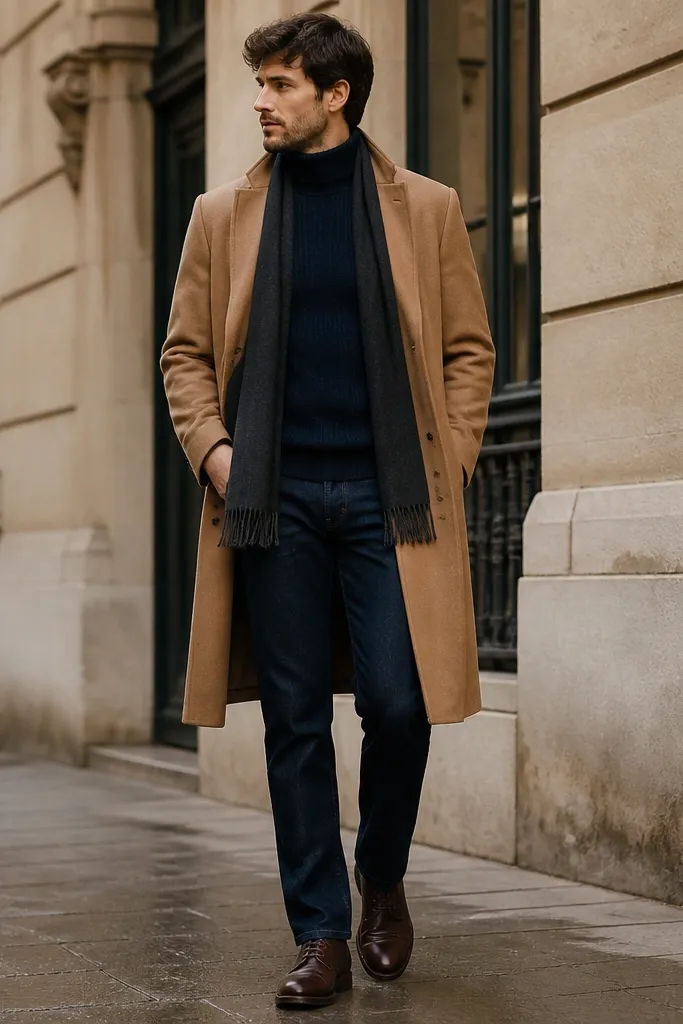
Start with dark jeans that have minimal fading and a straight or slim-straight cut. Layer the navy turtleneck underneath and keep it smooth at the waist — no bunching. Wear the camel overcoat unbuttoned and let it fall cleanly without pulling at the shoulders. Choose dark brown leather shoes and a matching belt if the jeans have a visible belt line. Add a thin scarf in charcoal or deep navy, not bright colors.
Cold-weather business casual is where people usually mess up, and this combo fixes it. The navy turtleneck gives a clean neck line and eliminates the “what shirt should I wear?” problem. The camel overcoat adds color warmth without looking flashy, and dark jeans keep it grounded. This is great for medium and taller guys because the vertical lines of the turtleneck and coat length help your proportions. If you’re more compact, choose a shorter overcoat that hits above the knee so you don’t swallow your frame.
AvoidAvoid overcoats with huge shoulder padding; they make the whole outfit look costume-like.
Try thisSteam the turtleneck before you leave; ribbing looks messy when it’s crushed.
8. Tan blazer + white tee + navy chinos
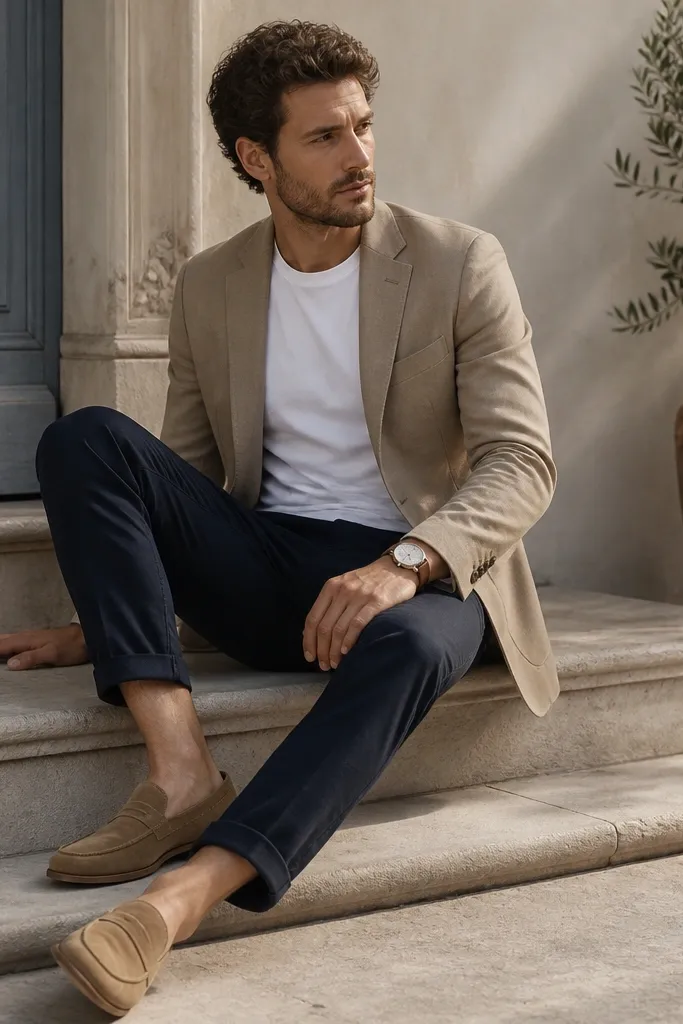
Start with a white crew tee that fits your shoulders and doesn’t cling. Wear it tucked into navy chinos with a clean waistband line. Add the tan blazer unbuttoned so it drapes naturally and you avoid pulling at the midsection. Choose tan suede loafers or suede derby shoes to match the blazer tone. Keep the belt in the same family as the shoes, and skip extra accessories so the outfit stays crisp.
This is the easiest “budget business casual outfits men” formula for spring and early fall. A tan blazer reads warm and professional, and the white tee keeps it relaxed without looking sloppy. Navy chinos keep the color pairing sharp and make the outfit look intentional instead of random. I wear this when I know I’ll be moving around because it’s comfortable but still structured. It flatters most builds as long as the blazer isn’t too boxy — you want the shoulders to sit cleanly.
AvoidAvoid distressed chinos or visible fading — tan and white will highlight it.
Try thisUse a slightly thicker tee fabric; thin jersey makes tan blazers look cheap fast.
9. Gray flannel overshirt + black trousers + white sneakers
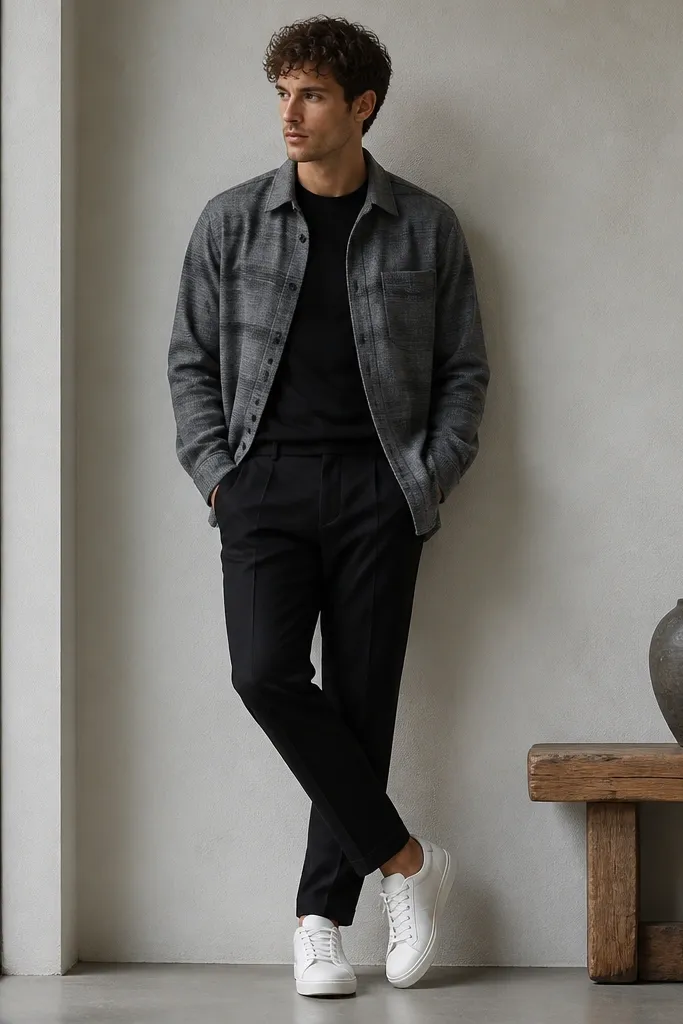
Start with a black crew tee tucked into black trousers. Layer the gray flannel overshirt open, letting the hem fall at the upper hip. Choose trousers with a smooth finish and no heavy stretch — stretch can look too casual. Wear white sneakers that are low-profile and clean, with no chunky soles. Add a black belt if the trousers show the waistband, and keep watch metal simple.
Flannel overshirts get overlooked because people assume they’re only for weekends. Put it over black trousers and a plain tee, and suddenly it looks like a thoughtful business casual uniform. The gray flannel adds texture that catches light nicely, while the black trousers keep the silhouette formal enough for office days. This works for guys who hate button-ups but still want to look put together. If you have a lean frame, the overshirt adds bulk in a flattering way without looking padded.
AvoidAvoid overshirts with loud plaids or big checks; small texture is the sweet spot.
Try thisMatch the sneaker color to your belt hardware; it makes the outfit feel “designed,” not accidental.
10. Burgundy button-up + navy chinos + dark brown loafers
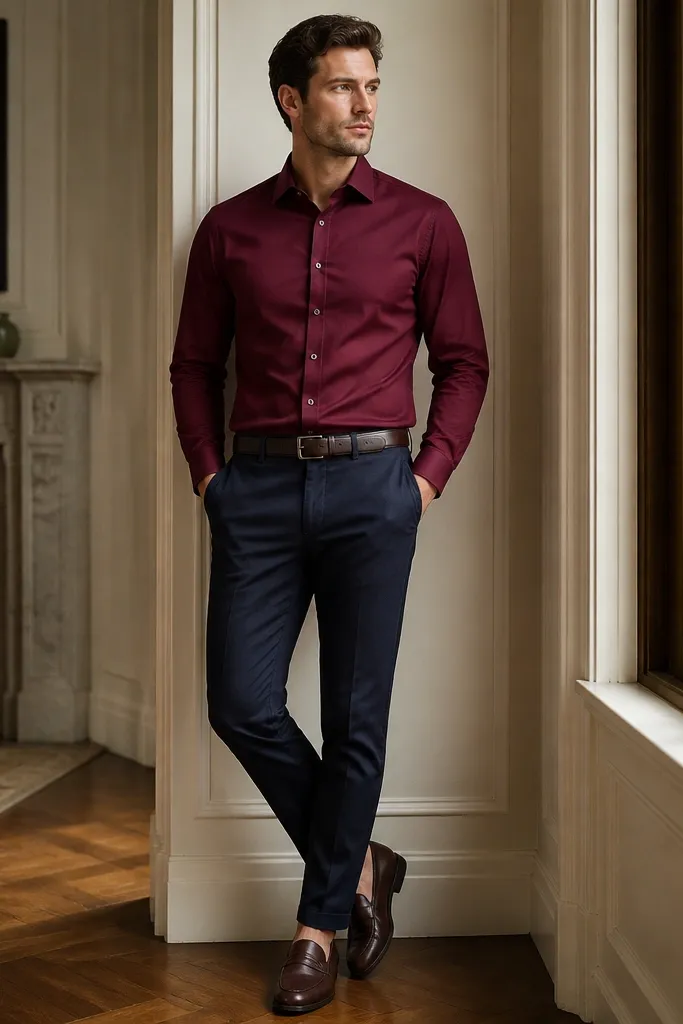
Burgundy is one of those colors that looks expensive even when the shirt isn’t. It’s deep enough to read professional, but it still adds personality compared to plain blue or white. Navy chinos keep it grounded, and dark brown loafers finish it with warmth. This looks great on medium and darker skin tones because burgundy brings out contrast in your complexion. If you’re fair, choose a slightly muted burgundy so it doesn’t clash with very pale undertones.
Start by buying a burgundy button-up in a medium-weight cotton so it doesn’t wrinkle instantly. Tuck it into navy chinos and press the collar flat. Add a belt in dark brown and wear matching loafers. Keep the chinos straight with a slight break and avoid cuffing too high. If you want extra polish, add a simple pocket square in a white or cream cotton, folded once.
If your burgundy looks too dark indoors, roll the top button down and keep the collar crisp.
Avoid burgundy shirts with heavy sheen; they look cheap under office lights.
11. White poplin shirt + black trousers + black Chelsea boots
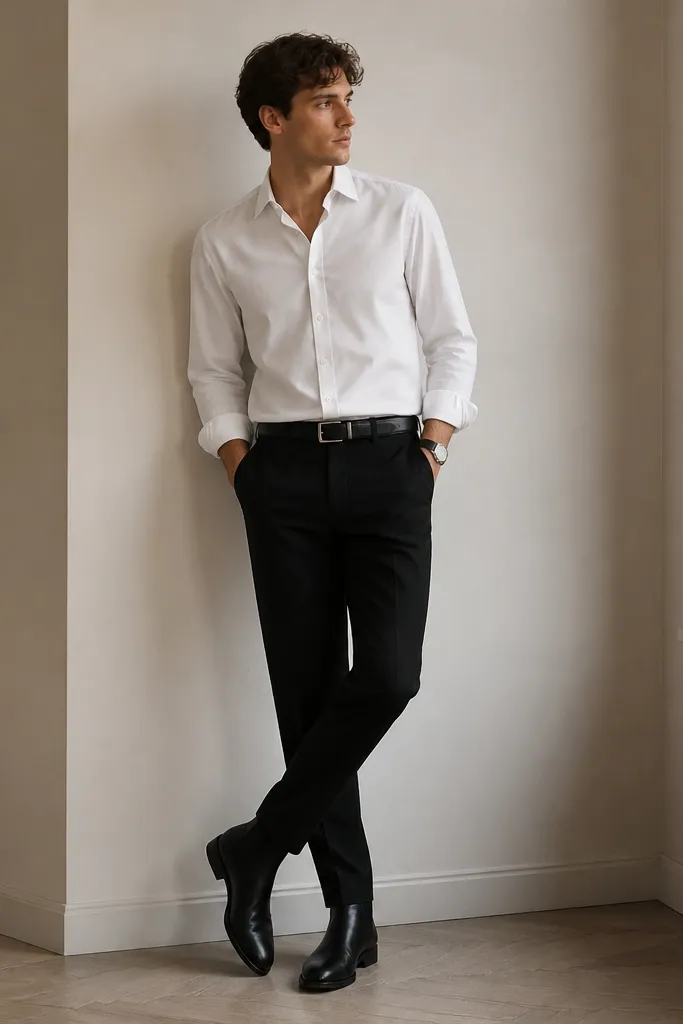
Start by tucking the shirt fully into black trousers and keep the shirt hem smooth — no twists. Button the shirt to the second button if the office is strict, or leave one undone for a softer look. Wear a black belt that matches the boots' hardware. Add black Chelsea boots and keep socks black or very dark. Steam the shirt collar and front before you leave; that’s where the “expensive” look starts.
This is a clean, repeatable outfit for interviews and serious client meetings. Poplin holds its shape better than thin cotton, so your shirt stays crisp longer. Black trousers make the outfit feel structured, and Chelsea boots add a sharp line without needing laces. If you have a slimmer build, the contrast of white and black creates a strong silhouette. If you carry more weight, choose trousers with a smooth front and enough stretch so you don’t strain the fabric at the seat.
AvoidAvoid wrinkled poplin; it turns the whole look dull fast.
Try thisUse a shirt stay or double-sided fashion tape if the shirt shifts when you sit.
12. Navy polo + light gray chinos + white leather sneakers
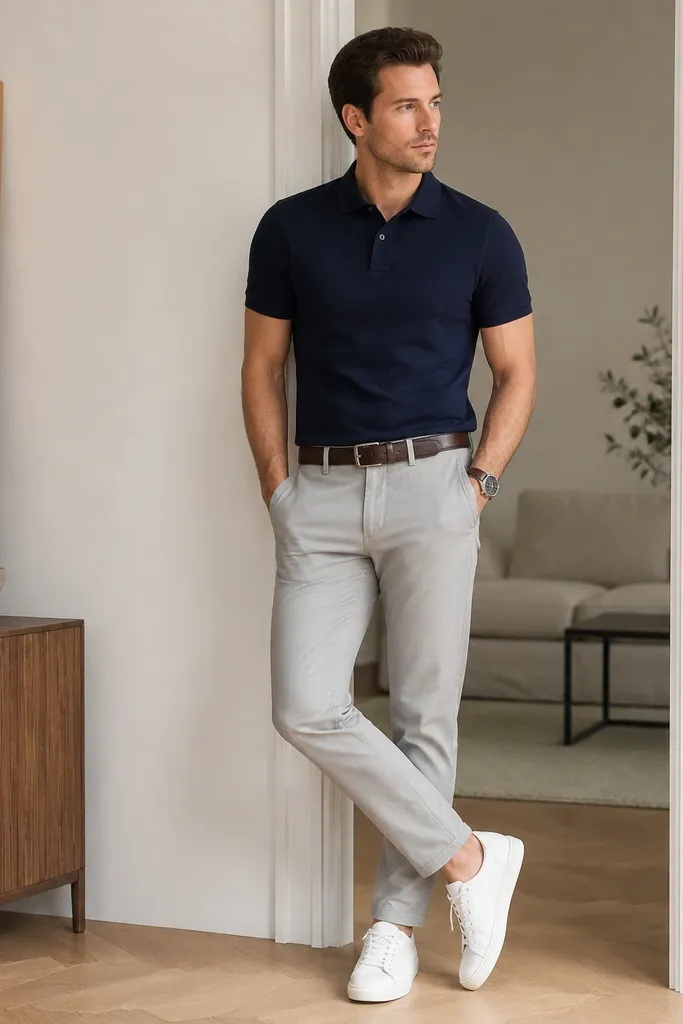
Start with a navy polo that fits the shoulders and doesn’t flare at the sleeves. Tuck it into light gray chinos for a sharp line, then pull the fabric smooth at the waist. Choose chinos with a tapered leg and a clean hem that hits just above the shoe. Wear white leather sneakers and keep laces white or matching. Add a brown or black belt depending on your sneaker hardware — keep it consistent.
This is one of my most worn “budget business casual outfits men” because it looks neat even when you’re running late. The navy polo is office-safe, and the light gray chinos make it feel brighter without going casual like shorts. White leather sneakers add comfort while still reading clean, especially if the leather is smooth and the soles aren’t yellowing. This works well for most skin tones because the navy frames your face and the gray softens the contrast. For guys with a larger frame, pick a polo with a straight cut and avoid tight ribbing around the chest.
AvoidAvoid polos with faded collars; the collar is what people notice first.
Try thisClean the sneaker edges with a damp cloth and a tiny bit of leather cleaner; scuffed toe caps ruin the vibe.
13. Patterned tie optional: navy cardigan + button-up + chinos
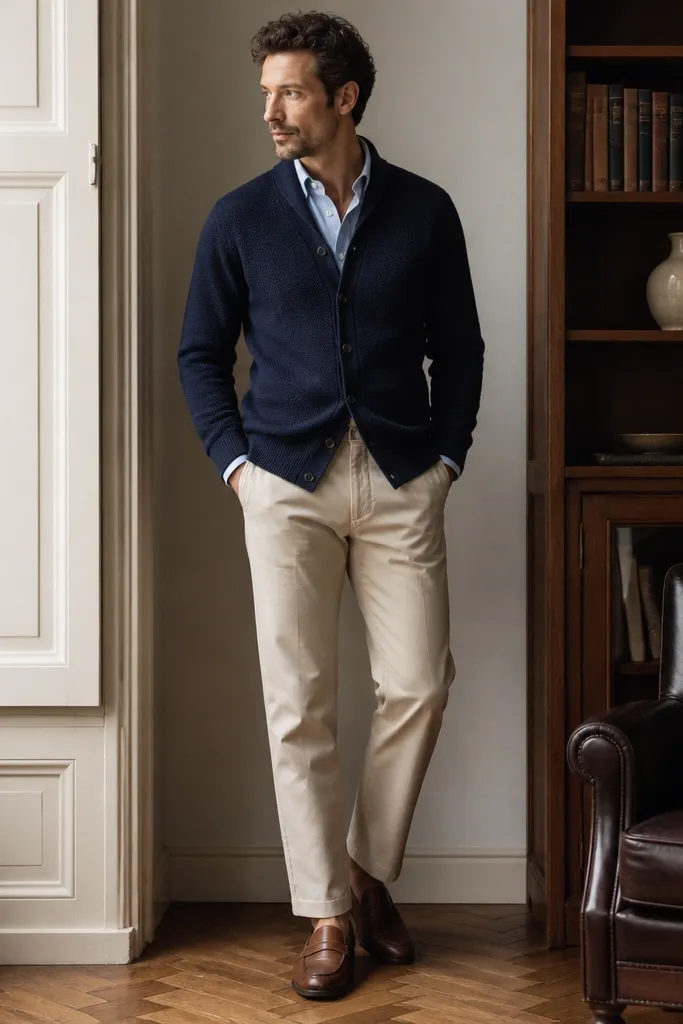
Start by choosing a cardigan that closes cleanly at the front without pulling. Wear a light blue button-up underneath and keep the collar centered. Tuck the button-up into beige chinos and smooth the front — no bunching. Add brown loafers and match your belt to the loafers. If you want extra polish, keep the cardigan length around mid-hip so it covers the waistband line.
Cardigans look old-school until you wear them the right way — and then they look like you’ve got a style system. The navy cardigan layers smoothly over a button-up, giving you structure without the bulk of a blazer. Beige or tan chinos pair well because they warm up the navy and keep the outfit from looking too dark. This works for guys with thicker arms because the cardigan fabric moves with you, and it’s forgiving around the midsection. If you’re fair-skinned, the light blue collar under the cardigan adds a bright frame without harsh contrast.
AvoidAvoid cardigans that are too long; they can shorten your legs and make you look boxy.
Try thisUse a simple pocket watch or a thin watch strap; metal details look better with knits.
14. Black overshirt + cream shirt + charcoal trousers
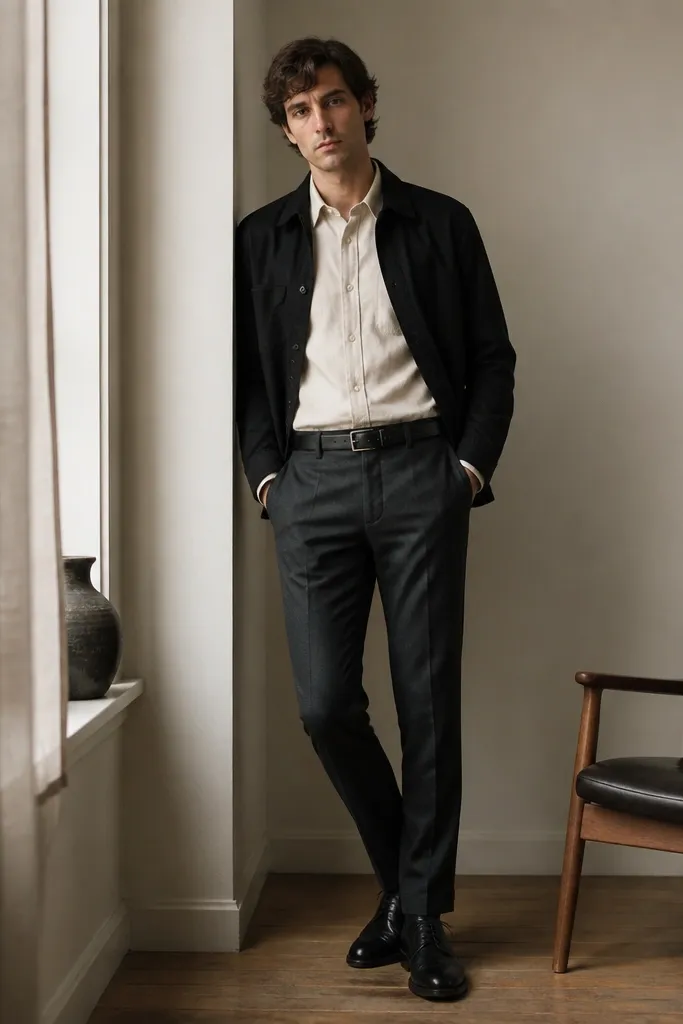
Start by tucking the cream shirt into charcoal trousers. Wear the black overshirt open and let the shirt collar peek out evenly. Choose trousers with a straight or slight tapered leg and a break that sits cleanly on the shoe. Wear black leather derby shoes and keep socks dark. Add a belt that matches the overshirt hardware and keep the watch minimal.
This outfit works when your office dress code is casual on paper but strict in photos. The black overshirt gives you that “layered” look, and the cream shirt brightens your face. Charcoal trousers keep it business, especially if the fabric has a matte finish. I like it on guys with medium builds because the contrast draws the eye toward the center without clinging. If you have darker skin, cream looks clean and doesn’t wash you out — it just makes the outfit feel crisp.
AvoidAvoid cream shirts with yellowing — under office lights it reads dirty instantly.
Try thisRoll the overshirt sleeves once if your office allows it; the cuff detail makes the look feel intentional.
15. Sand chinos + navy blazer + striped shirt
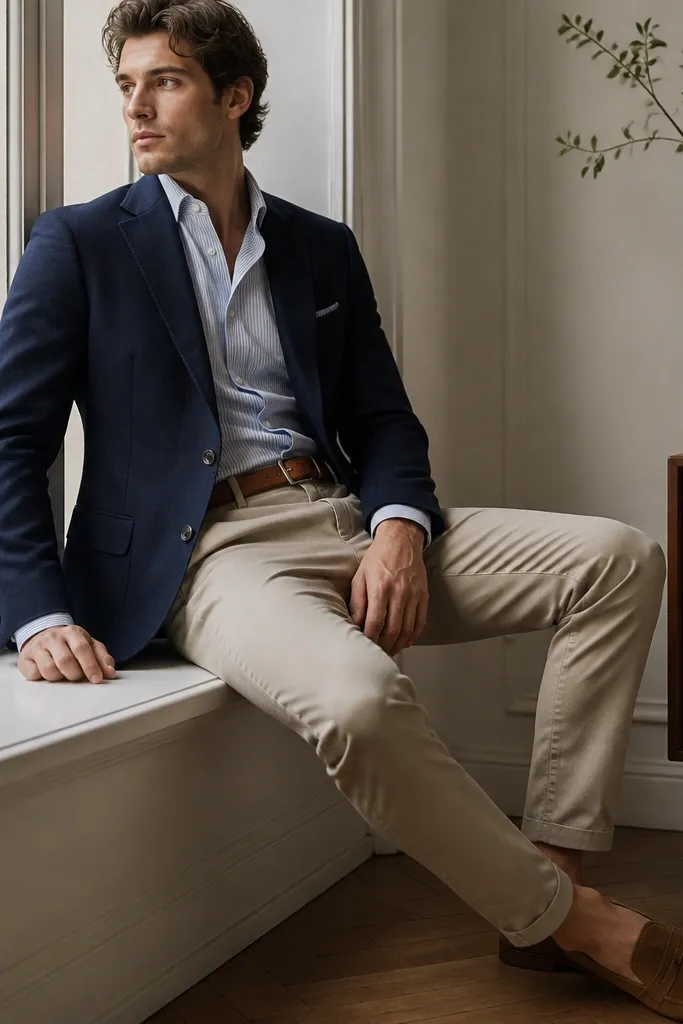
This is my go-to for “we’re meeting someone new” situations because it looks friendly but still professional. The navy blazer anchors the outfit, and the striped shirt adds movement without making it too casual. Sand chinos keep the color palette warm, which matters in offices that run cold and gray. It flatters most body types when the blazer isn’t too oversized; the striped shirt adds visual interest around the shoulders. If you’re tall, the sand color can make you look broader, so keep the stripes narrow and the blazer shoulder fit clean.
Start with a navy blazer that fits your shoulders, then wear it unbuttoned. Put a thin blue-and-white striped shirt under it and leave the shirt collar sitting flat. Tuck the shirt into sand chinos and keep the hem smooth at the belt line. Wear brown suede loafers and match the belt to the shoes. Keep the rest simple: no extra patterns, and let the stripes do the work.
Choose stripes that are narrow and evenly spaced; chunky stripes look too casual with a blazer.
Avoid sand chinos that are too pale; they can look like khaki uniform pants.
16. Gray flannel trousers + white tee + dark chore jacket
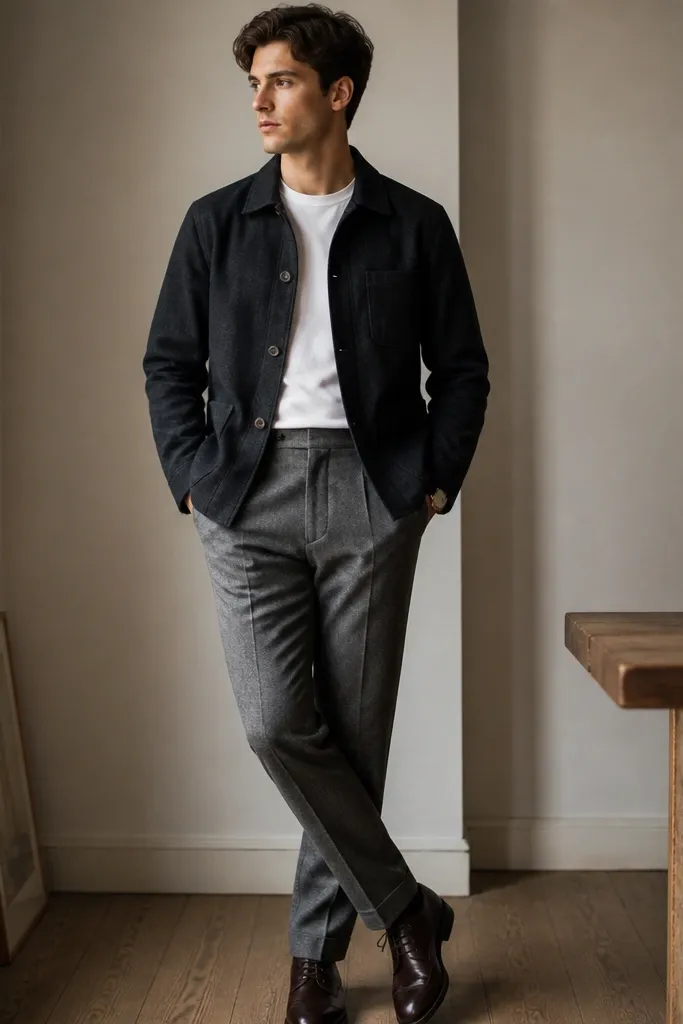
Start with gray flannel trousers with a straight leg and a slight break on the shoe. Wear a white crew tee tucked in — keep it tight enough that it doesn’t bunch. Layer the dark charcoal chore jacket over it, leaving the jacket hem covering the waistband. Choose dark brown lace-up shoes and match the belt. Make sure the jacket shoulders fit — if they sag, the whole outfit looks sloppy.
This is for the days you want comfort but still want the “business” look. A chore jacket has structure like a workwear layer, but in dark charcoal it reads more office-ready than a casual jacket. Pair it with gray flannel trousers and a white tee, and you get contrast that looks intentional in daylight. This works especially well for guys who carry weight through the hips because the chore jacket can cover without clinging. For fair skin, gray flannel adds softness and the white tee brightens the face.
AvoidAvoid chore jackets with large patches or heavy distress; those read too casual.
Try thisUse a fabric brush on the flannel trousers — it makes the texture look cleaner.
17. Navy satin-feel shirt + black slacks + loafers
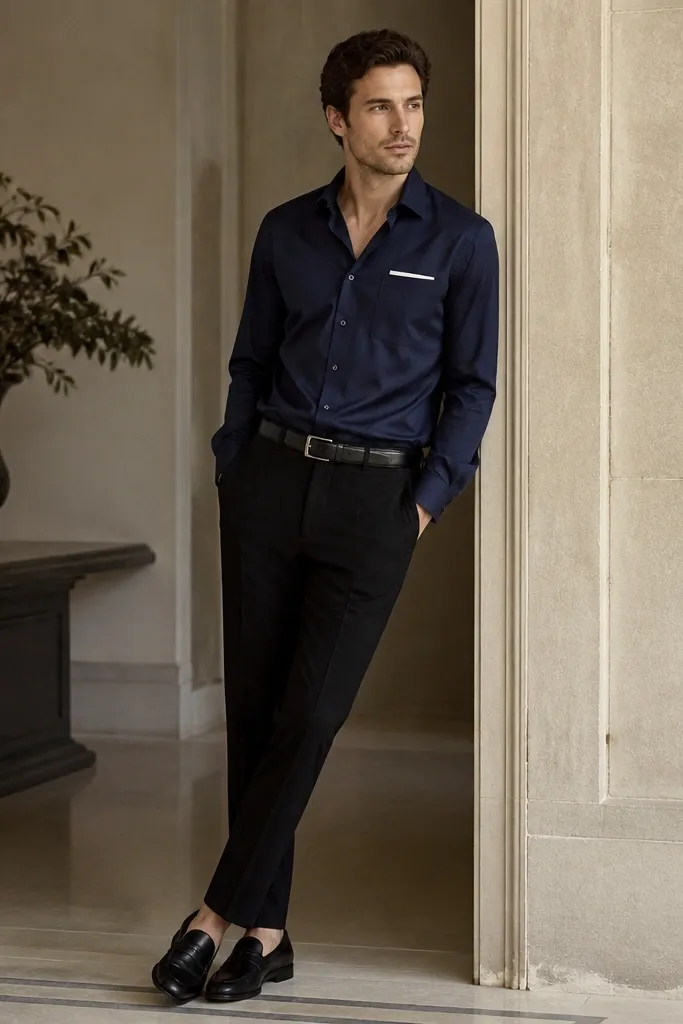
Start with black slacks that have a smooth front and no heavy pattern. Tuck the navy shirt in fully and use a belt that matches the loafers. Add loafers in black leather or dark espresso, not a bright brown. If you use a pocket square, keep it white cotton and fold it once. Button the shirt to the second button for a business look, or one button undone if your office is casual.
A shirt with a subtle sheen can make budget outfits look like you spent more, because it reflects light evenly. I keep it controlled: navy only, no wild prints. Black slacks keep the outfit formal enough for dinners and presentations, while loafers make it comfortable for long days. This works great for men who want to look sharper without a blazer. If your skin tone is warm, navy complements it and the sheen doesn’t look harsh; if your skin tone is cool, navy still reads clean and modern. Keep the shirt fit snug at the shoulders and straight through the torso.
AvoidAvoid very shiny shirts that look like party satin; keep the sheen subtle.
Try thisHang the shirt after washing; satin-feel fabrics wrinkle differently and look worse when creased.
18. Burgundy knit vest + white shirt + dark trousers
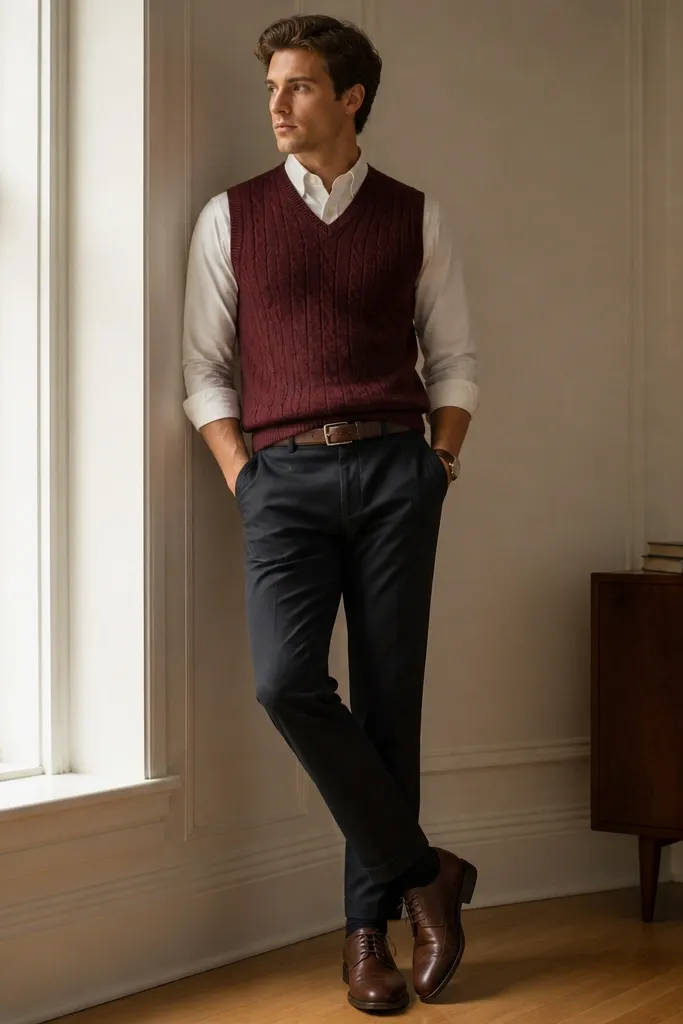
This is one of my favorite “budget business casual outfits men” moves because a vest adds shape instantly. Burgundy gives warmth and depth, while the white shirt keeps it bright and professional. Dark trousers make the outfit look grown-up, especially when the vest is fitted in the chest and doesn’t gap at the buttons. This flatters men who want a defined waist — it creates a line from shoulders to belt. If you’re lean, a knit vest adds texture and visual weight without looking bulky.
Start by wearing a white button-up tucked into dark trousers. Put on the burgundy knit vest and button it so the front looks smooth. Choose trousers in charcoal or deep navy with a matte finish. Wear brown leather shoes and match your belt to the shoe color. Keep accessories minimal — one watch and a simple ring if you wear one.
Choose a vest with a slightly higher armhole; it prevents bunching under the arms.
Avoid vests that are too long; they can make you look shorter and heavier.
19. Olive chinos + navy sweater jacket + white sneakers
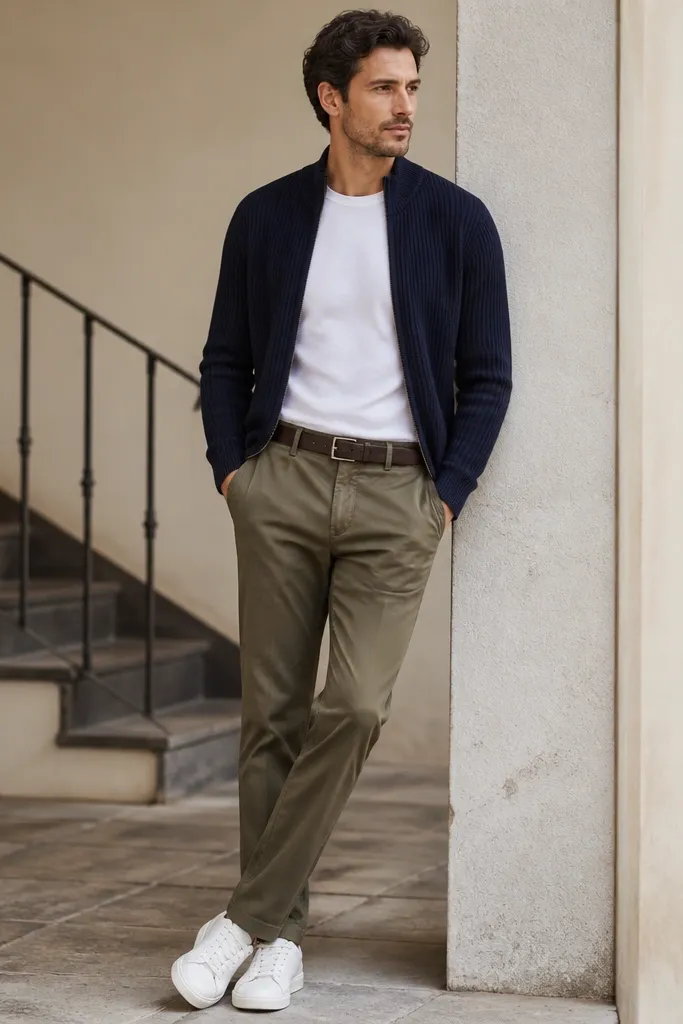
When business casual gets cold, this combo looks right without feeling like you’re dressing up too much. Olive chinos are more interesting than khaki, and navy sweater jackets add a tailored feel through the knit structure. The white tee keeps the center bright and makes the outfit feel balanced. This works well for people with medium builds because the sweater jacket drapes instead of clinging. For darker skin tones, olive and navy look especially sharp and don’t wash you out like lighter neutrals can.
Start by wearing a white crew tee tucked into olive chinos. Add the navy sweater jacket open, making sure the front edges lie flat around your torso. Choose chinos with a straight fit and an ankle hem that doesn’t bunch. Wear white sneakers with clean uppers and no heavy texture. Finish with a dark belt and a watch with a dark strap so the outfit stays cohesive.
If your sweater jacket sheds, lint-roll it before leaving — knit fuzz shows on white sneakers.
Avoid olive chinos with a super warm yellow cast; it clashes with navy in office lighting.
20. Cream overshirt + black polo + charcoal jeans
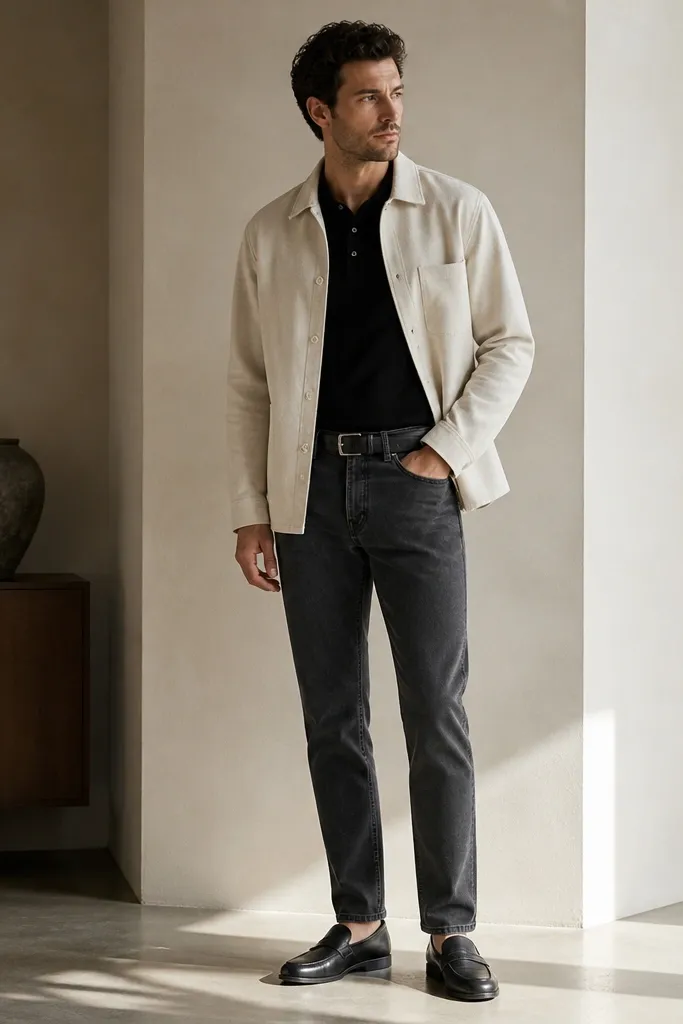
Start by choosing a black polo with a collar that lies flat and a hem that doesn’t ride up. Tuck it into charcoal jeans and smooth the front. Wear the cream overshirt open so the polo stays visible, letting the overshirt hem hit around mid-hip. Choose black loafers or derby shoes and match your belt to the shoe. Keep the look monochrome at the bottom: charcoal jeans and black footwear.
This is my “sleek casual” option for days when the office feels relaxed but you still need to look presentable. The cream overshirt adds softness and lightness, while the black polo keeps the contrast strong and professional. Charcoal jeans are the secret here — they read like trousers and hide scuffs better than lighter denim. This flatters guys who want to look cleaner without a blazer because the overshirt gives you that layered structure. If you have a narrower frame, the cream top adds width around the shoulders in a good way.
AvoidAvoid slim jeans that are too tight in the thigh; they wrinkle at the knee and look cheap.
Try thisSpot-clean the cream overshirt before work; small marks show fast on light fabric.