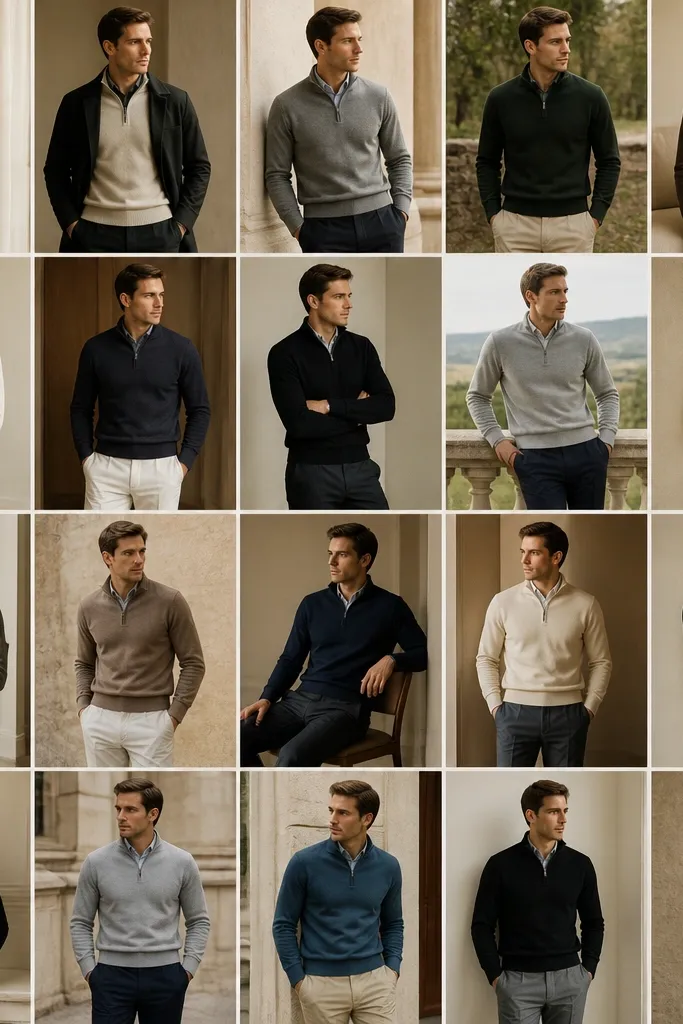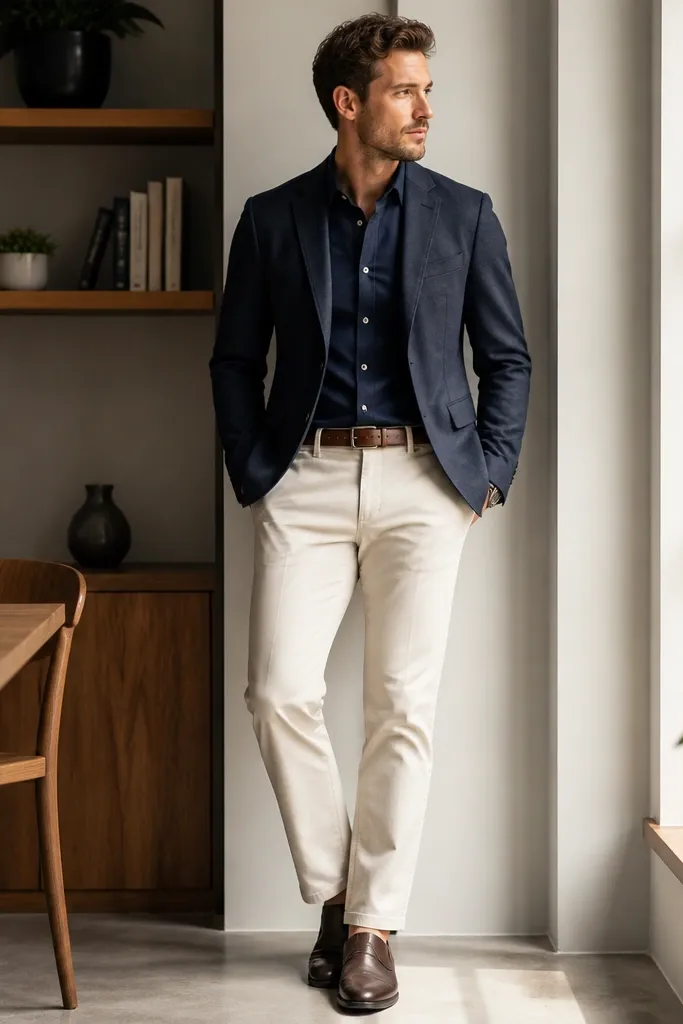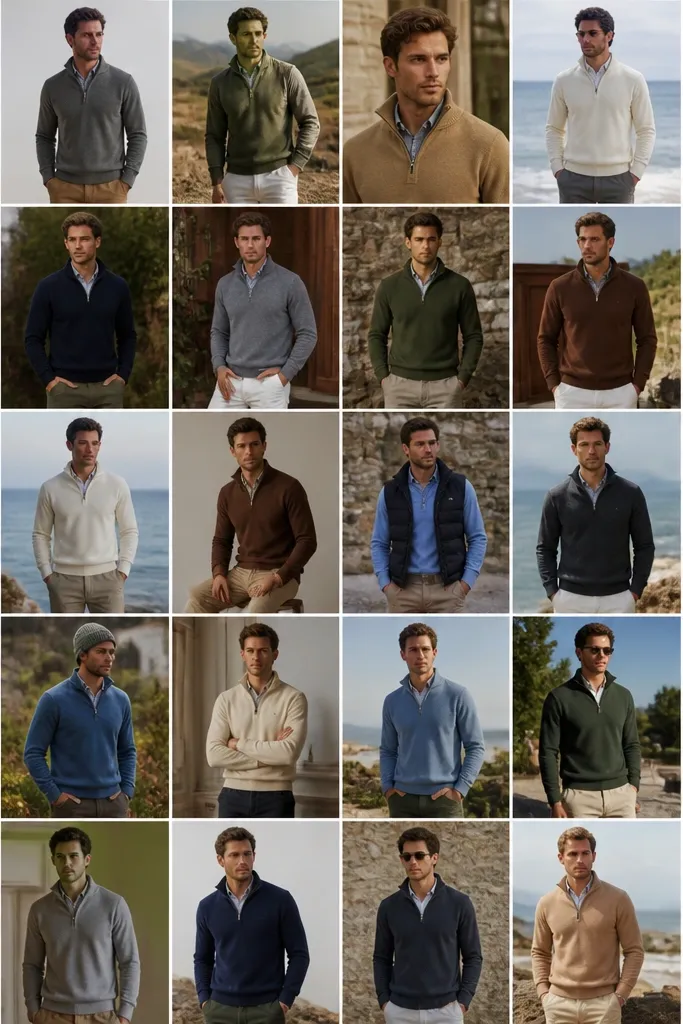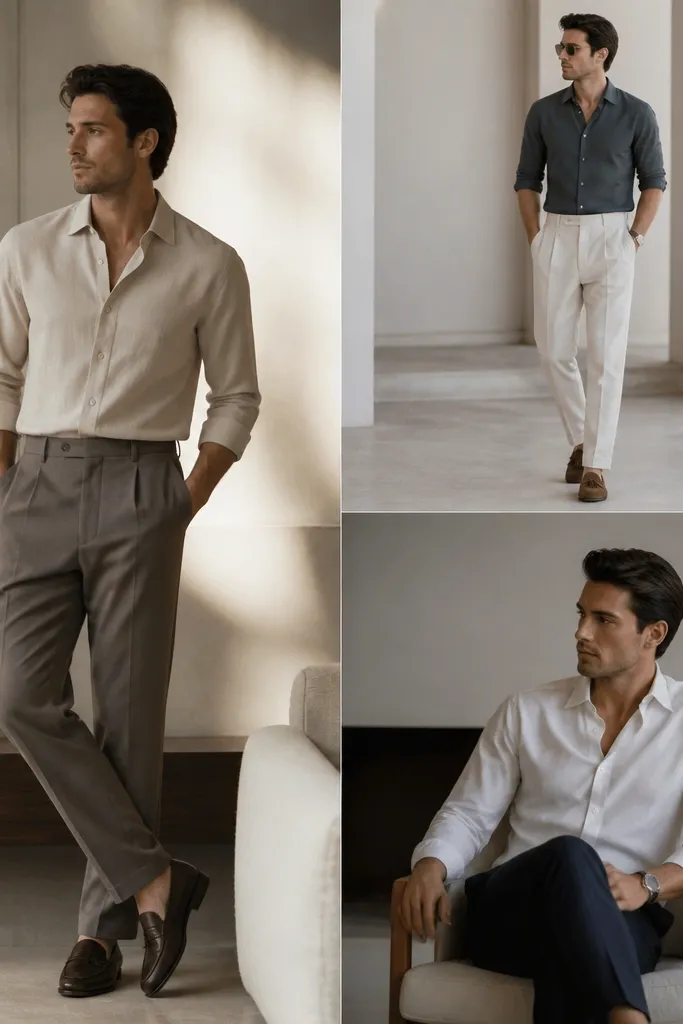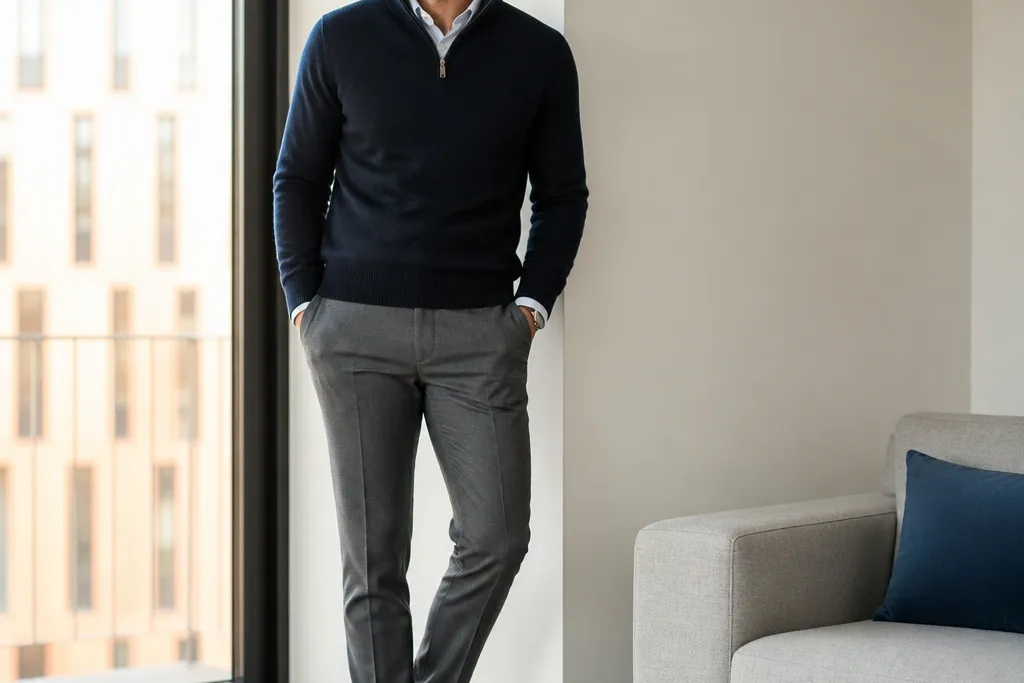
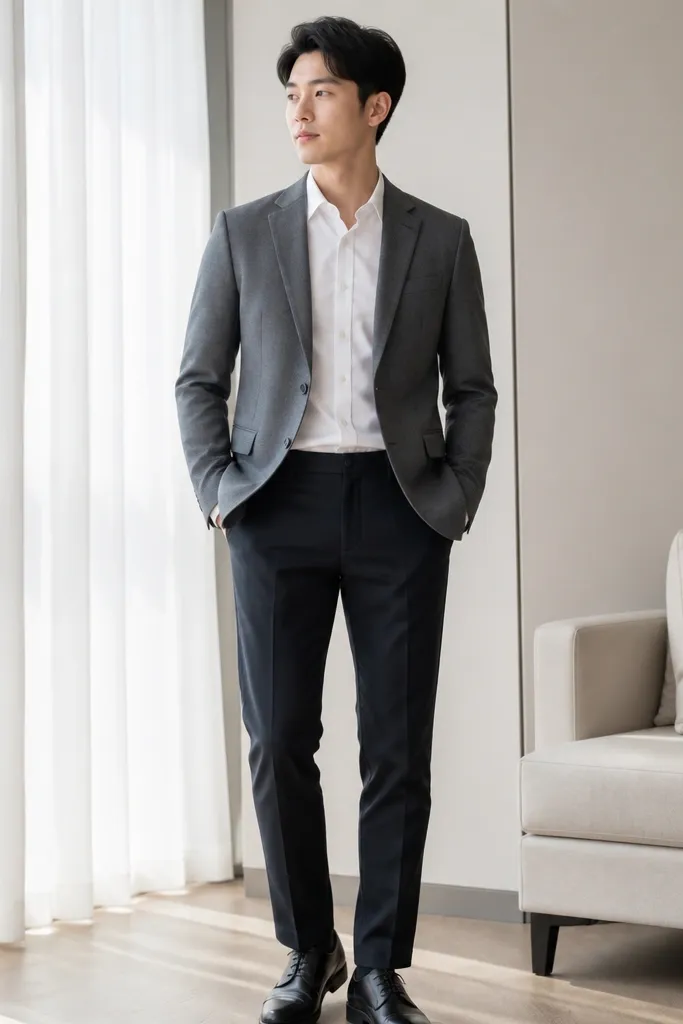
1. Navy unstructured blazer + knit polo + pleated-front chinos
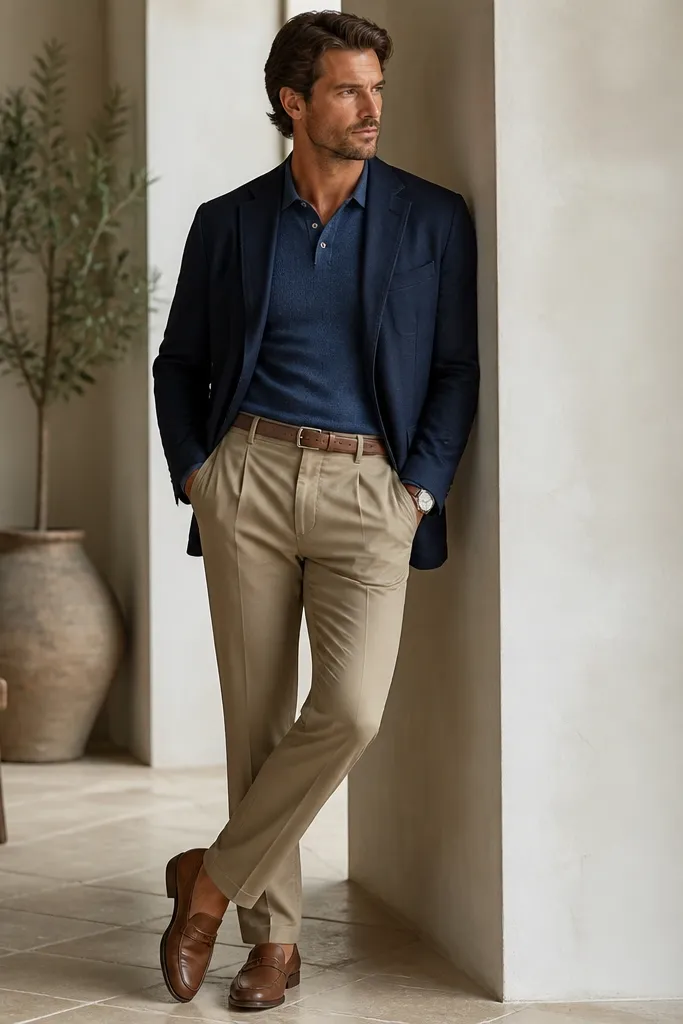
This look works because the blazer gives you shape without punishing you for wrinkles. I like an unstructured navy blazer in a textured weave (think cotton-linen or a cotton blend) because it doesn’t crease as sharply as a stiff, full-canvas jacket. The knit polo underneath keeps the collar from looking flat and cheap, and it hides sweat better than a thin dress shirt. Medium khaki chinos with a mild pleat drape cleanly and look intentional even if your apartment storage is messy. This combo flatters most builds — the blazer adds width at the shoulders, and the pleat gives the seat some room without making the legs baggy.
Start by laying your outfit around the blazer: choose a navy blazer that fits close at the shoulders and lets you move your arms without pulling. Add a knit polo in heather navy or deep teal, then tuck it fully and smooth the front — no bunching at the waist. Pick chinos in khaki or stone with a slightly tapered leg; aim for a break that lands around the top third of your shoe. Finish with brown loafers or derbies and a tan or cognac belt to tie the warm tones together. If you’re renting and can’t steam, wear the blazer open on arrival and close it only for calls.
If your polo collar rolls, swap to a polo with a collar that has a firmer edge or add a quick collar stay before work.
Don’t pair a shiny blazer fabric with a thin, see-through polo — it looks tired by lunch.
2. Charcoal button-down + grey ponte trousers + leather loafers
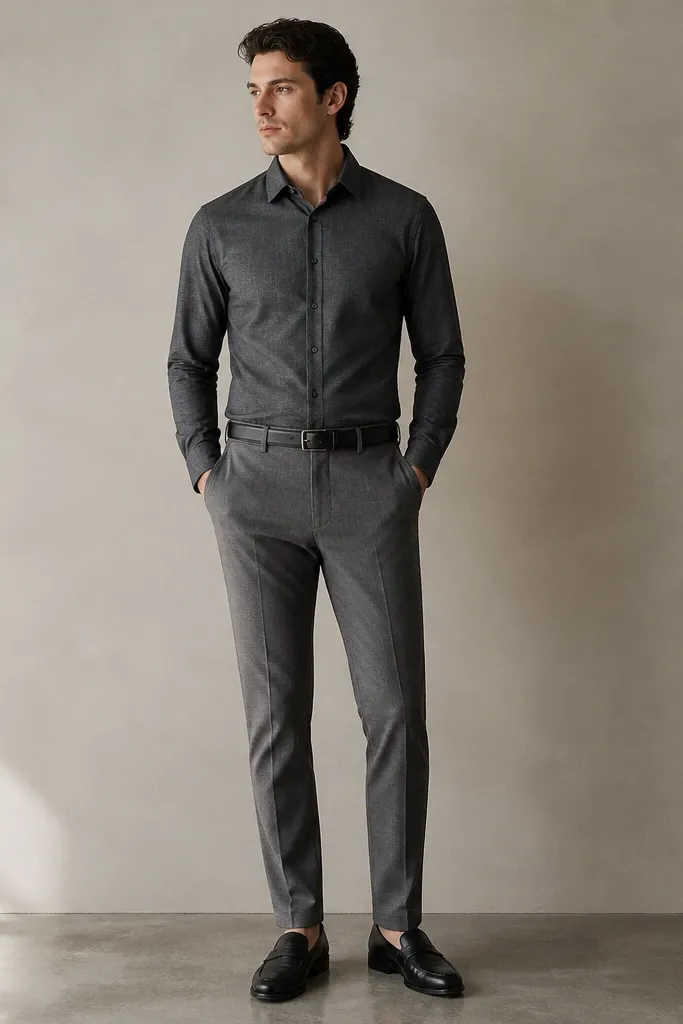
This is the “I have meetings all day” outfit. Charcoal button-downs look sharp without the starkness of white, and they hide minor wrinkles better than light colors. Ponte trousers are the secret for renters — the fabric bounces back, so you don’t get the same crease lines you see on lightweight cotton chinos. Grey works with almost every office palette, and it keeps your look from tipping into “dark and gloomy” like black-on-black can. It’s also forgiving if you sit a lot; ponte tends to recover and doesn’t go shiny at the knees the way some synthetics do. For most body types, the slight stretch makes the waist and seat look smoother.
Start with the shirt fit: button the top button and check that the shoulders sit flat and the sleeves reach to the base of your thumb. Choose grey ponte trousers with a clean front and a straight-to-slightly-tapered leg; press or steam only the waistline if you can. Tuck the shirt fully, then smooth the fabric down the side seam so it doesn’t billow. Wear black or dark brown loafers and match your belt color to the shoes. Add a simple watch or a single bracelet and keep the belt hole centered at the middle of your buckle — it reads deliberate.
Carry a small fabric roller in your commuter bag; ponte shows lint more than cotton and it’s an easy fix.
Skip thin, dressy-looking charcoal shirts with super low thread count — they wrinkle fast and look cheap by midweek.
3. Olive field jacket + Oxford button-down + dark denim (clean wash)
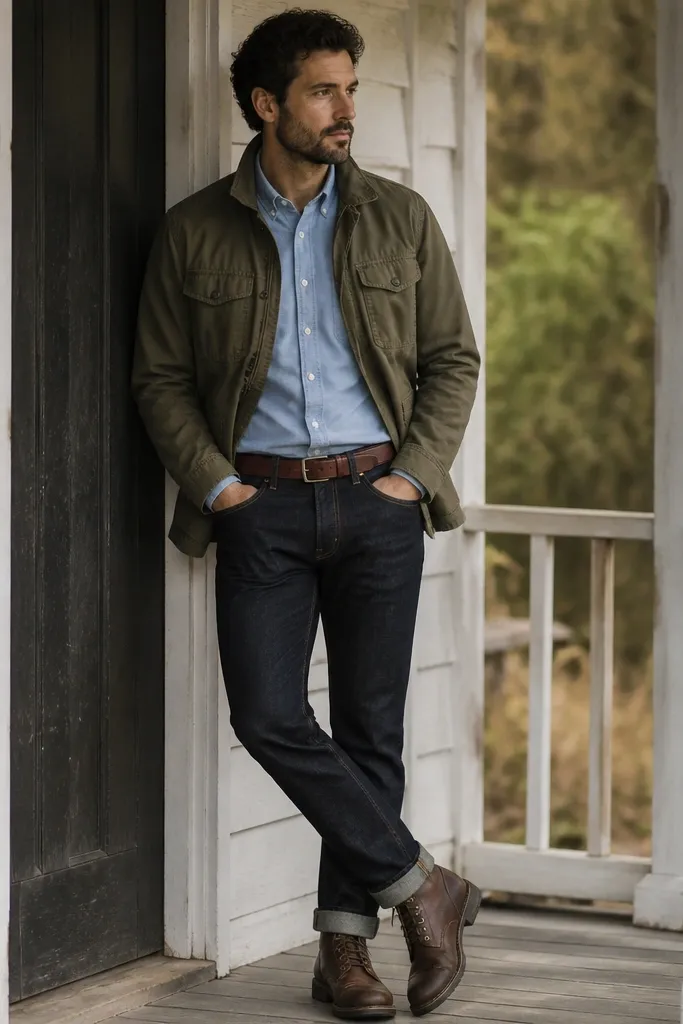
If your office is business casual but not strict, this combo looks right without trying too hard. The olive field jacket adds rugged structure, and because it’s usually a cotton canvas, it hides wrinkles better than a dress jacket. An Oxford button-down under it gives you that crisp collar shape, and the fabric has enough texture to avoid looking flat. Dark denim with a clean wash keeps it office-appropriate, especially when the jacket is more casual than a blazer. The overall palette — olive, light blue, and deep navy — flatters a lot of skin tones and works well for medium and tall frames because the jacket adds shoulder definition.
Start with the jacket length: it should hit around your hip bone so it doesn’t shorten your legs. Add a light blue Oxford button-down and either leave the top button open or do one-button closure, then tuck only if your jacket is open and you have a longer jacket hem. Choose dark denim with no rips and minimal fading; aim for a straight or slim-straight cut with a clean thigh. Cuff the hem just once to show the shoe, and wear dark brown boots or loafers to keep the look grounded. Keep the belt matching the shoe color so your outfit reads cohesive even if the denim isn’t “dress.”
Use a collar roll technique: iron the collar flat, then fold only the collar tips — it keeps the Oxford from looking floppy.
Don’t choose denim with heavy whiskering or big contrast fades — it pulls the outfit toward weekend.
4. Camel short overcoat + white OCBD + wool-blend trousers
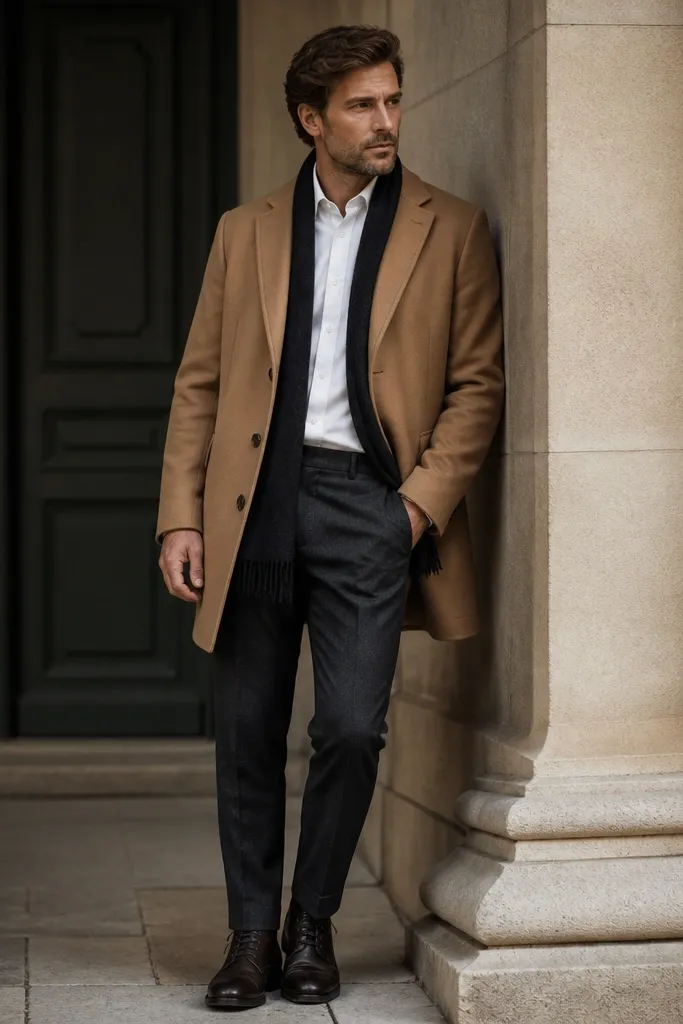
When the weather hits and you still need business casual, a short camel overcoat is the easiest way to look expensive without adding a tie. Camel reads warm and polished, and a shorter length keeps it from swallowing your frame. A white OCBD gives you crisp lines — the thicker weave resists the “rent-storage wrinkle” problem better than thin dress shirts. Wool-blend trousers hold shape through the day and don’t shine like some polyester blends. This look flatters most builds because the coat adds vertical lines, while the charcoal bottoms anchor the outfit. If you get cold commuting, it also lets you stay sharp even when you’re bundled.
Start by sizing the coat so the shoulder seam lands right where your shoulder ends; if it droops, it will look sloppy fast. Wear the OCBD fully buttoned at the collar and tucked into charcoal wool-blend trousers with a slight taper. Keep the trousers to a mid break, not a full stack on the shoe. Use dark brown or black lace-up boots with a clean toe and a belt that matches. If you need a scarf, choose a medium grey or charcoal knit and keep it short so it doesn’t bunch at the throat.
Hang the overcoat overnight; a foggy bathroom steam for 10 minutes helps release creases from suitcase storage.
Skip coats that are too long — they bunch at the ankle and make the outfit look heavier than it is.
5. Black knit crew + light grey chinos + suede chukka boots
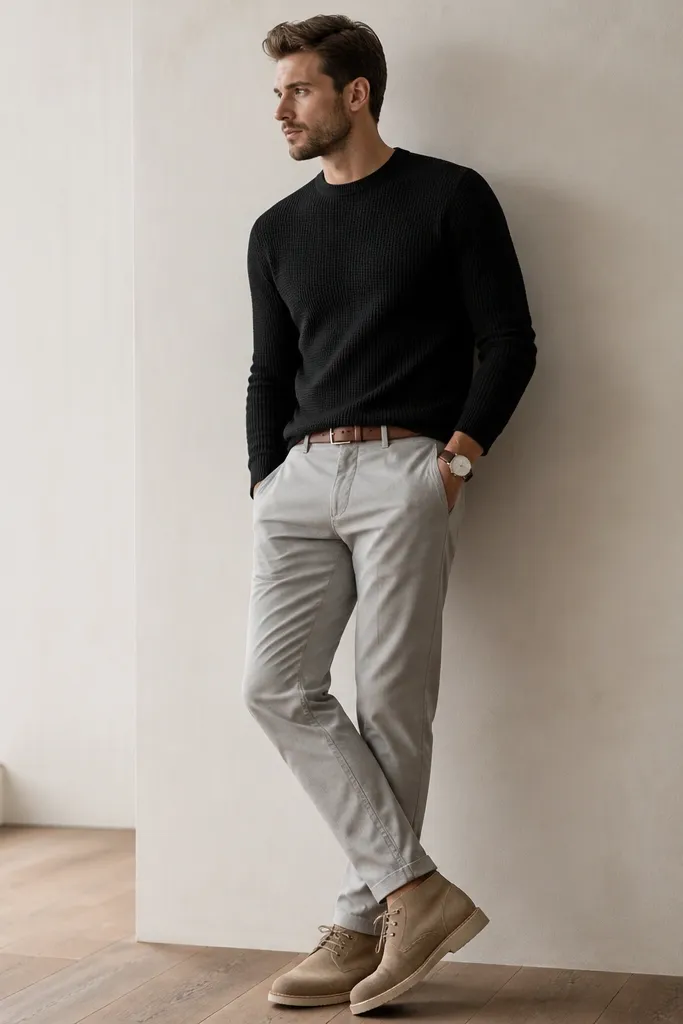
This is my go-to for offices that say “business casual” but actually mean “no one wants to see a tie.” A black knit crew looks clean and modern, and knit fabric hides minor shirt wrinkles because you don’t rely on crisp buttons. Light grey chinos brighten the outfit and keep it from feeling too heavy in winter. Suede chukkas add texture, which matters because smooth leather can look too formal with a casual knit. The whole combo flatters lean builds because the knit adds some bulk through the torso, and it works for medium builds because the light grey balances the darker top. If you have a bigger midsection, choose chinos with a straight cut and avoid skinny legs.
Start with a knit that sits flat at the shoulders and doesn’t stretch out around the neck. Choose light grey chinos in a sturdy cotton twill, then cuff lightly at the ankle if your boots show. Put the chinos at a waistband height that sits slightly above your hip bone, and belt it with a brown leather belt. Wear suede chukkas in tan, sand, or dark brown, then match the belt to the boot color. If you’re carrying a bag, keep it matte leather or canvas — shiny accessories fight the soft texture of suede.
Brush suede once a week with a suede brush so it stays even and doesn’t look patchy.
Don’t pick light grey chinos that are thin and see-through when you sit — office lighting will show it.
6. Light blue button-down + navy trousers + bomber or cardigan layer
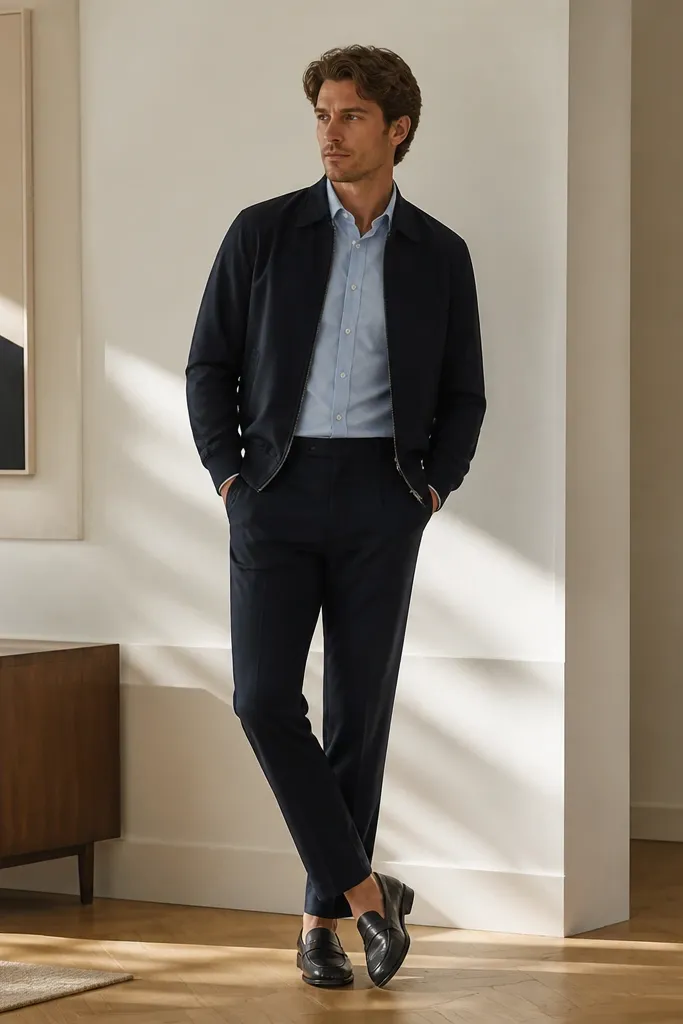
This outfit is for the days when your office is casual but you still need a sharp collar. Light blue button-downs are the easiest “friendly” color — they look professional without the harshness of white. Navy trousers make the outfit cohesive, and they hide minor stains better than lighter fabrics. The layer choice matters: a bomber with a smooth finish looks tidy, while a cardigan in a thicker knit gives you warmth without looking like you’re dressed for a weekend. I’ve worn variations of this for interviews in business casual companies and for team days where everyone shows up in jeans — the button-down keeps you from looking underdressed.
Start by choosing a button-down with a collar that holds its shape; press it once before work if you can. Tuck the shirt and keep the top buttons simple — no extra pocket flaps or loud patterns. Pick navy trousers with a clean hem and a straight or slight taper; aim for a break that touches the top of the shoe. Layer with a bomber in dark navy or a cardigan in charcoal, then keep the layer length around hip level. Wear dark loafers or leather low-pro sneakers with no bright accents, and match belt color to shoes.
If your shirt wrinkles in transit, roll it loosely and store it flat in your bag — don’t fold it tight along the same crease lines.
Don’t wear a light blue shirt with very thin, shiny trousers — it reads like a costume under fluorescent lights.
7. White OCBD + olive overshirt + dark chinos
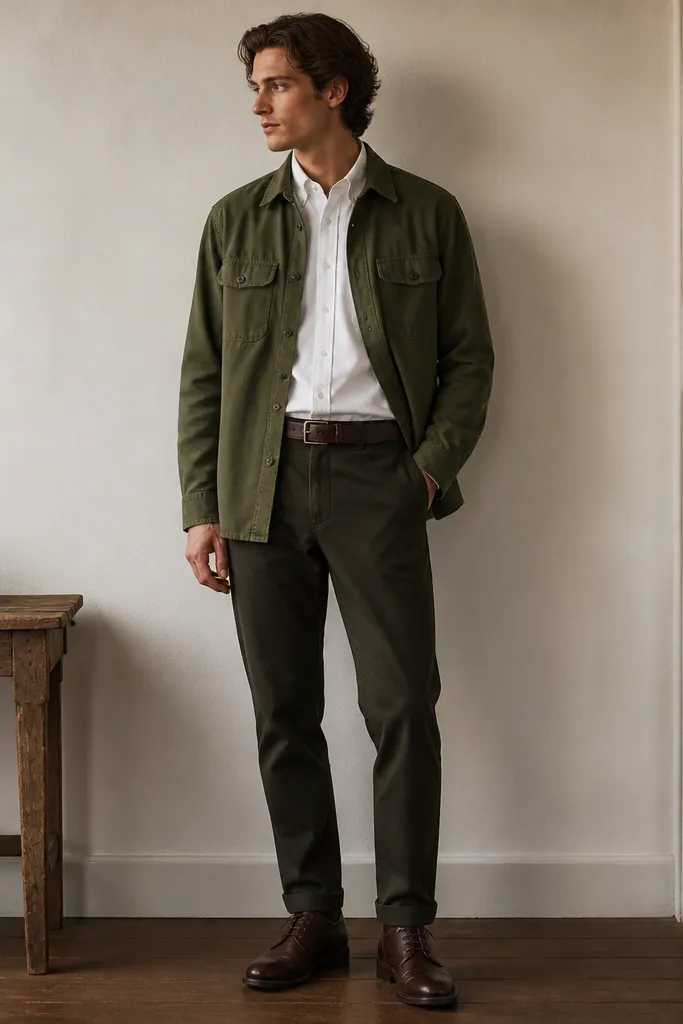
This one is a renter-friendly trick: overshirts let you look layered without needing a full blazer. A white OCBD gives you crisp structure, but the Oxford weave stays better through storage than thin poplin. Olive overshirts add depth and hide lint because the fabric is textured. Dark chinos keep everything grounded, and the olive/white/dark combo looks good on warm and cool skin tones. If you’re between sizes or your weight shifts, overshirts are forgiving — you can button it comfortably without feeling tight across the chest.
Start with a properly tucked OCBD: tuck the shirt, then pull the fabric down so it sits smooth at the waist. Button the overshirt to the second button only if you want a relaxed look, or keep it open for more airflow. Choose dark chinos in deep olive, charcoal, or black-brown, and keep the leg straight to slight taper. Wear dark brown lace-ups or boots with a belt that matches. Finish with a simple watch and keep the pocket square out — overshirts don’t need extra decoration.
Try thisUse a lint roller on the overshirt before you leave; textured fabric holds onto commuter dust.
AvoidSkip overshirts with loud stripes or big branding on the chest — they fight business casual.
8. Grey check flannel overshirt + solid tee + tailored-fit chinos
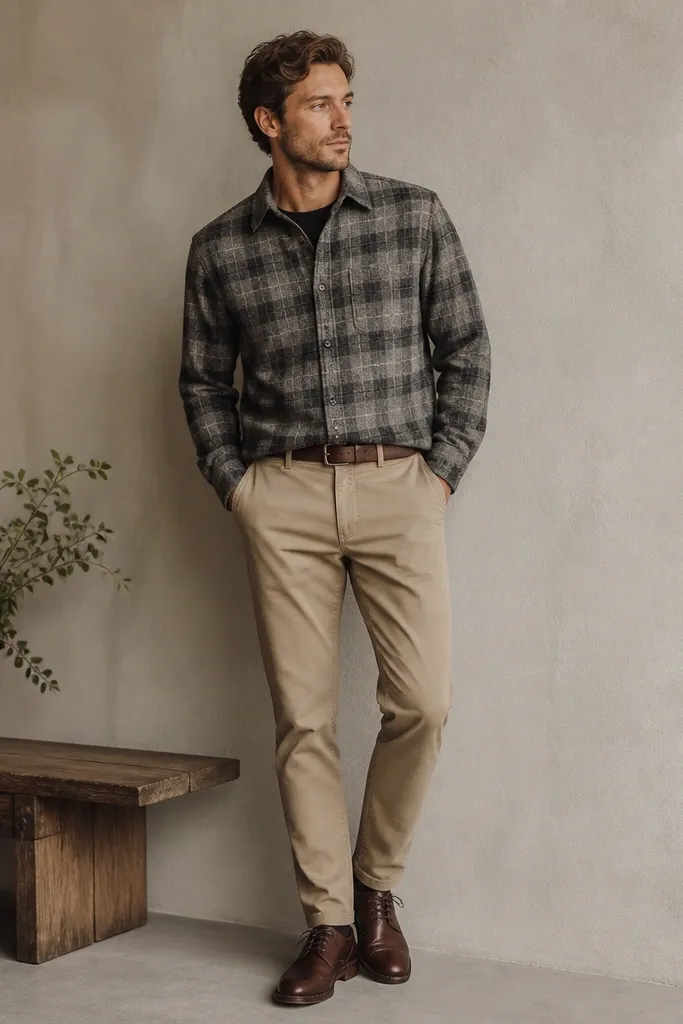
Flannel overshirts can look sharp instead of sloppy when you keep the inside simple. Grey check flannel is the sweet spot: it has pattern interest, but it stays muted enough for offices that still mean business. I pair it with a plain tee only when the tee is thick and the collar holds shape — otherwise it looks too casual. Tailored-fit chinos add the clean line you need, and brown shoes finish the warmth. This outfit flatters shorter guys because the overshirt length breaks the torso evenly, and it works for broader shoulders because the check pattern draws the eye across without clinging.
Start by picking a flannel overshirt that fits your shoulders and doesn’t gap at the buttons. Choose a thick tee in black or deep charcoal and keep the neckband snug. Tuck or half-tuck the tee depending on your overshirt length — if it covers the belt line, full tuck looks cleaner. Wear chinos in stone or tan with a tailored leg and a clean hem. Add brown derbies or loafers, then match belt color to shoes. Keep the overshirt buttoned only if it sits flat; if it pulls, leave it open and let the tee show the waist line.
Wash flannel in cold and skip high heat drying; it keeps the pattern crisp and reduces shrink surprises.
Don’t use a thin, stretchy tee — it will sag at the neckline by 2pm.
9. Deep green crewneck sweater + navy trousers + dark loafers
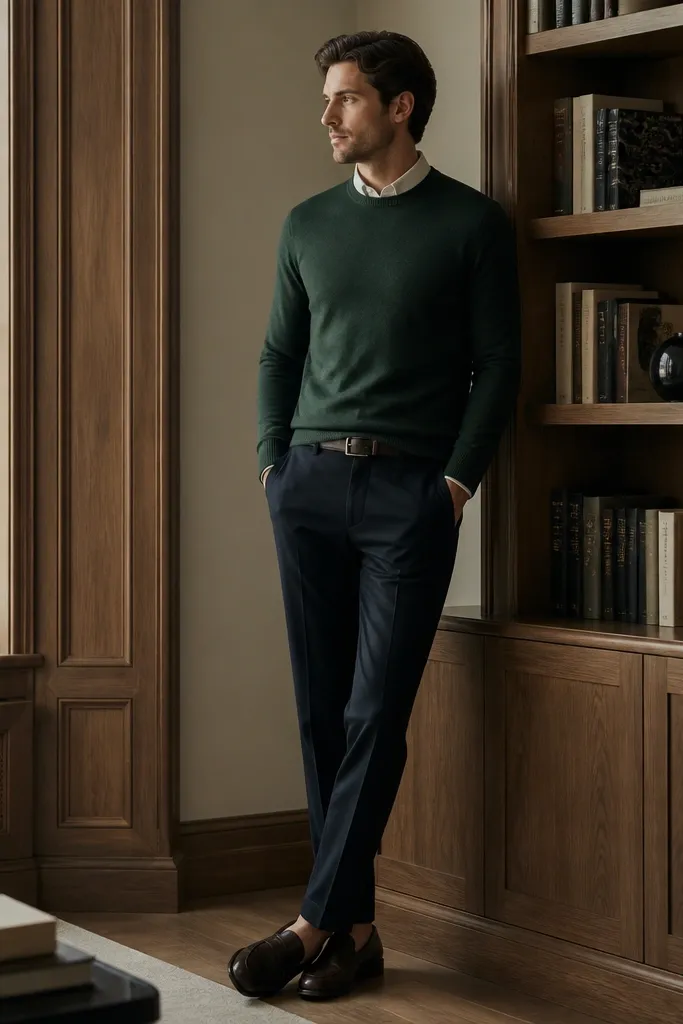
Deep green is one of the few colors that reads professional and still feels personal. The sweater gives you a smooth torso and hides wrinkles from shirts underneath, especially if you’re pulling a collared shirt in and out during commuting. Navy trousers are a reliable anchor — they keep the outfit from looking too dark because green has warmth built in. I like this for people who get cold easily but don’t want a heavy coat inside the office. It also works if you have a longer torso because the crewneck sits cleanly and doesn’t break the body line like hoodies do.
Start with a crewneck that fits close at the neck and doesn’t stretch wider at the hem. Wear it with navy trousers in a midweight fabric like wool-blend or a sturdy cotton twill. If you want a more formal edge, add a white or light blue collared shirt peeking out by 1-2 centimeters at the neckline. Choose loafers in dark brown or black and match your belt. Keep the sweater cuffs from riding up by choosing a knit with a firm rib — it should hold its shape after a day of sitting.
Try thisIf your sweater sheds, run a lint brush over it before you leave the house and again after your commute.
AvoidSkip sweaters with a loose, droopy collar — they make even good trousers look worn.
10. Pale blue polo + cream chinos + white-soled leather sneakers
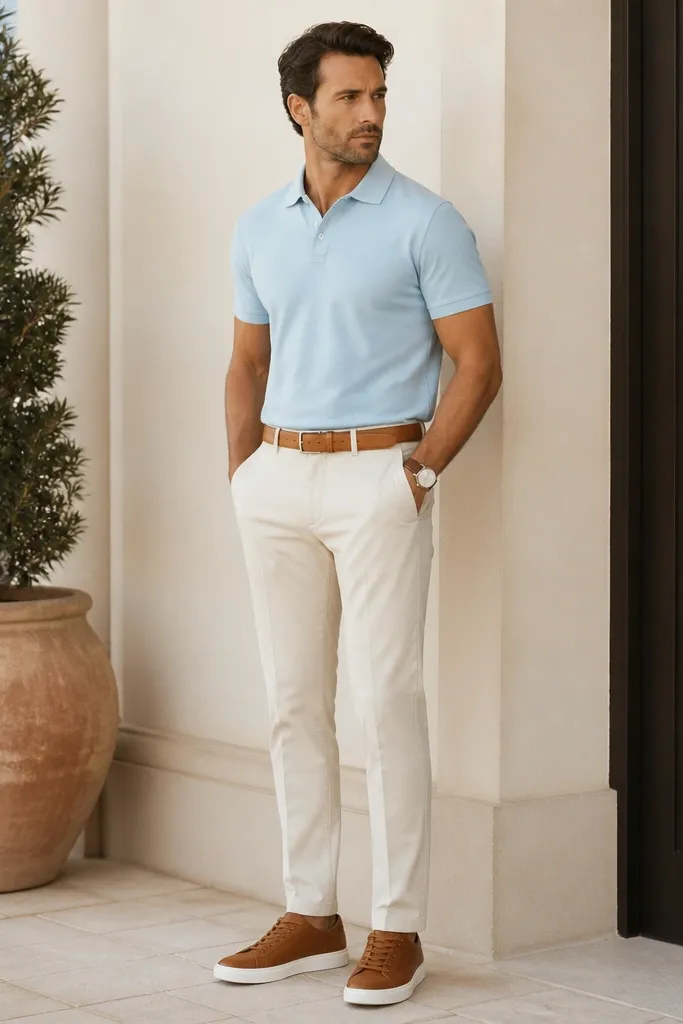
This works when your office is okay with “no tie” but still expects you to look tidy. A pale blue polo is softer than a button-down and hides minor creases because the knit surface is forgiving. Cream chinos keep it bright and clean, and they look intentional with the right shoe — leather sneakers with a white sole read modern without looking like gym gear. I’ve worn this to casual client meetings where everyone else was in polos and chinos, and it still held up because the polo collar is structured. This outfit flatters most frames; the cream color adds contrast and makes the legs look longer.
Start with a polo that has a structured collar and a hem that stays flat when tucked. Tuck the polo fully into cream chinos and smooth the fabric at the waistband — no wrinkles near the belt. Choose chinos in a medium-weight cotton that holds shape, not thin twill. Wear leather sneakers with a clean white sole and minimal scuffs; keep laces tied neatly. Use a tan belt and keep accessories simple, like a watch with a dark strap. If your building is humid, give the polo a quick air-out before you leave.
Try thisKeep a small stain stick for polos; cream fabric shows tiny marks fast and it’s an easy fix.
AvoidDon’t wear a polo with a stretched-out placket seam — it makes the collar look sad.
11. Black overshirt + grey t-shirt + charcoal trousers
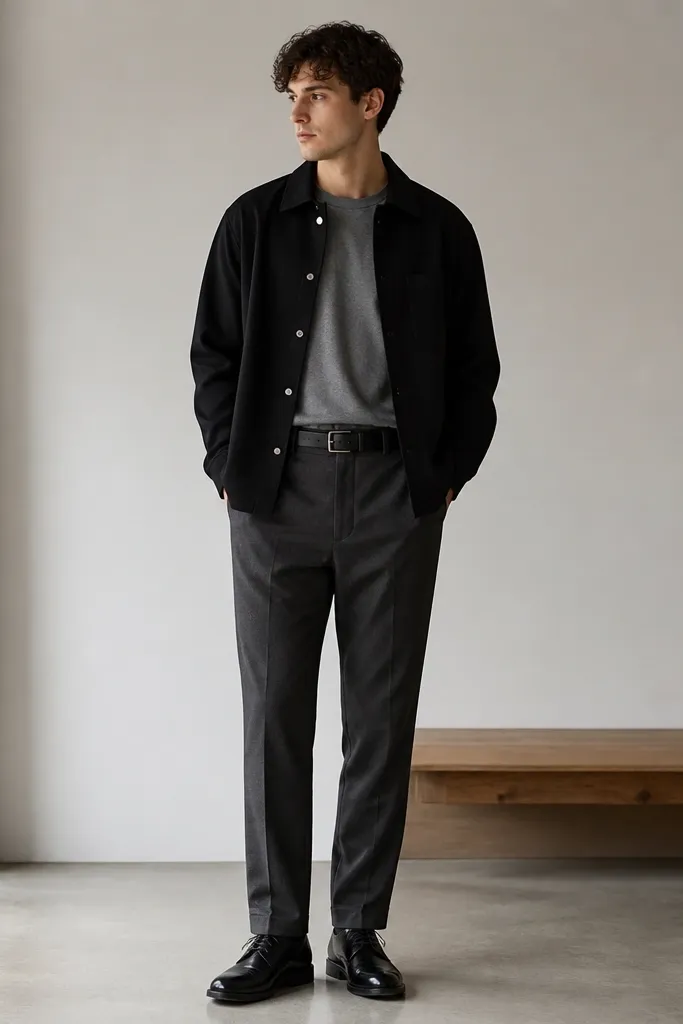
This is a clean, modern uniform when you don’t want a blazer but you still want to look sharp. A black overshirt has enough structure to look intentional, and snap closures keep the look neat even if you’re in a hurry. The grey tee keeps it casual inside, while charcoal trousers prevent the outfit from looking too dark and heavy. I like this for renters because overshirts hide wrinkles from storage better than dress shirts. It’s also great if you have a slightly broader torso — the straight cut of charcoal trousers balances the upper layer.
Start by choosing an overshirt that fits at the shoulders and doesn’t gap when buttoned or snapped. Wear a thick grey t-shirt underneath — one with a collar that doesn’t curl. Pair with charcoal trousers in a mediumweight fabric that drapes, not stiff board-straight denim. Keep the overshirt hem covering your belt line so the silhouette stays clean. Wear black derbies or loafers and match your belt color. If you’re sitting a lot, pick trousers with a bit of stretch and keep the overshirt unbuttoned slightly so you don’t pull fabric across the stomach.
Use a steamer for the overshirt only at the collar and cuffs; you don’t need to steam the whole garment.
Avoid overshirts that are shiny or coated — they show every office light reflection.
12. Tan blazer + white tee + navy chinos
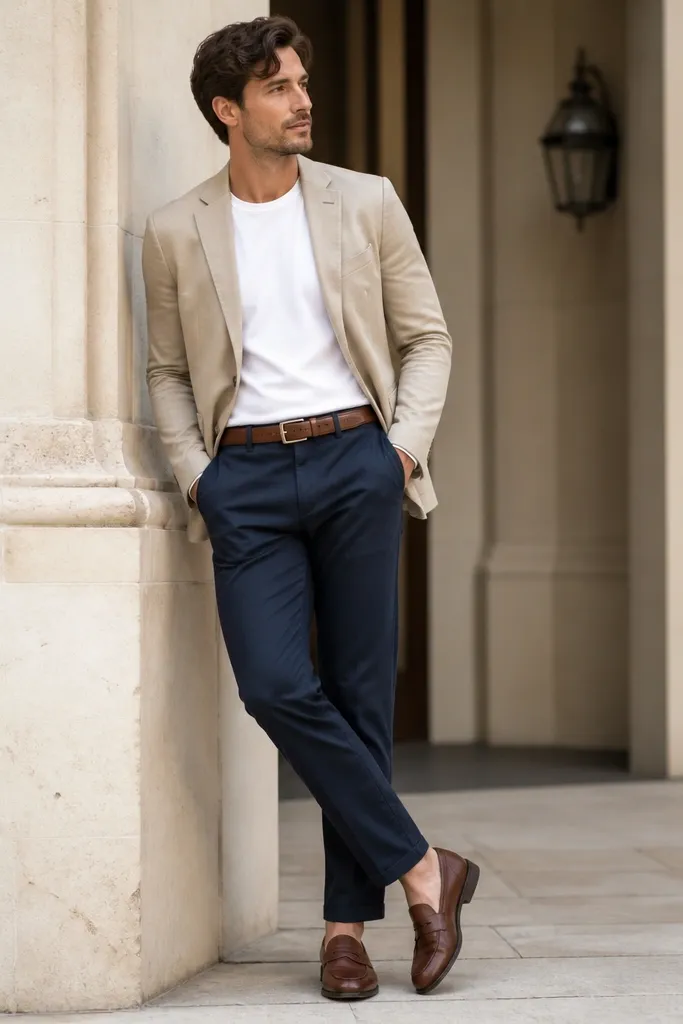
A tan blazer is a cheat code for business casual because it reads warmer than grey and feels approachable. Pairing it with a plain white tee works only when the tee is thick and the blazer has structure. The navy chinos add contrast and keep the outfit from looking too summery for an office. This combo is great for guys who get bored with button-downs but still need to look professional. It flatters medium builds because the blazer adds shape and the navy anchors the lower half.
Start with a tan blazer that fits cleanly in the shoulders and has sleeves that end at the wrist. Choose a white tee in heavyweight cotton that doesn’t cling — you want it to sit flat. Tuck nothing here if the blazer covers the waist, but make sure the tee hem is smooth and not bunched. Wear navy chinos with a straight or slight taper and a clean break at the shoe. Finish with brown loafers and a matching belt. Roll up nothing — keep everything smooth and flat.
If your white tee looks thin, swap to one with a tighter knit; it stops the “see-through under fluorescents” problem.
Don’t pair a shiny tan blazer with a thin tee — it looks like you’re trying to dress up a workout shirt.
13. Cream knit cardigan + light blue button-down + dark trousers
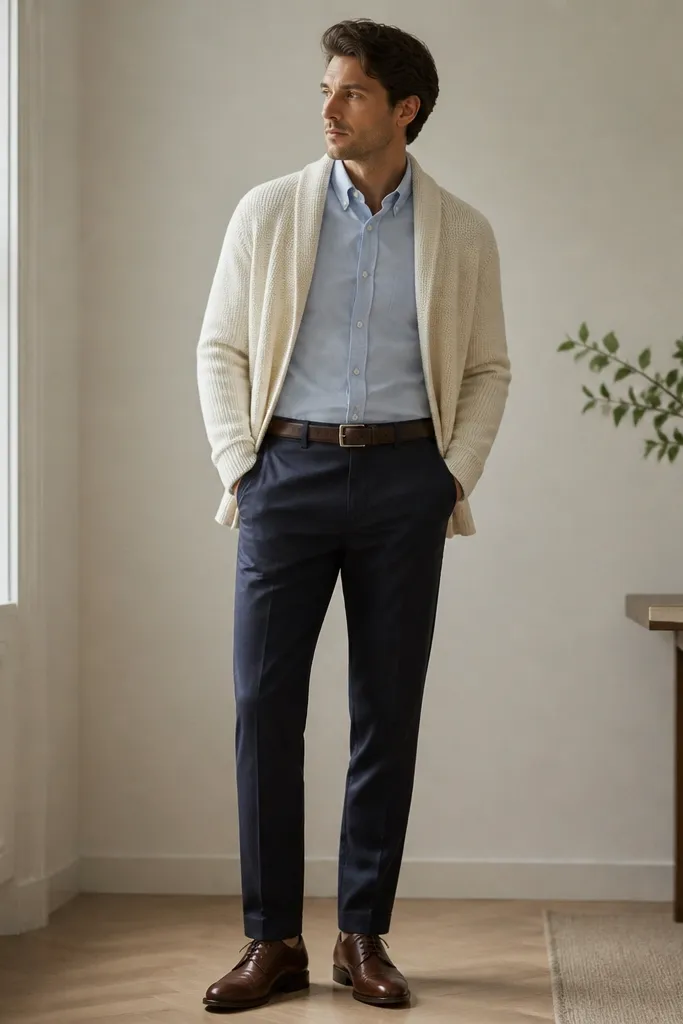
Cardigans get ignored in business casual, but a cream one can look better than a blazer when the office is laid-back. The trick is thickness and fit — a chunky cardigan that hangs too low looks messy, but a medium-weight knit that sits at the hip looks intentional. A light blue button-down underneath brings the crisp element, and dark trousers keep the contrast sharp. I’ve worn this for office days when the air conditioning is brutal and people are in light layers. It flatters guys with narrow shoulders because the cardigan adds soft width without the hard lines of a jacket.
Start with a cardigan that fits the shoulders and buttons cleanly without pulling across the chest. Wear a light blue button-down tucked into dark trousers, and keep the collar crisp. Leave the cardigan unbuttoned if it drapes nicely; if it flutters, button the top one only. Choose dark trousers in charcoal or deep brown and keep the hem aligned with your shoes. Wear brown or dark burgundy leather shoes and match the belt. If your cardigan bunches at the elbows after sitting, adjust the sleeve length by choosing one that doesn’t ride up.
Try thisWash knitwear in cold and lay flat to dry; a warped shape shows instantly under office lighting.
AvoidAvoid cardigans with loose, stretched cuffs — they make the outfit look old.
14. Navy blazer + striped knit shirt + grey chinos
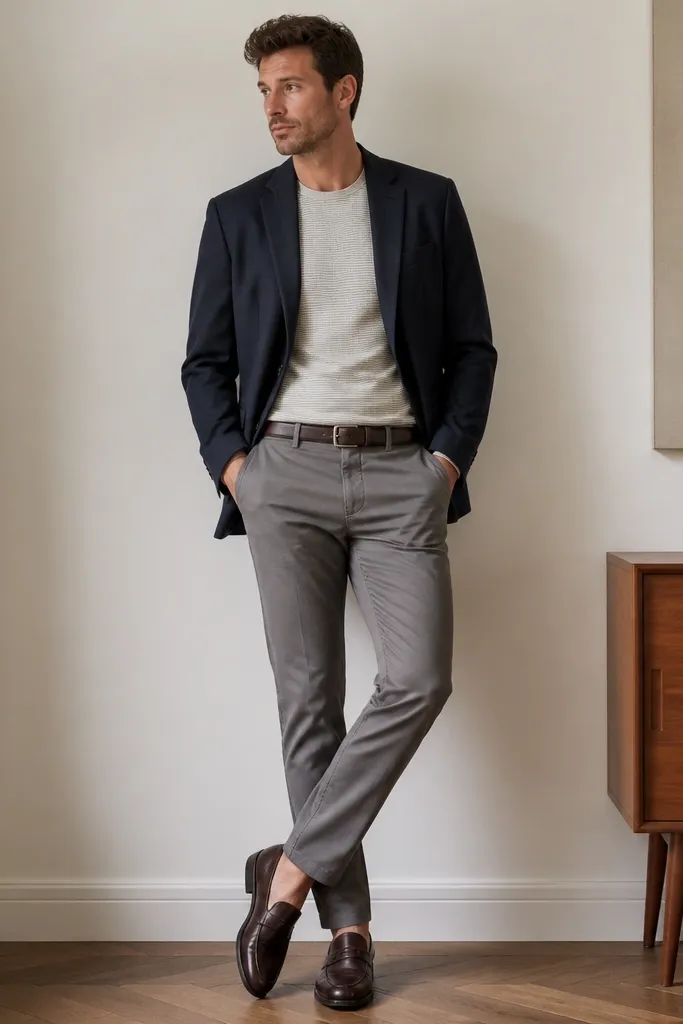
This is for when your office says business casual but you still want a little personality. A navy blazer is your anchor, and the striped knit shirt adds visual interest without looking loud like a graphic tee. The knit fabric keeps the outfit from looking stiff, and grey chinos keep the palette clean. I like subtle stripes in navy/white or navy/cream because they look sharp and read “office” even from across the room. This outfit flatters most builds because the blazer adds structure and the knit makes the torso look smoother than a crisp shirt alone.
Start with a blazer that has a clean lapel and fits your shoulders without pulling; that’s the difference between “smart” and “costume.” Choose a striped knit shirt that sits at the waist — not too long, not too cropped. Tuck the knit fully into grey chinos and smooth the fabric at the belt line. Pick shoes in dark brown and match the belt. Keep the stripes narrow and the pattern small so it doesn’t compete with the blazer lapels. If you’re storing clothes in a rental closet, hang the knit shirt after you get home so it doesn’t crease at the fold.
Try thisIf the knit looks wrinkled, steam only the chest area — focus on the front panel, not the sleeves.
AvoidDon’t go with wide, high-contrast stripes — they turn the outfit into casual weekend fast.
15. Mid-grey suit separates vibe: matching vest + trousers + OCBD
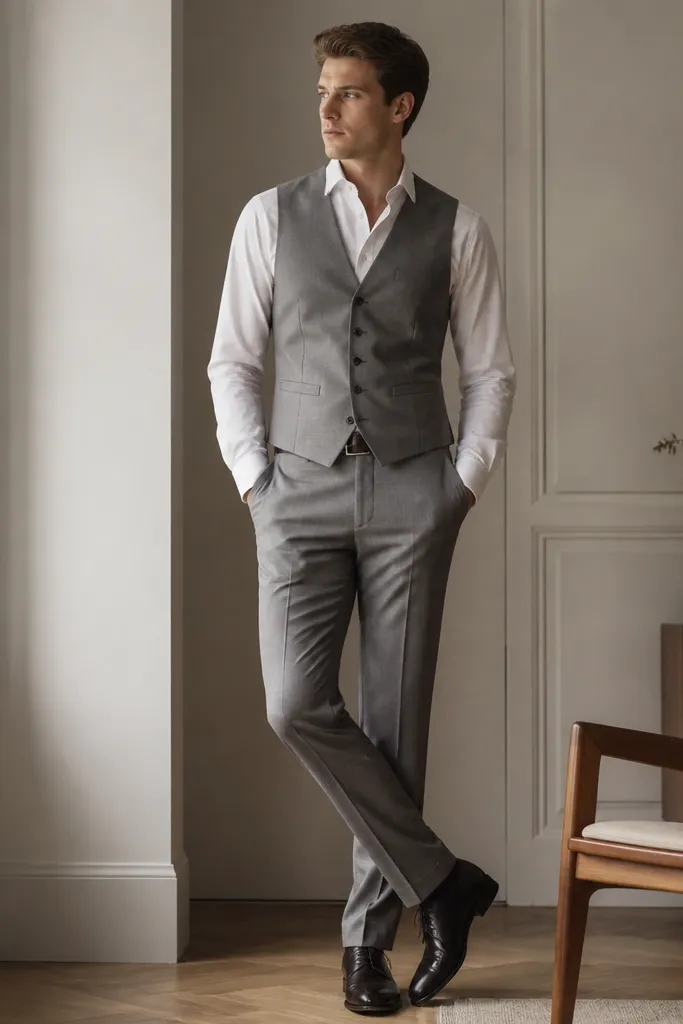
This one looks like “real tailoring” even when you’re renting. A vest adds structure and makes your proportions look intentional, and it hides shirt bunching under the jacket because you don’t need a jacket at all. Mid-grey is the best color for office days because it’s neutral, doesn’t show sweat as much as lighter shades, and works with both warm and cool shoes. Pair it with a white OCBD for crisp collar shape, and keep the rest simple. I like this for interviews, presentations, and days when you want to look sharp but skip the tie routine. It also flatters average and lean builds because the vest adds width and length through the torso.
Start by matching the vest and trousers in the same fabric weight and shade — you want them to look like one set. Choose a vest that fits snug at the chest and doesn’t pull at the armholes; the bottom edge should hit around your belt line. Wear a white OCBD tucked in, then check that the shirt doesn’t gap at the buttons under the vest. Choose dark leather lace-ups and match the belt. If you’re in a warmer office, leave the vest unbuttoned slightly at the top button to keep the neckline from looking too stiff. Keep accessories minimal: one watch, no loud chain.
If the vest wrinkles in storage, hang it by the shoulders and tug the bottom edge down gently before work.
Skip mismatched shades of grey — the set will look accidental and cheap.