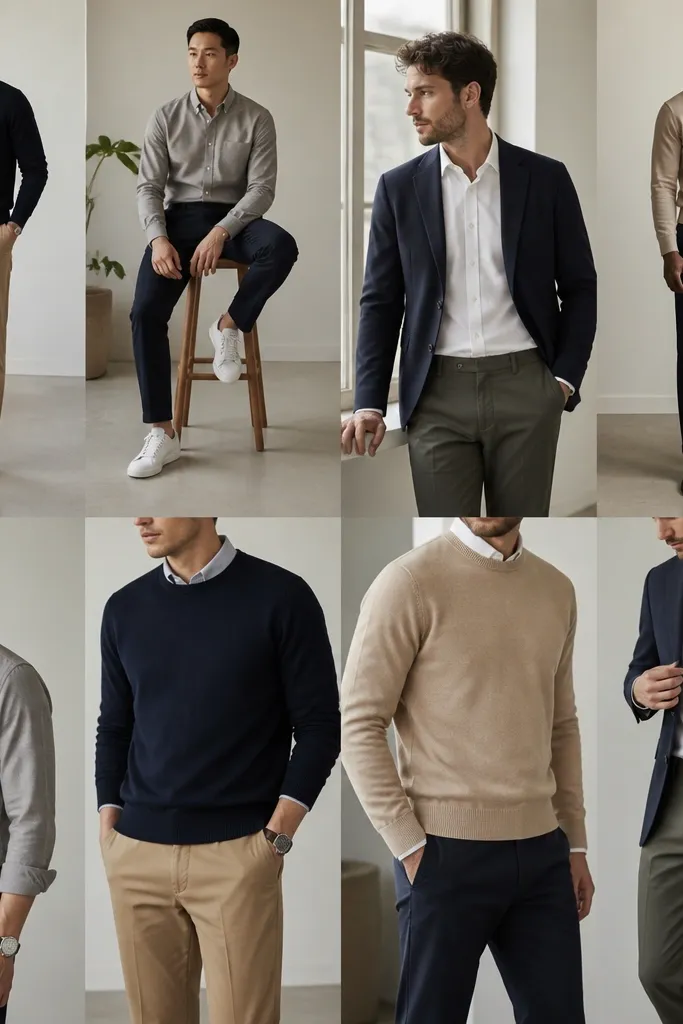
1. Navy blazer, white oxford, charcoal chinos, brown cap-toe oxfords
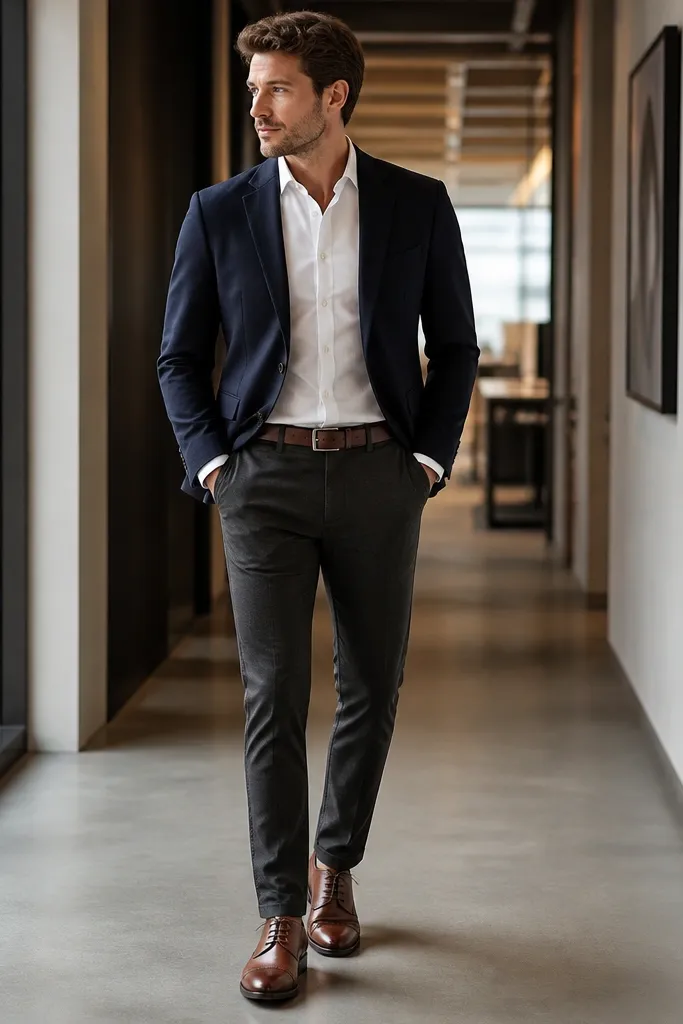
This is the cleanest before and after transformation business casual outfit men can do because it removes ambiguity. Navy blazer plus white oxford reads professional without feeling stiff, and charcoal chinos keep you from looking too formal. I like this on lean guys and average builds because the charcoal grounds the look and the navy adds depth near the shoulders. If your skin tone is fair, the white shirt brightens your face; if you’re deeper toned, it still looks crisp because the oxford weave catches light. The key is the contrast: the top is lighter and sharper than the bottom.
Start by choosing a navy blazer that fits your shoulders and closes cleanly without pulling at the chest. Add a white oxford with a collar that stands up — not floppy — and check that the cuff peeks out about half an inch. Then wear charcoal chinos with a short break or no break, aiming for a hem that hits the top third of your shoe. Finish with brown cap-toe oxfords and match your belt to the shoe color. If you want it to look even sharper, keep the shirt tucked and use a simple watch with a dark strap.
Press your blazer lapels and steam the shirt collar; small creases show up badly in office lighting.
Avoid a blazer that’s too long — if it covers too much of your seat, the outfit looks like you borrowed it.
2. Slate overshirt over a light blue knit polo, tan chinos, white-soled suede loafers
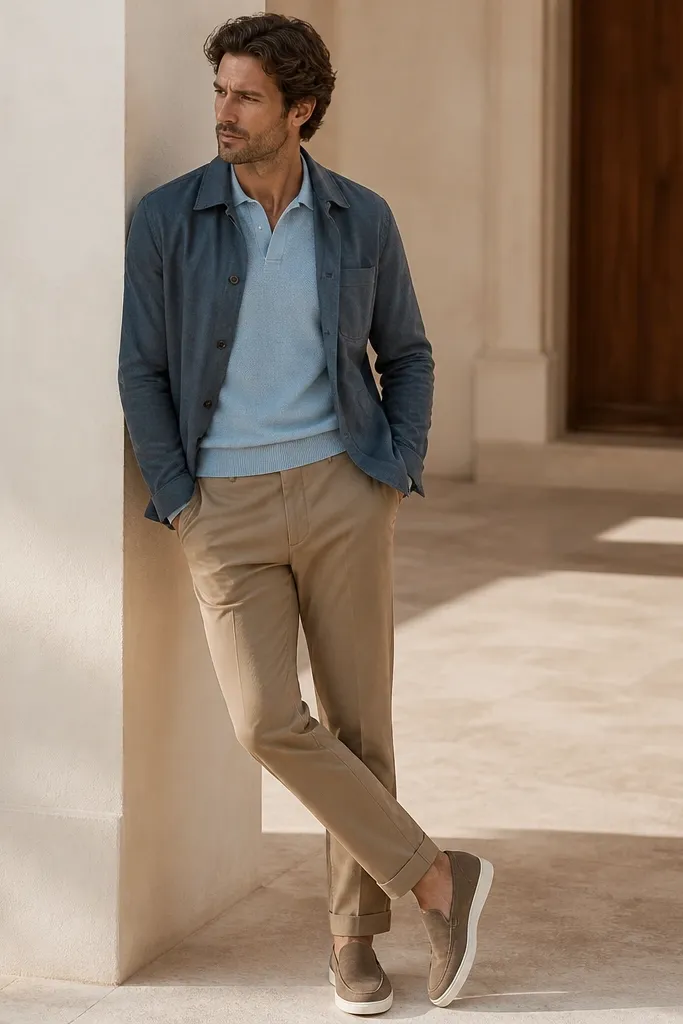
This look is for the office that’s business casual but not boardroom formal. The slate overshirt gives structure around the shoulders, while the light blue knit polo keeps it friendly and less corporate. Tan chinos add warmth, which makes the blues feel less cold and more wearable. I’ve seen this work especially well on medium to athletic builds because the overshirt frames the torso and the knit polo sits comfortably without clinging. If you’re fair-skinned, the light blue brings a clean, fresh contrast; if you’re darker, it still looks intentional because tan balances it.
Start with a light blue knit polo that fits close enough to show shape but not stretch across the chest. Layer the slate overshirt open — button it only if your office is strict, but open looks better for most casual workplaces. Choose tan chinos in a mid-rise and keep the hem slightly tapered so it doesn’t pool. Wear suede loafers in a neutral like sand or taupe with a white sole so the look stays modern. Finish with a leather belt in tan or a dark brown that matches the suede shade.
Try thisPick suede loafers with a matte finish; shiny suede reads too party for business casual.
AvoidSkip bright white sneakers here — they pull the whole outfit into “weekend” territory.
3. Mid-blue chambray shirt, navy chinos, cream sneakers, navy belt
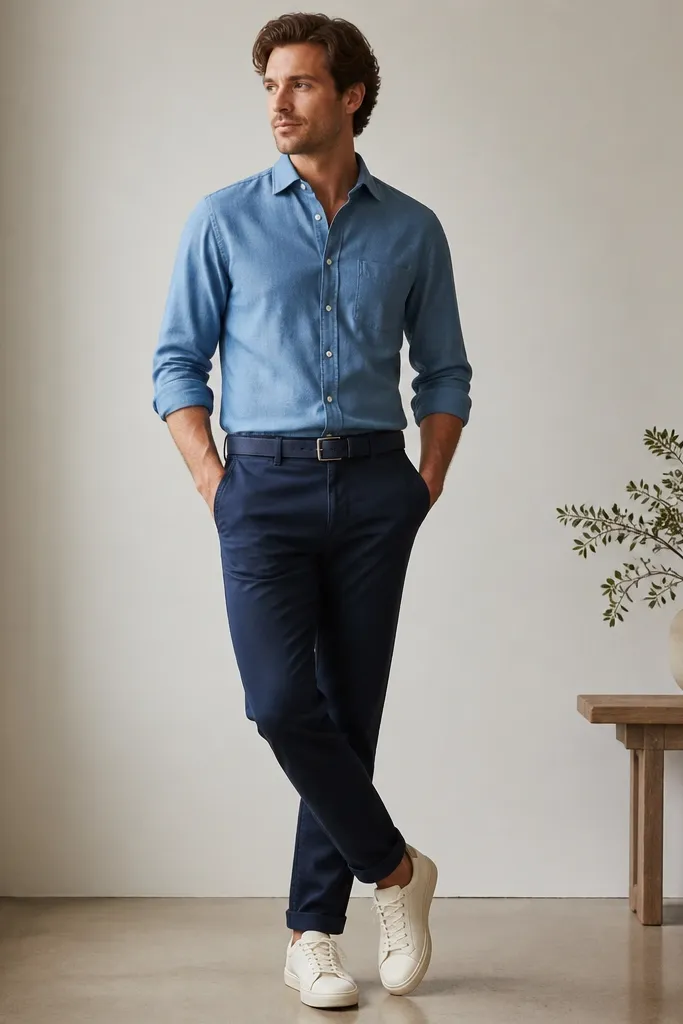
Chambray is the cheat code when you want business casual that still feels relaxed. The mid-blue color is softer than navy, and it works great for creative offices or days that start early and end late. Navy chinos are darker and keep the outfit anchored so you don’t look like you’re going to a backyard barbecue. I’ve found this combination flatters most body types because the chambray drapes without adding bulk, especially if you choose a shirt with a slightly longer hem. For fair skin, chambray adds color without washing you out; for deeper skin, it creates a clean contrast that doesn’t look harsh.
Start with a chambray shirt that has a crisp collar and enough structure to hold its shape — avoid thin, see-through chambray. Tuck it in fully and use a belt so the waistline looks intentional. Choose navy chinos with a slim-straight cut and a hem that grazes the shoe without stacking. Wear cream low-top sneakers that are truly clean — no scuffs, no yellowing. Keep the belt in navy and skip extra accessories that compete with the color.
Roll the sleeves to a consistent width so the forearm looks neat, not bunched.
Don’t use a chambray that’s too light or too faded — it reads like a worn work shirt.
4. Navy suit jacket with a chambray pocket square, white tee, dark jeans, black leather boots
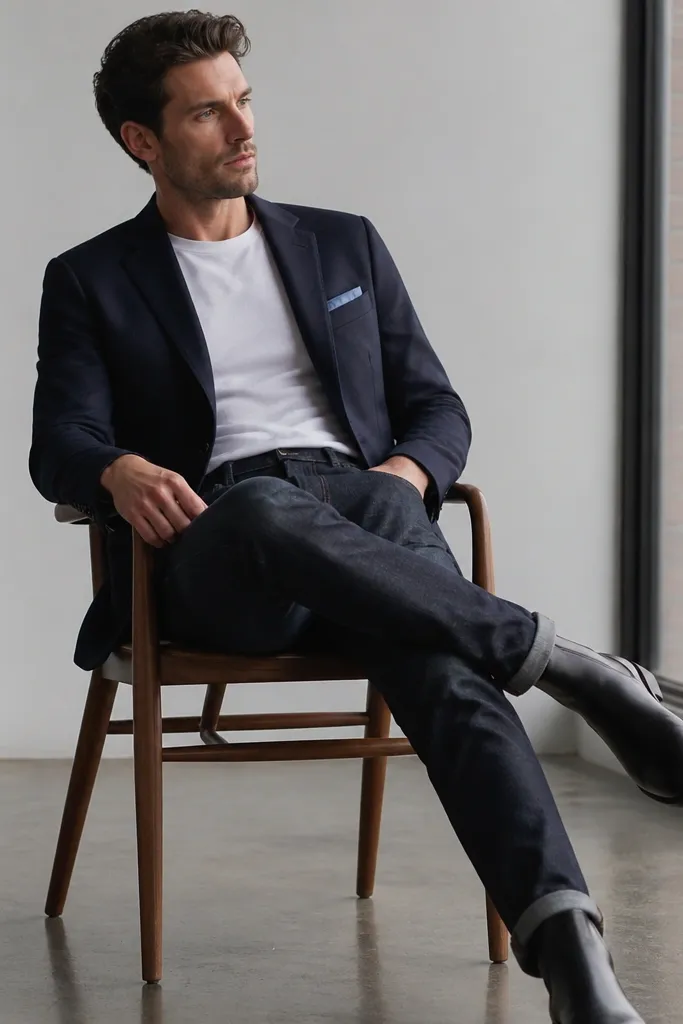
This is a modern business casual move that looks expensive because the blazer does the heavy lifting. The navy suit jacket adds formality, and the white tee keeps it relaxed without going sloppy. Dark jeans replace chinos and still look sharp when the denim has minimal fading and a clean hem. I like it for guys who want to wear something comfortable but still look put together for meetings. It flatters athletic builds because the jacket shapes the shoulders while the dark denim streamlines the legs. With fair skin, the white tee brightens; with deeper skin, the contrast stays clean and not washed out.
Start with a navy jacket that fits your shoulders and has working sleeve length — cuff should show a little at the wrist. Wear a white crewneck tee with a thicker knit so it doesn’t cling or look see-through. Choose dark indigo jeans with no heavy whiskering and a hem that hits the top of the boot. Add black leather boots with a polished toe and clean laces. Finish with one chambray pocket square and a simple watch; keep everything else minimal.
Try thisUse a tee that sits flat at the collar — if it curls or sags, the whole outfit loses authority fast.
AvoidAvoid distressed jeans with holes — they wreck the business casual read instantly.
5. Blue patterned tie, navy blazer, white shirt, beige trousers, oxblood derbies
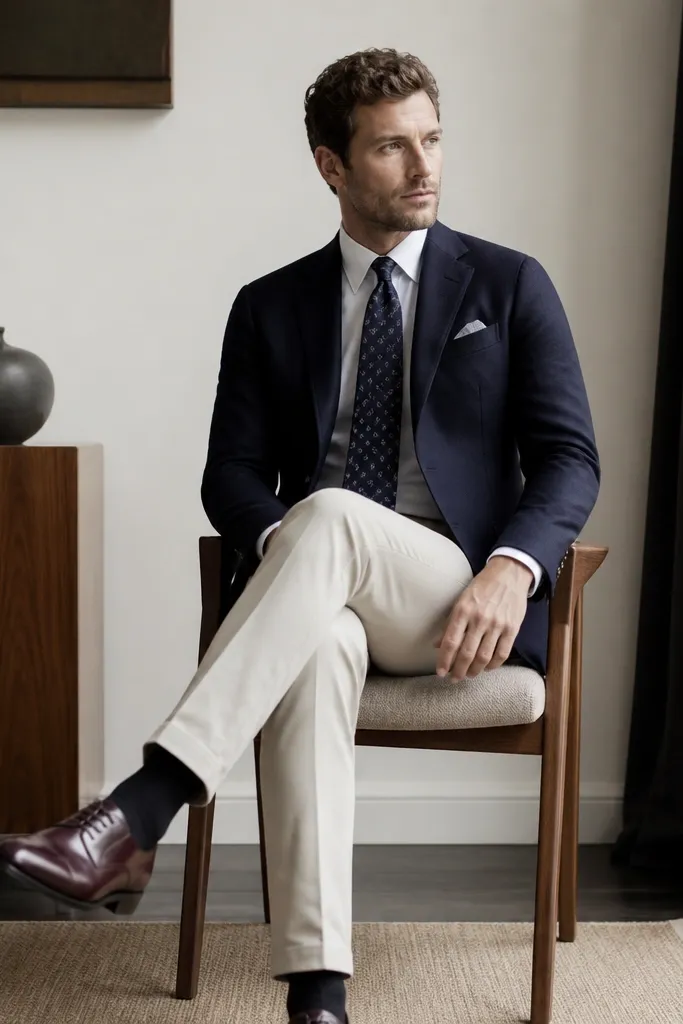
If you have a meeting that tips toward formal, this is the outfit that still feels stylish. The navy blazer and white shirt are a classic base, but the blue patterned tie adds energy without shouting. Beige trousers soften the look and make the blue feel deliberate instead of heavy. Oxblood derbies bring a warm tone that looks great under office lighting and in photos. This works well for average and lean builds because it creates a straight line from shoulder to hem. It also flatters many skin tones because beige and oxblood add warmth next to the white shirt.
Start with a navy blazer that has a medium width lapel and closes smoothly across the chest. Choose a white dress shirt with a crisp collar and keep the tie knot neat — I aim for a tie length that reaches just to the belt line. Wear beige trousers with a clean break and a slightly tapered leg so they don’t look like slacks from an old photo. Add oxblood derbies and match a belt to the shoe tone. Finish with a pocket square in white or pale blue, folded simply.
Tie tip: match one of the tie’s blue shades to your shirt cuff or pocket square, even if it’s subtle.
Skip skinny ties with big loud patterns if your blazer is already slim — it looks too costume-y.
6. Light blue dress shirt, navy cardigan, gray wool trousers, dark brown loafers
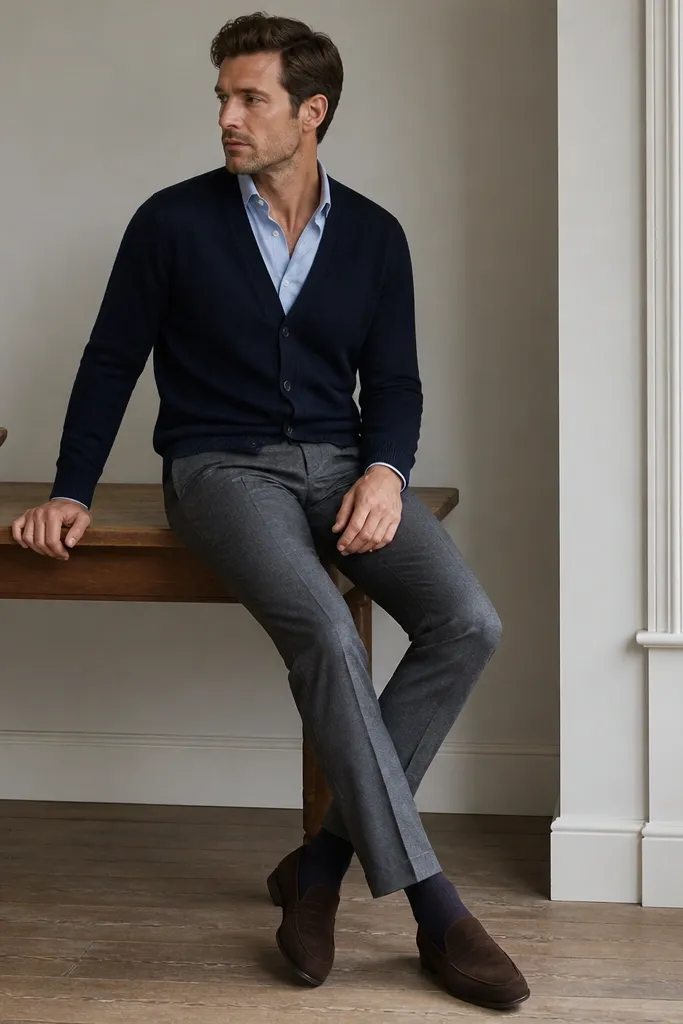
Cardigans are underrated for business casual because they look styled without needing a blazer. The navy cardigan creates a smooth frame, while the light blue shirt keeps it fresh and not gloomy. Gray wool trousers add texture and make the outfit feel more “intentional” than cotton chinos. I’ve worn this to office days where people expect polish but not a full suit — it hits the sweet spot. It flatters guys with a bit of belly because the cardigan can skim rather than cling, as long as you choose the right size. For fair skin, the light blue warms the face; for deeper skin, the gray wool and navy balance the color.
Start by selecting a cardigan in navy with a medium-gauge knit so it lays flat — avoid thin knits that show bumps. Wear a light blue dress shirt underneath and leave the top button undone for a clean V line. Choose gray wool trousers with a straight leg and a hem that breaks lightly at the shoe. Add dark brown loafers with a low heel and keep socks in a matching gray or navy. If you want a finishing touch, use a simple leather watch strap.
Use a shirt that holds its collar shape, or the neckline will look messy under the cardigan.
Avoid cardigans that bunch at the elbows — they look worn and drag the whole look down.
7. Navy bomber jacket, white and blue striped crewneck, olive chinos, white leather sneakers
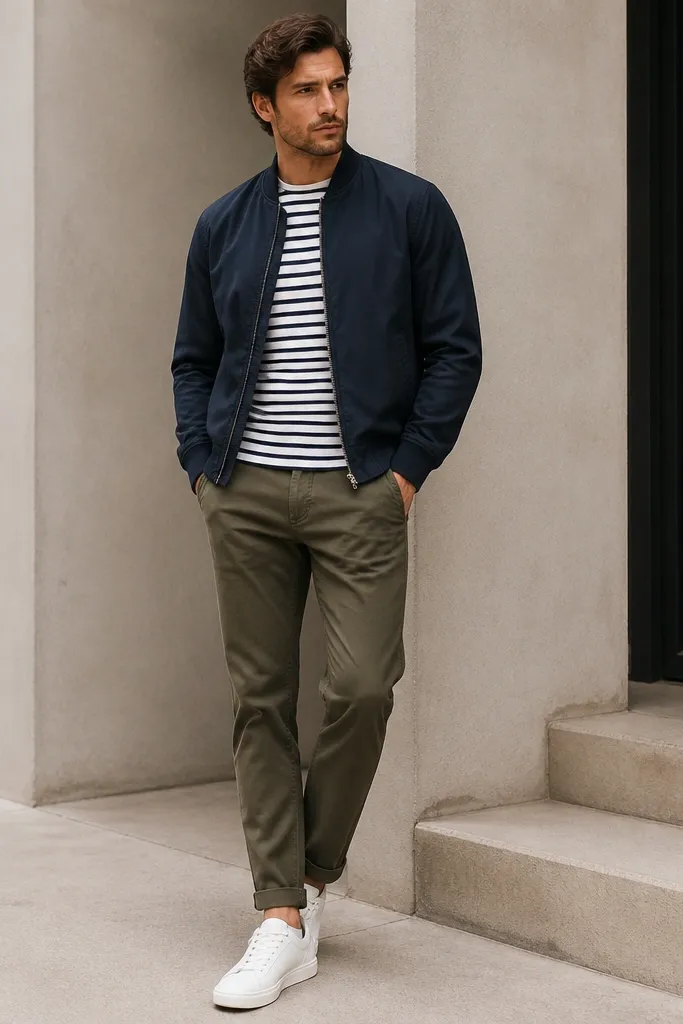
This one is for the office that allows outerwear but still wants you to look sharp. The navy bomber gives structure without the formality of a blazer, and the striped crewneck adds a tidy pattern that reads “styled.” Olive chinos bring contrast to the blue and keep the outfit from looking too monochrome. I’ve found this works on taller guys because the bomber’s length breaks the body nicely and the stripes add visual rhythm. For most skin tones, the navy and white stripe combo looks bright and clean — it’s hard to mess up. The rule here is to keep the rest of the outfit simple so the pattern stays controlled.
Start with a bomber that fits at the shoulders and has sleeves that end at the wrist, not past it. Wear a crewneck with thin stripes in white and blue, in a knit that doesn’t stretch out at the collar. Choose olive chinos with a tapered fit and a hem that sits cleanly above the shoe. Use white leather sneakers with minimal detailing — no chunky soles. Finish with a belt that matches the chinos or the shoe tone, and keep the watch strap dark.
If your bomber has a shiny finish, reduce shine by rubbing a tiny bit of suede/cloth polish on fabric panels — it keeps it office-friendly.
Skip olive chinos that are too light or too gray — they clash with navy and make the outfit look flat.
8. Navy blazer with a chambray shirt, navy-and-white striped socks, black leather derby shoes
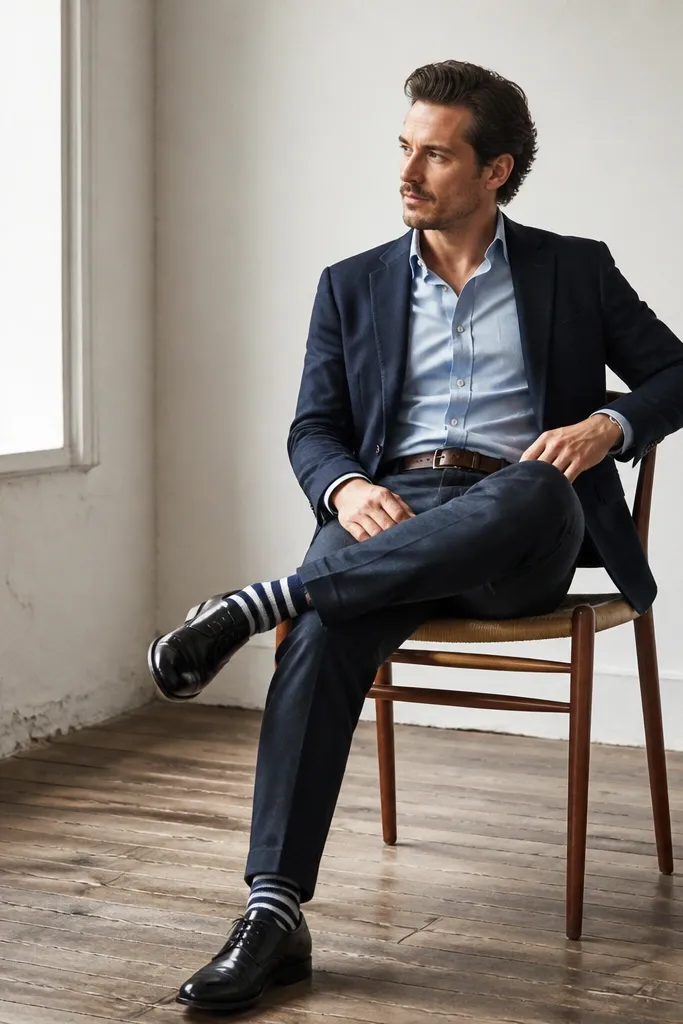
This look is small-detail heavy, and that’s why it reads polished. A chambray shirt under a navy blazer gives you texture without the stiffness of a dress shirt, and it looks great when the office has neutral lighting. Black derbies sharpen the silhouette, and the striped socks add a controlled pop of pattern that only shows when you sit or cross your legs. I like this for average and stocky builds because the blazer shapes the upper half while the chambray stays comfortable through the midsection. It works across skin tones since chambray is a mid-tone blue that doesn’t bleach anyone out. The styling principle is that one pattern is enough — socks do the work, everything else stays solid.
Start with a chambray shirt that has a structured collar and tuck it in fully. Choose a navy blazer that fits your shoulders and waist — no extra fabric at the midsection. Wear trousers in a medium gray or navy for a clean match, with a hem that shows the sock when you stand. Put on black leather derbies with a clean toe and a matching black belt. Add navy-and-white striped socks and keep the rest of the accessories plain.
Match the socks to your shirt shade, not your shoes — it makes the outfit look intentionally coordinated.
Don’t let the chambray bunch at the waist — it reads sloppy under a blazer.
9. Blue oxford shirt, beige knit vest, navy chinos, brown suede chukkas
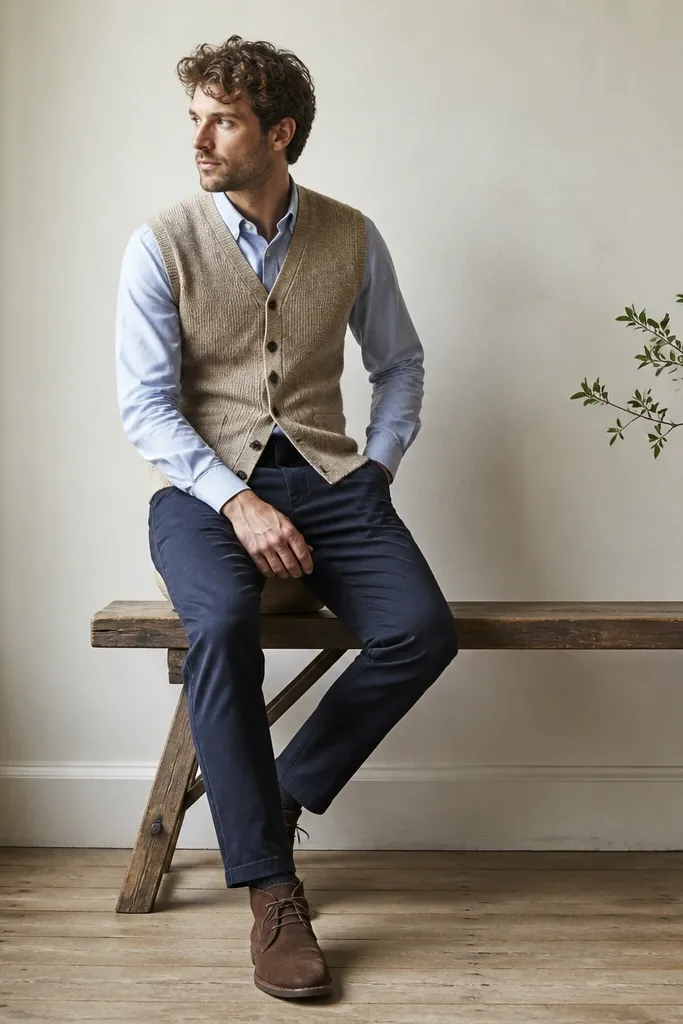
This is the outfit that makes business casual feel personal. The beige knit vest adds texture and warmth, and it makes blue look richer. Navy chinos keep the palette grounded and the chukkas add a slightly rugged edge that still looks office-appropriate. I’ve used this for presentations and interviews because it reads “thoughtful” without needing a tie. It flatters guys with broad shoulders because the vest creates shape and the oxford adds structure. If you’re fair-skinned, beige warms your complexion; if you’re deeper toned, the beige creates a contrast that looks intentional rather than washed out.
Start with a blue oxford shirt that fits at the shoulders and has enough room through the chest to layer comfortably. Add a beige knit vest that buttons cleanly with no pulling; the bottom hem should sit at or just above your belt line. Wear navy chinos with a slim-straight cut and a hem that lands cleanly above the chukka shaft. Choose brown suede chukkas with a simple toe and clean laces. Finish with a brown leather belt and skip bulky accessories so the knit texture stays the focus.
Try thisIf your vest is itchy, switch to a knit with a tighter gauge — it feels smoother and looks cleaner.
AvoidAvoid a vest that’s too long — if it covers your crotch area, it ruins the proportions.
10. Navy t-shirt (polo style), indigo overshirt, black chinos, white sneakers
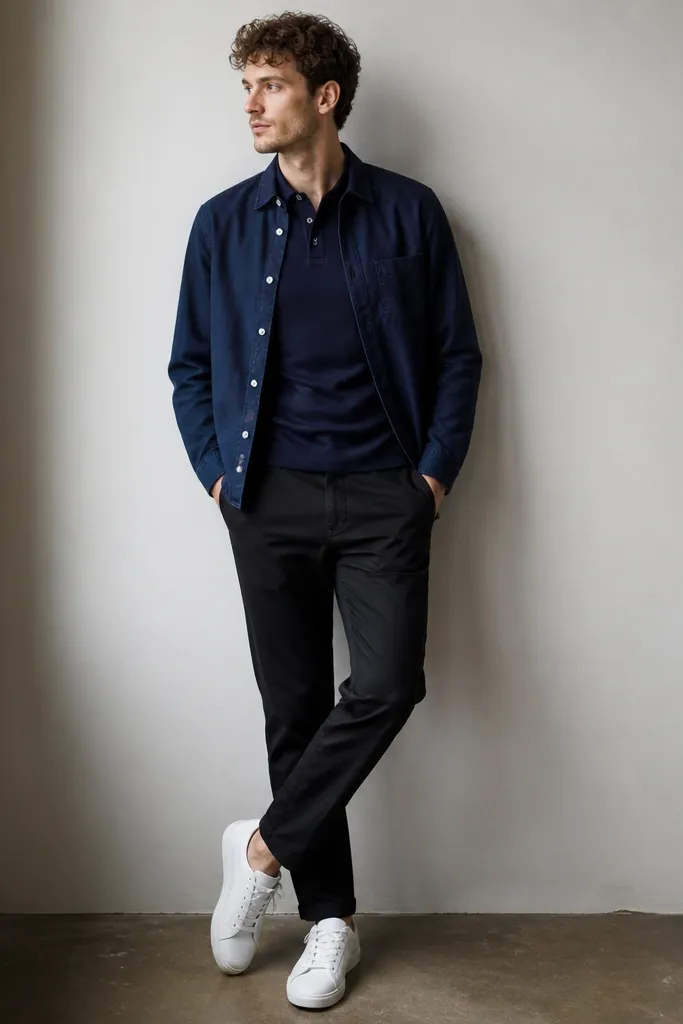
This is for the office where people wear jeans but still expect you to look put together. The indigo overshirt adds the “dress layer” that makes a simple base look styled. Black chinos give contrast and make the outfit look sharp, while the white sneakers keep it modern. I like this for short-to-average guys because the overshirt length adds vertical structure without making you look buried. It also works for different skin tones because navy and indigo are mid-to-dark colors that don’t wash anyone out. The key principle is layering: one structured outer piece makes the rest look intentional.
Start with a navy polo-style t-shirt that has a collar and a thicker knit so it holds shape. Layer an indigo overshirt open — the hem should fall around mid-zipper height on your torso, not past your seat. Choose black chinos with a clean taper and a hem that brushes the shoe. Wear white sneakers with a low profile and no bright neon accents. Keep the belt black or skip it if your chinos fit perfectly without gaps.
Try thisSteam the overshirt and press the collar; wrinkled overshirts look cheap fast.
AvoidAvoid overshirts with heavy fading and patchwork — they push the outfit into casual streetwear.
11. Blue dress shirt, navy textured blazer, dark brown trousers, monk strap shoes
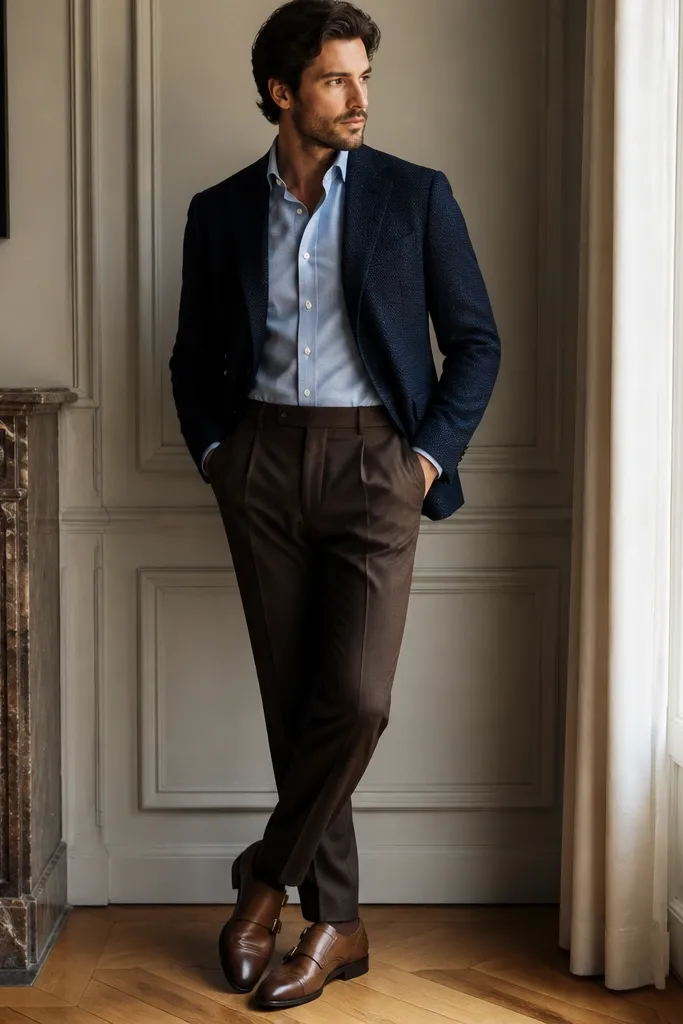
If you want business casual that reads “senior” without wearing a full suit, textured blazers are the move. The blue dress shirt brings brightness, and the navy blazer texture adds depth so the outfit doesn’t look flat. Dark brown trousers warm everything up and pair beautifully with monk strap shoes, which add a little personality without being flashy. I’ve found this works well for men with broad shoulders because the blazer texture and structured lapels create clean lines. It also flatters most skin tones because brown and blue sit naturally together. The styling principle is texture contrast: smooth shirt, textured blazer, clean trouser — each fabric shows up in photos.
Start with a blue dress shirt in a medium tone, not pale powder blue, and keep the collar crisp. Choose a navy blazer with subtle texture like a micro-weave or light herringbone — nothing that looks fuzzy. Wear dark brown trousers with a straight leg and a short break so the shoe looks sharp. Add monk strap shoes in brown with clean buckles and matched laces. Finish with a simple belt in the same brown tone and keep your tie choice optional — this works with or without a tie depending on the office.
Try thisPolish the shoe toe area even lightly; it changes how the outfit reads in daylight.
AvoidDon’t pick a blazer texture that’s too loud — if it looks chunky, it reads casual.
12. Light blue poplin shirt, navy cardigan, stone chinos, tan leather loafers
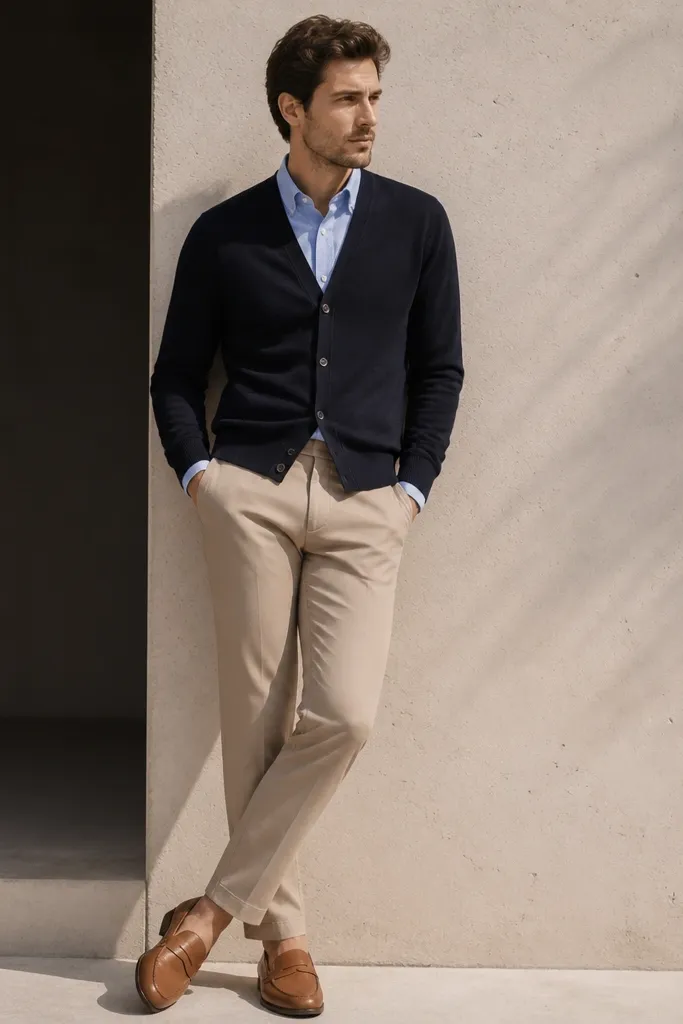
Poplin has a clean finish, so it looks sharp under a cardigan without needing a blazer. Light blue keeps the outfit airy, and stone chinos soften the contrast so it feels friendly. Tan leather loafers tie the warm tones together and make the outfit look expensive even if the pieces are basic. I’ve worn this for days when the office is chilly but people still expect business casual. It flatters lean and medium builds because the cardigan creates a smooth torso line and the stone chinos elongate the legs. For fair skin, stone chinos keep the look bright; for deeper skin, the light blue adds a fresh top layer that doesn’t feel heavy.
Start by choosing a poplin shirt that has a structured collar and a slight sheen under light. Tuck it in and button the cardigan in a way that lays flat across your stomach. Pick stone chinos with a straight leg and a hem that hits right at the top of the loafer. Wear tan loafers with minimal hardware and a clean finish. Match your belt to the loafers, and keep socks thin and neutral so the outfit stays light.
Try thisIf your cardigan is thick, size up the shirt so the cardigan doesn’t pull the shirt seams.
AvoidAvoid stone chinos that are too gray — they make light blue look dull.
13. Navy blazer, pale blue gingham shirt, olive chinos, dark green leather belt
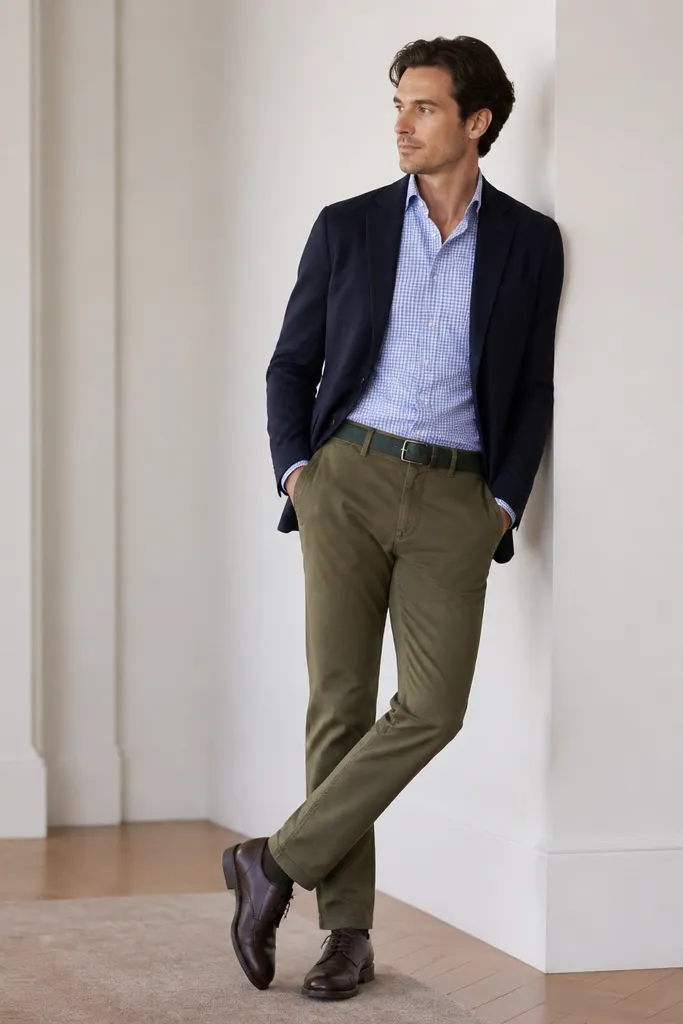
Gingham is the easiest pattern to wear in business casual because it looks orderly. A pale blue gingham shirt under a navy blazer adds interest without looking like you’re dressing for a weekend. Olive chinos bring a warmer, earthy balance that makes the blue feel less formal. I like this for men who want to look different from the standard white shirt routine but still stay office-safe. It works well on medium and athletic builds because the gingham lines create visual structure through the torso. For fair skin, it adds gentle color; for deeper skin, it creates contrast that doesn’t look harsh.
Start with a navy blazer that fits your shoulders and keeps the sleeves straight. Choose a gingham shirt where the squares are small — think subtle, not big-check picnic. Tuck the shirt and keep the collar crisp, then wear olive chinos with a clean hem and slight taper. Use dark brown shoes and a dark green belt so the belt doesn’t look like it belongs to a different outfit. Keep your pocket square plain white or pale blue, folded in a simple way.
When you wear a patterned shirt, keep your shoe and belt smooth and solid so the pattern stays the star.
Avoid loud gingham with wide spacing — it reads casual even under a blazer.
14. Blue crewneck sweater, navy dress shirt collar peeking, gray flannel trousers, black oxfords
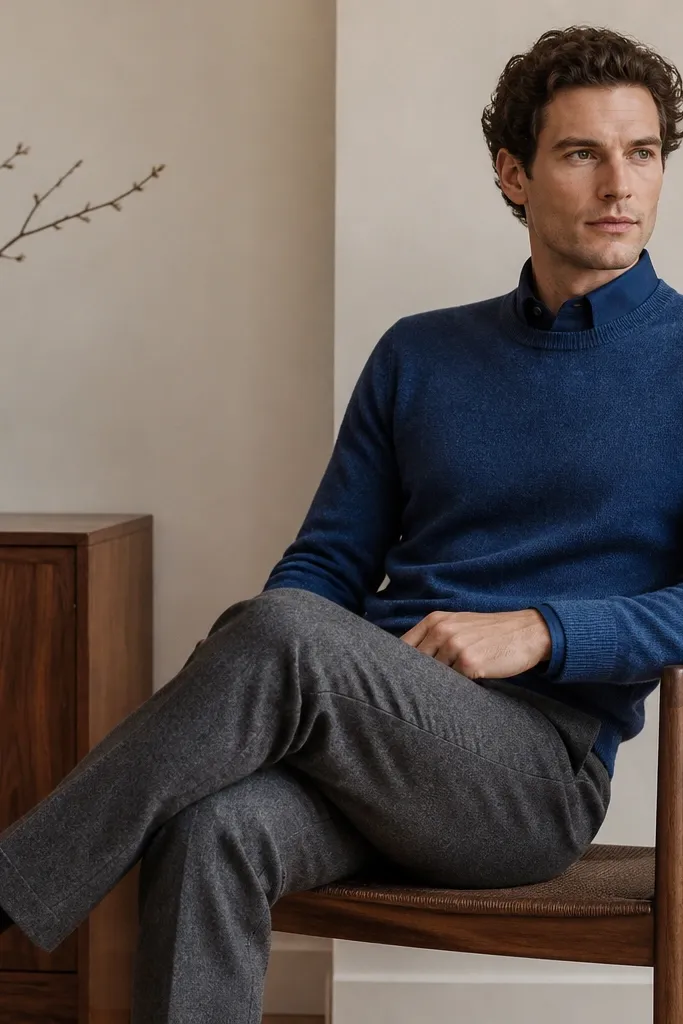
This is the “I dressed for the weather and the room” look. The blue crewneck adds comfort, and the peeking navy collar makes it feel intentional and slightly more formal than a basic sweater. Gray flannel trousers add texture and hide wrinkles better than smooth wool, which matters in real office life. I like it for guys who feel uncomfortable in blazers but still need to look professional. It flatters most body types because the sweater can skim the torso and the collar adds structure at the neckline. It also works across skin tones because the contrast between blue and navy is controlled, not harsh.
Start with a blue crewneck sweater that fits cleanly around the shoulders and doesn’t bunch at the waist. Wear a navy dress shirt underneath with a collar that stays up — then leave it slightly visible under the sweater. Choose gray flannel trousers with a straight leg and a hem that breaks lightly at the shoe. Wear black leather oxfords and add a matching black belt. Keep socks in a dark gray or black so the transition looks smooth.
Try thisTuck the shirt in fully before you put the sweater on; a rolled-up shirt edge shows under the sweater quickly.
AvoidSkip thin sweaters — if you can see your undershirt through it, the outfit looks cheap.
15. Navy quarter-zip, white shirt underneath, medium wash jeans, dark brown leather sneakers
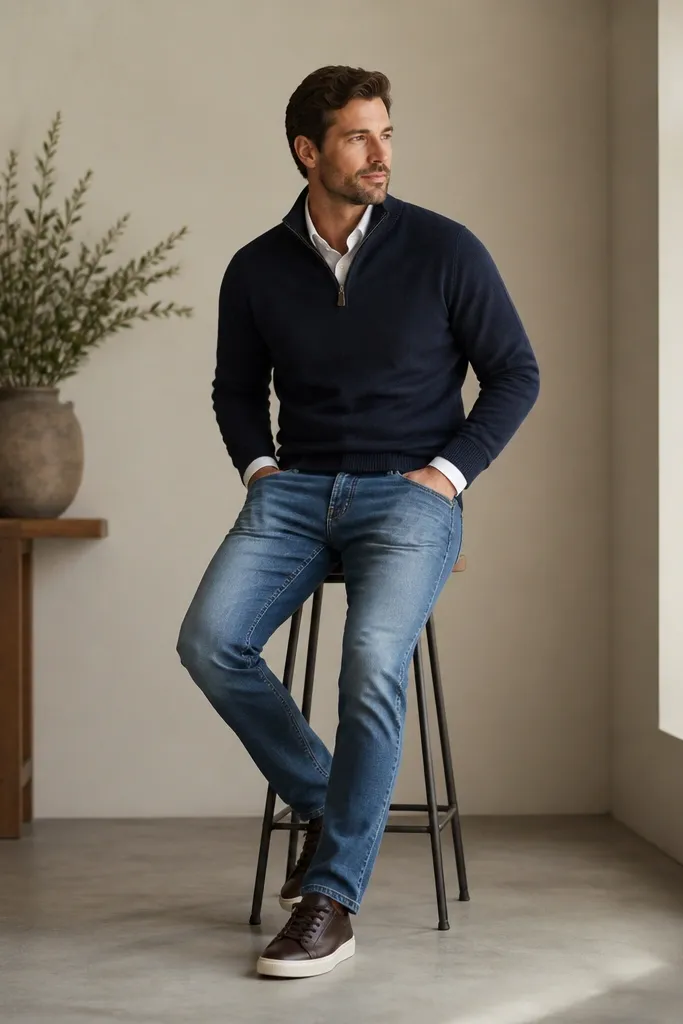
This is a smart bridge between casual and business casual when jeans are allowed. The navy quarter-zip looks polished because it’s knit, not a hoodie, and the white shirt underneath gives you a crisp neckline that reads work-ready. Medium wash jeans work only if they’re clean and not overly faded; they should look like they’ve been cared for. Dark brown leather sneakers keep it grounded and more office-friendly than bright white. I’ve used this on guys who hate blazers but still need to meet clients — it looks intentional without feeling like a costume. It flatters lean and average builds because the quarter-zip creates a vertical line from neck to waist.
Start with a navy quarter-zip that fits the shoulders and ends at your belt line when zipped — too long looks sloppy. Wear a white button-up or crisp poplin shirt underneath and let the collar show just a bit. Choose medium wash jeans with a straight or slim-straight cut, minimal whiskering, and a hem that hits the top of the sneaker. Use dark brown leather sneakers with clean soles and minimal branding. Finish with a simple watch and keep your outer layer zip at mid-height for a balanced look.
Try thisIf your quarter-zip is slightly oversized, belt the jeans higher and keep the shirt tucked tighter to balance the silhouette.
AvoidAvoid jeans with heavy distressing and avoid quarter-zips with stretched cuffs — both read casual in a bad way.